Hawaiʻi has plenty of postcard material — beaches, waterfalls, sunset mai tais. But ask anyone raised on the islands about night marchers and you'll get a very different picture of the place after dark.
Night marchers, or huakaʻi pō, are said to be the spirits of ancient Hawaiian warriors who march in procession through the islands at night, torches in hand, drums beating. Storyteller Lopaka Kapanui, who leads Mysteries of Hawaiʻi ghost tours on Oʻahu, describes encounters that come with more than one sense: people report hearing a conch shell (the pū) or the thud of stomping feet, and some claim a faint smell of sulphur hangs in the air before the procession appears.
The folklore comes with strict instructions. If you find yourself in the marchers' path, run. If escape isn't an option, tradition says to strip naked, lie face-down on the ground, cover your head and keep your eyes shut until they pass. Breaking those rules, the story goes, means death — unless you happen to be descended from one of the warriors, in which case your ancestors will vouch for you.
Kapanui's tours stop at spots where people have reported distant drumming and lines of torchlight coming down the mountain, including a remote area off the windward side of Pali Highway. The writer of the original account recalls hearing that drumming firsthand at the Pali Lookout in Nuʻuanu decades ago — a fitting place for a haunting, given it was the site of a brutal 1795 battle where hundreds of warriors were driven off the sheer cliffs.
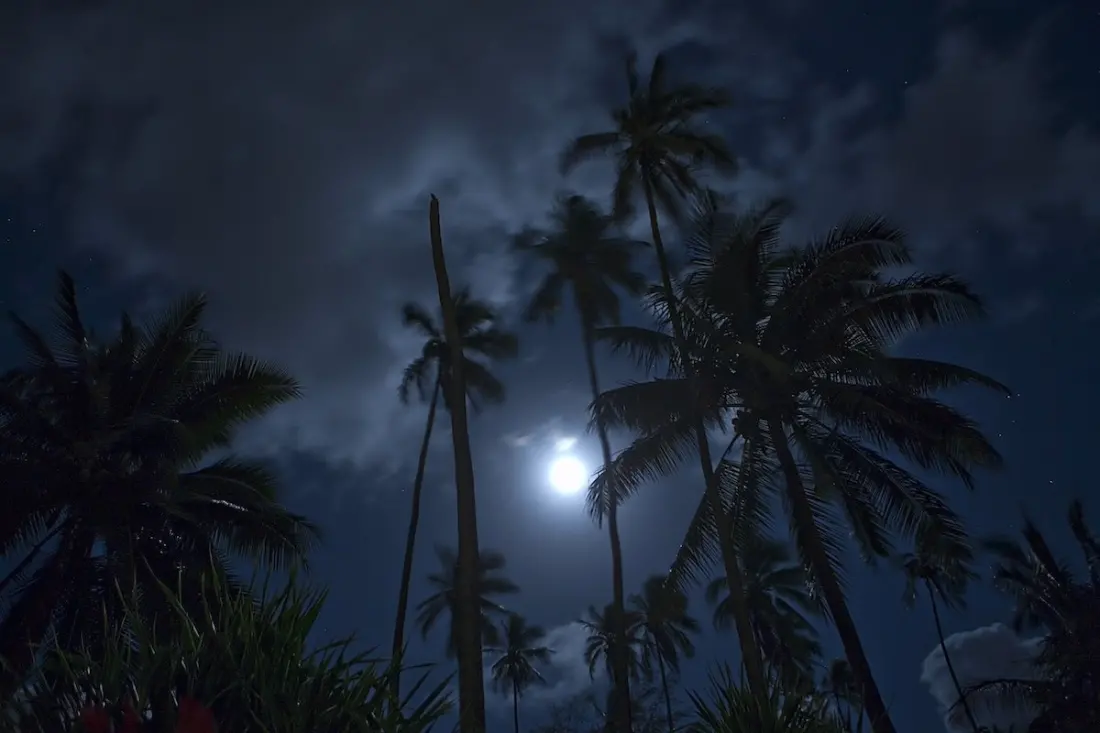
Certain places are considered night marcher territory because they're sacred in Native Hawaiian culture. On Oʻahu, the list includes the Pali, Yokohama Bay, Mākaha Valley Plantation, Kaʻena Point and Kalama Valley. Timing matters too: the processions are traditionally said to march during the last four phases of the Hawaiian moon cycle, in the dark nights just before the new moon.
Even if you don't buy a word of it, the legend is worth knowing before a trip to Hawaiʻi. It's a window into Native Hawaiian history and spirituality — the sacredness of places like the Pali, the old warrior culture, the lunar calendar — that you won't find on any luau menu. Ghost tours with Native Hawaiian guides like Kapanui turn the islands' spooky stories into genuinely engaging history lessons, and they run after the beach crowds go home. Just maybe check the moon phase before you plan a late-night drive along the windward coast.