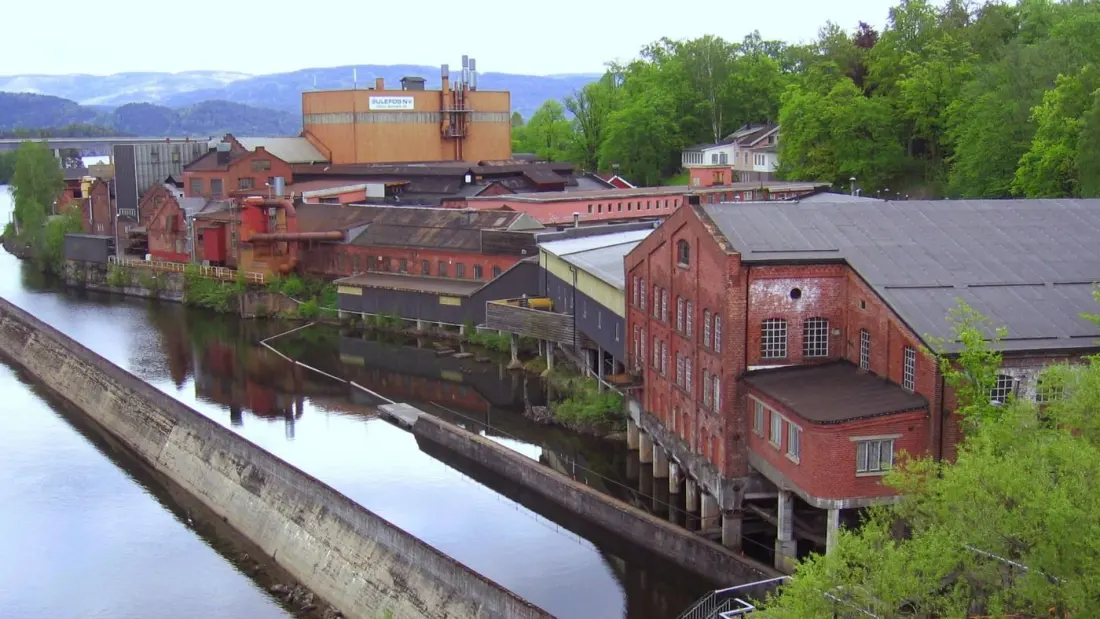
Look down at the pavements in almost any Norwegian town and you might spot it: a cast-iron manhole cover stamped with the name Ulefos. Those covers, along with drains and grates for the country's water and sewage networks, have been made in the small Telemark town of Ulefoss since the 17th century. Now the foundry behind them, Ulefos Jernværk, is shutting down production after 369 years — making it the end of one of Europe's longest-running industrial stories.
The company traces its roots to 1657, when Holden Jernværk was established near a fresh iron ore discovery at Fen. To put that in perspective: Norway wouldn't get its own constitution for another 157 years. The works started out making iron stoves — the first rolled off the line in 1690 — before shifting into the street infrastructure that made the Ulefos name a quiet part of everyday Norwegian life. The Cappelen family has owned the business since 1835.
The closure won't be instant. Following the 2026 merger with Furnes Jernstøperi, the company will consolidate production at its facility in Stange, in Innlandet, with the Ulefoss site winding down over up to three years. The reason, according to the company, is economics: weak demand and cheaper foreign competition made running two foundries unsustainable, and concentrating at Stange is pitched as a way to keep some casting alive in Norway at all.
For Ulefoss itself — a small community in Nome municipality — the human cost is the real story. 114 jobs will go, a heavy blow for a town where the ironworks has been a cornerstone employer for generations. Hundreds of residents joined a torchlight procession to protest the decision, and local workers told Norwegian media they had expected many more years at the plant. Transport firms and suppliers in the area will feel the knock-on effects too.
Why should travellers care? Telemark is one of southern Norway's most rewarding regions — think the dramatic Telemark Canal, forested hills, and historic industrial towns — and Ulefoss is part of that heritage trail. The town grew up around the ironworks, and its factory-era buildings and works-owner estates reflect nearly four centuries of continuous industry. If you're passing through, you have a window of a few years to see production before it ends for good. And even after the furnaces go cold, the company's handiwork stays underfoot all over the country — a fittingly low-key memorial for a business that shaped Norwegian streets for 369 years.
Life in Norway