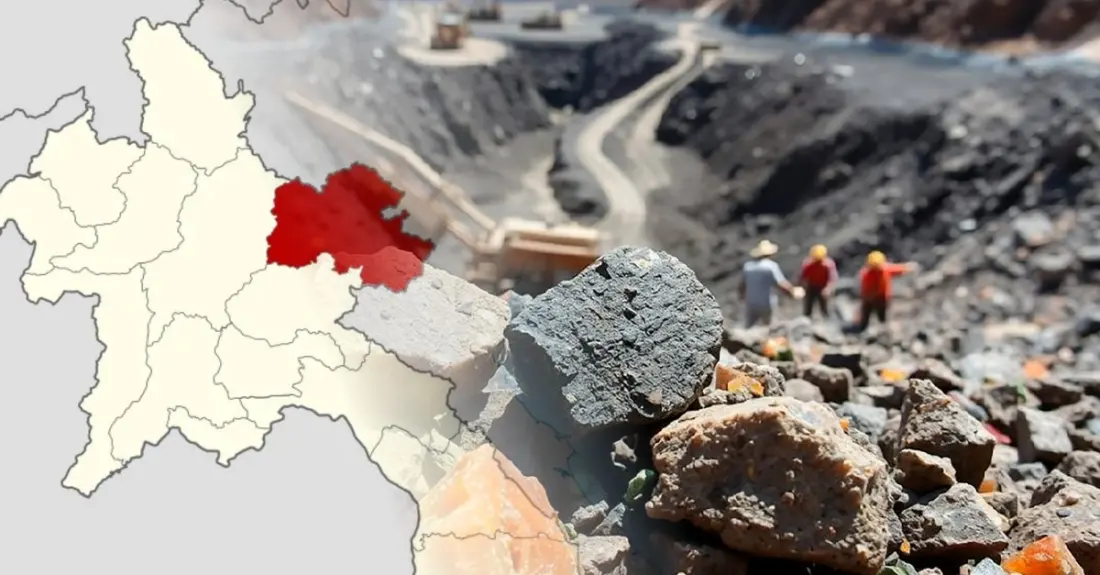
Travellers heading into Laos' remote northeast should know that rivers in Houaphanh province are effectively off-limits for now. On 1 November, two ponds holding chemical wastewater from rare earth mining burst in Thabpheung village, Xam Neua district, sending contaminated water into the Nam Vaen River. Within two days, village authorities had told residents of Meuangvaen, Nakao and Nakhoun to stop using river water entirely until inspections are complete.
As of 4 November, provincial officials and the Ministry of Industry and Commerce had still not identified which chemicals escaped or why the ponds failed. The timing matters for anyone travelling in the area: the Nam Vaen feeds into the Nam Xam, which crosses into Vietnam and becomes the Chu River on its way to the Gulf of Tonkin — one of the few Lao rivers flowing east rather than joining the Mekong system.
This is not an isolated incident. In early 2024, villagers near Teuam reported chemical pollution in the Taboun and Man streams, blaming the Laos-China Rare Mineral Development Company North 2 Limited. An affected-village group later said the leak had spread to the Vaen and middle Xam rivers, hitting 36 villages, killing fish, cattle and buffalo, and causing severe skin rashes. Mining was ordered suspended in March 2024, but villagers said it continued regardless.
The issue has reached national politics too. On 6 October, Houaphanh National Assembly member Soyphet Thongsombath told the Assembly that rare earth projects were still damaging the environment and residents' daily lives, and urged a freeze on new approvals. Less than a month later, the Thabpheung ponds burst.
Houaphanh is one of Laos' least-visited provinces — a historically significant region around Xam Neua with caves and mountain scenery — so few international travellers are directly affected. But the practical takeaway is straightforward: avoid contact with the Nam Vaen and Nam Xam rivers in the area until official notices clear them, skip fishing or swimming there, and stock bottled water if passing through. Anyone with trips planned around Xam Neua should check local updates before setting out, as the inspection timeline remains open-ended.