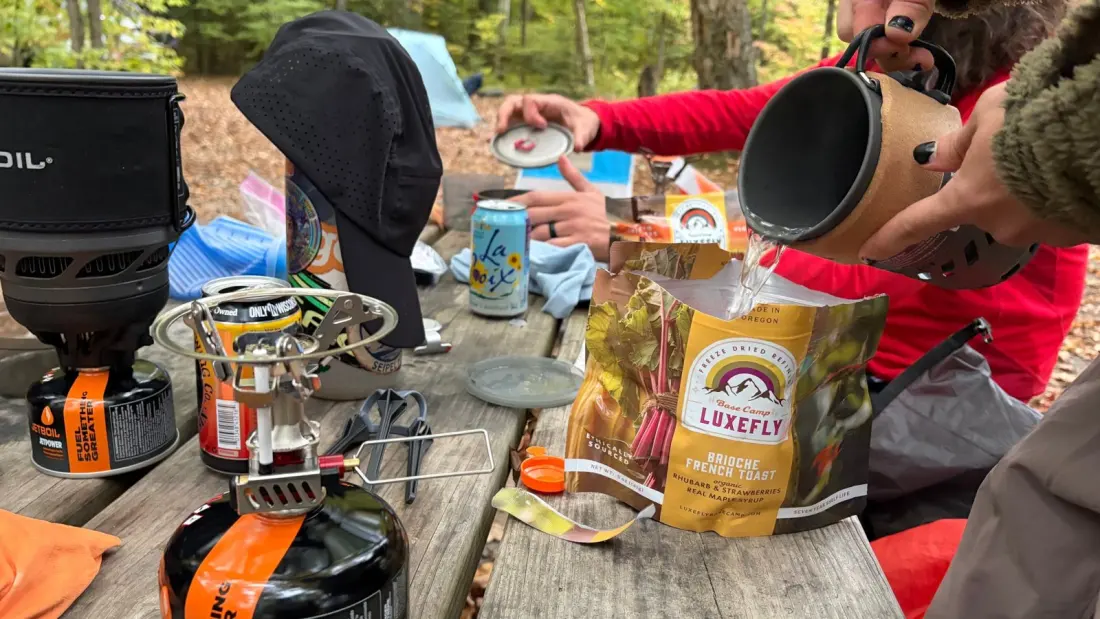
Two pouches on the shelf can sound equally hearty — chicken alfredo here, mushroom risotto there — yet deliver wildly different fuel. A registered dietitian and ultralight backpacker writing for Backpacker compared three popular store-bought dinners with two DIY recipes, and the gaps are big enough to matter on a multi-day hike.
The headline example: Peak Refuel's Chicken Alfredo Pasta packs 830 calories per pouch, while Mountain House's Beef Lasagna has just 440 despite both pouches being labelled as two servings. Good To-Go's Mushroom Risotto, a single-serving meal, comes in at 410 calories. Choose by flavour alone and you could be carrying hundreds fewer calories than your legs actually need.
Her first fix is simple: ignore suggested serving sizes and count the calories in the portion you'll actually eat. Second, look at calorie density — total calories divided by dry weight in ounces. The five meals she compared range from about 120 to 168 calories per ounce, and over a week-long trip that difference adds up to serious pack weight. Fat is the key here, at 9 calories per gram versus 4 for carbs and protein, which is why recipes built around nuts, oils and full-fat dairy powders punch above their weight. But more fat isn't automatically better; the aim is balance.
Carbohydrates deserve as much attention as the protein hype. Sports nutrition guidelines suggest 5 to 7 grams of carbs per kilogram of body weight daily for moderate exercise — roughly 340 to 475 grams for a 150-pound hiker — because glycogen is what powers steep climbs and long pushes. On the label, the lasagna beats the alfredo on carbs (60 grams versus 46) despite having half the calories, proof that no single number tells the whole story.
Protein matters for muscle repair on back-to-back hiking days, with 20 to 40 grams per meal a useful benchmark, but piling in extra doesn't speed recovery. And sodium, so often demonised at home, is a moving target on trail: sweat losses vary with heat and effort, so a meal with 1,180 milligrams (Mountain House) might serve you well on a hot day, while a low-sodium option like the DIY ziti at 324 milligrams isn't automatically healthier.
The takeaway for anyone planning a trek: treat dinner as one piece of a daily menu rather than hunting for a perfect pouch. If a meal is light on carbs or protein, cover the gap with breakfast, snacks or drinks. Read the label before you buy, calculate calories per ounce for your own recipes, and pack food you'll genuinely enjoy eating after a long day on your feet.