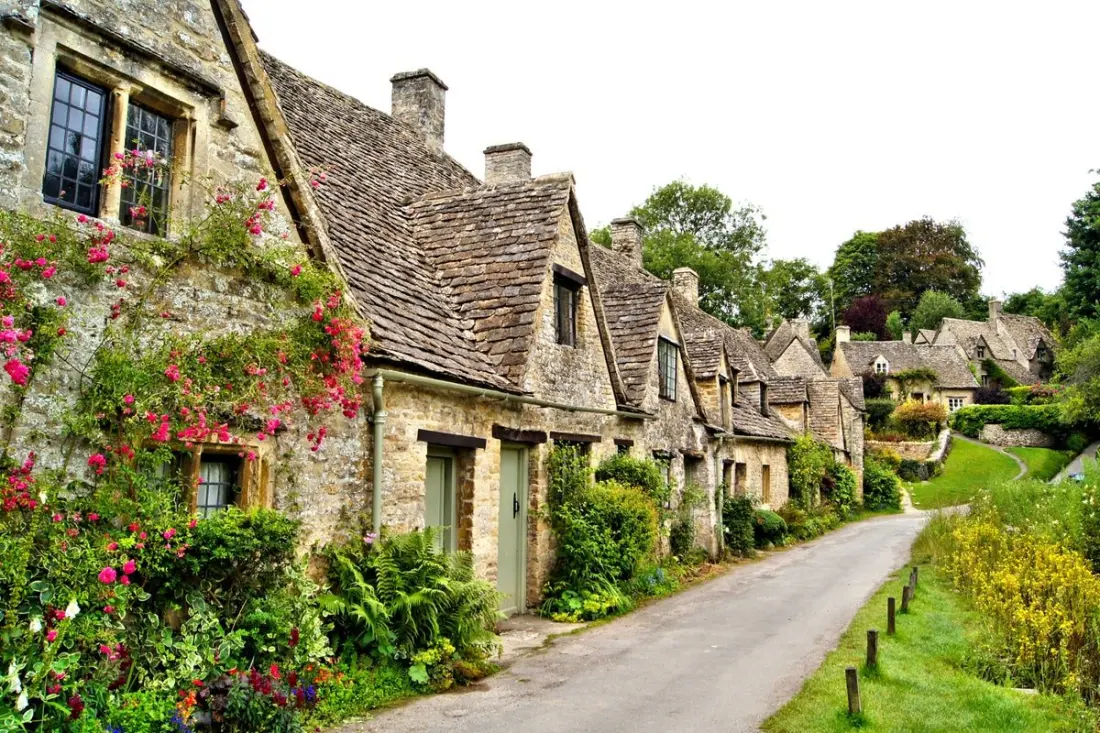
Arlington Row in Bibury, Gloucestershire, might be the most photographed stretch of houses in Britain. The 17th-century weavers' cottages, restored by the National Trust in the 1970s, have appeared on the inside cover of UK passports and on screen in Bridget Jones's Diary and Stardust. William Morris called Bibury the most beautiful village in England back in the 19th century. Now the fame has a cost, and the people living there are paying it.
Brian and Jill Skarda, residents of the Row for over 14 years, have announced they are leaving. In his farewell column for the local magazine, Brian described door banging, window peeping and a near-constant stream of selfie-takers. Since Covid, he says, visitor behaviour has worsened: on busy days the couple could barely get out of their front door or move their car. His final memory of life on the Row? Lowering his head to step outside and finding ten Japanese tourists lined up outside, all of whom bowed politely in return.
The scale of the problem is striking. Weekend visitor numbers can hit 20,000, many arriving on Cotswolds coach tours. The village has tried to fight back: trial drop-off coach parking, extended double yellow lines, and a plan to fence off the riverbank to keep swimmers out of the River Coln, where locals worry about wildlife. None of it has fully calmed things — residents still complain about oversized buses, drones buzzing overhead, and visitors climbing over private walls. Mr Skarda, a former parish councillor who spent years tackling inconsiderate parking (and sometimes abuse from drivers), summed it up bluntly: the village is being ruined by the very people who come to see it.
The cottages themselves have a longer history than most tourists realise. They began life in 1380 as a wool store and were converted for weavers roughly 300 years later. Today the National Trust rents them out, and if you want to see the Row from the inside rather than through someone's window, two of the cottages are available as holiday lets from £779 for a three-night stay.
The story is a useful cautionary tale for anyone heading to the Cotswolds. Bibury's crowds are heaviest at weekends and in summer, when tour buses converge on a village of a few hundred people. Travellers who genuinely want to experience the honey-coloured stone villages could do worse than visit midweek, arrive early in the morning, or spread out to quieter spots nearby. And if you do make it to Arlington Row, remember that people actually live behind those famous windows.
For the Skardas, the goodbye is bittersweet. They left hoping Bibury will one day find a balance that lets both residents and visitors enjoy the place properly — which is exactly the challenge facing every beloved small destination in the age of the group selfie.
Story first reported by The Independent Travel.