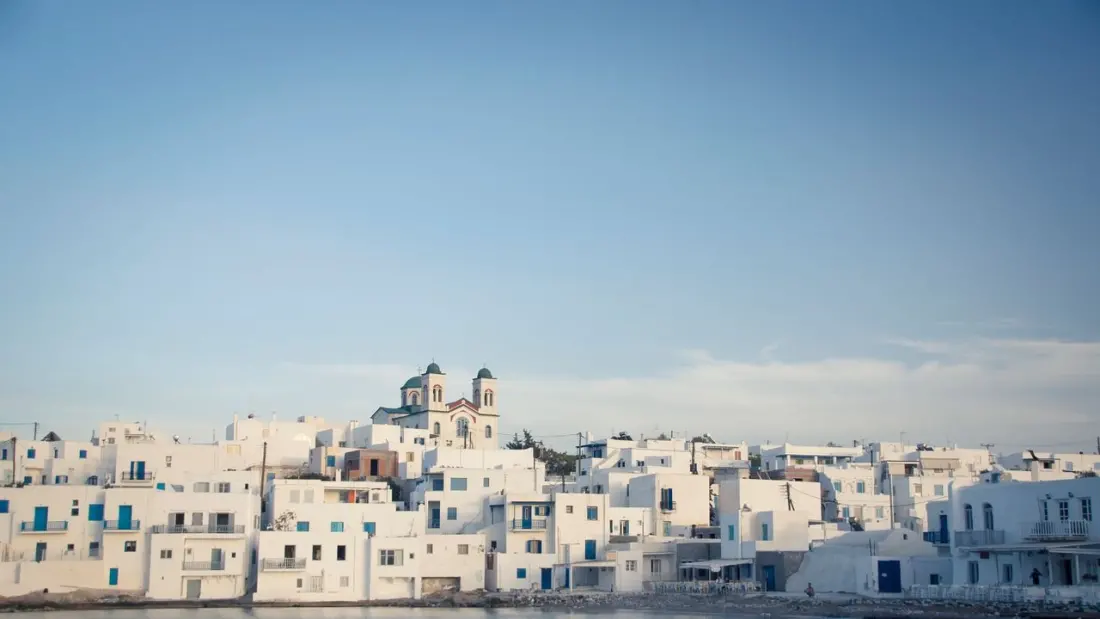
Artist Christiane Smit went to Paros on holiday in 2008 and simply never left. Nearly two decades later, the Dutch ceramicist runs a studio in the hillside village of Lefkes, rents out a minimalist clifftop villa called Moonhouse, and is restoring a roughly 100-year-old stone house in Kostos. Her verdict on the best time to visit the island: skip July and August entirely and aim for late spring or early autumn, when everything is open but nobody is in a hurry.
That's when Paros belongs to locals. Cafés fill with familiar faces, fishermen head out at dawn, and shopkeepers actually have time to talk. You'll also cross paths with a small crew of like-minded travellers and Greeks escaping Athens for a long weekend — but it's the residents who set the pace. Smit describes quiet village mornings scented with jasmine and bakery bread, church bells, and a shifting light that she channels directly into her ceramics.
The villages, not the port town, are where the island's character shows. Parikia is the social hub for year-round residents, but Lefkes, Marpissa, Prodromos, Kostos, and Dryos come into their own through seasonal festivals, religious celebrations, and community events. Smit's favourite off-season activity is walking the ancient Byzantine paths that link the villages — empty trails where the silence does half the work. The weather cooperates too: crisp sunny days, occasional rain that turns the hillsides unexpectedly green, and long views over a remarkably clear Aegean. The trade-offs are minor — winter storms can occasionally scramble ferry timetables, and some seasonal businesses shut until spring.
For food, head to the family-run taverna at Hotel Julia in Drios, a Smit favourite she calls authentic and unchanged across generations. Her ideal routine there: a swim in the water below, then a long lunch to the sound of the waves. In the colder months, order like a local. Revithada — a slow-baked chickpea stew — hearty bean soups, and goat or lamb braised in local wine appear as daily specials rather than menu regulars. The real move is to ask for the mageirefta, whatever is in the pot that day; every taverna has its own version, and that's what locals order.
Why it matters: Paros is one of the Cyclades' most popular islands in summer, and shoulder season swaps the crowds for a version of the place locals actually live in — plus lower prices, open tables, and trails to yourself. It suits slow travellers, walkers, and anyone more interested in taverna lunches than beach clubs. And if Smit's story is anything to go by, a single off-season trip can be persuasive: both her ceramics studio in Lefkes and the Moonhouse villa welcome visitors, so you can see the results of that inspiration up close.