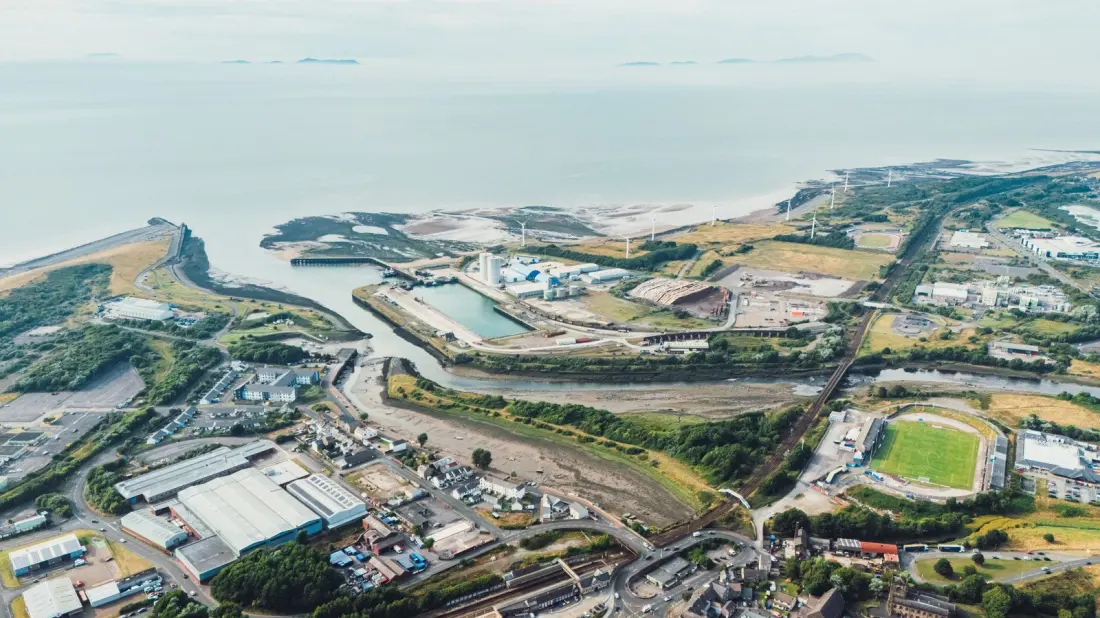
Workington spent centuries mining coal and iron ore — the trade dates back to the reign of Queen Elizabeth I — and rolling steel rails for Britain's railways. The last rail rolled off the line in 2006, but this port town at the mouth of the River Derwent hasn't stood still. Money has gone into pedestrian and bike-friendly streets, a new shopping centre, and permanent public art, all set against views across the Solway Firth towards Scotland.
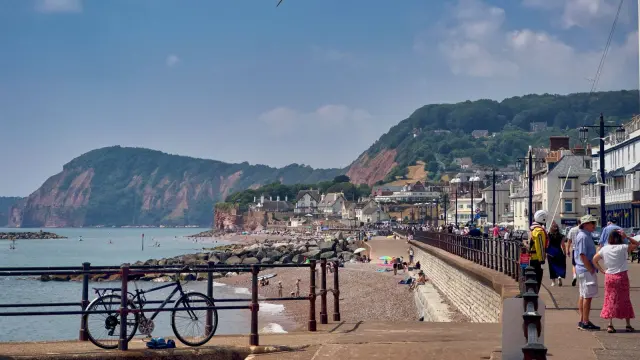
Start at Workington Beach, a pebbly stretch where, on clear days, you can see wind turbines dotting the firth and the hills of Scotland beyond. Nearby stands the steam engine house of Jane Pit, a 19th-century coal mine — a reminder of the industry that built this place. Birders should head to Siddick Ponds Nature Reserve, where freshwater and brackish ponds draw dozens of species, and just east lies Burrow Walls, a Roman fort from the 1st and 2nd centuries with remnants of a later medieval hall still visible.
The town's most storied ruin is Workington Hall, built in 1404 and famously one of Mary Queen of Scots' final stops in May 1568 before her capture at Carlisle Castle. She left the Curwen family an agate communion cup — the "Luck of Workington" — now displayed at the Helena Thompson Museum in Hall Park. Though the hall is now a shell, its Grade 1 listing protects it, and occasional guided tours run via the museum. The park itself is pleasant, with a rideable miniature railway operated on Sunday afternoons by the West Cumbria Guild of Model Engineers. In the holiday season, the Workington Lightworks event fills the hall's grounds with illuminated art, projection, music and dance.
The museum honours Helena Thompson, a local philanthropist and Workington's first female magistrate, with her antique dress collection alongside the famous cup and a cabinet supposedly crafted from Mary Queen of Scots' bed. Downtown, look for "Lookout," Andy Plant's giant sphere-cum-clock whose rotating minute hand points to the time on the ground, chiming composed music every half hour, plus the 13-foot "Coastline" sculpture of resin and granite, whose matching seats glow at night.
Workington is a solid pick for travellers who like their coastline layered with history rather than polished for postcards — think ruins, birdlife and shingle beaches rather than arcades. It's also a handy base: the Lake District lies to the east (Windermere is an easy add-on), and the King Charles III England Coast Path passes through town in both directions. Getting there takes commitment — over six hours by car from London, or around two and a half from Glasgow — but the Cumbrian Coast railway line and local buses make car-free exploring feasible once you arrive.
Story via Islands.