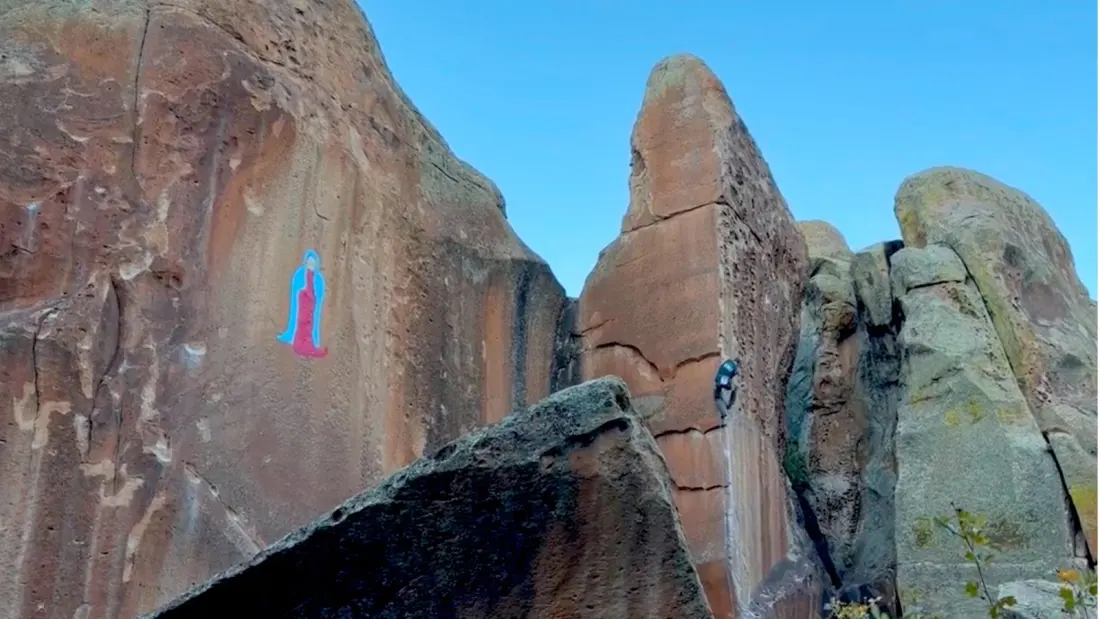
A canyon with self-flagellating monks, a painted Madonna on a rock wall, and a road called South Witches? Penitente Canyon in Colorado's San Luis Valley might be the most atmospherically unsettling day hike in the state, and it's entirely doable on a regular weekend.
The canyon got its name from Los Penitentes, a secretive Catholic brotherhood that occupied the area in the late 1800s. The group was known for dramatic acts of devotion, including self-flagellation and re-enactments of the crucifixion of Christ, staged right in the canyon itself. The brotherhood left long ago, but their legacy remains in the name and a prominent painting of the Sacred Mother high on a rock wall, which visitors can still see today.
Despite the ghostly backstory, this is a genuinely well-rounded outdoor destination. The trail network serves hikers, mountain bikers, and rock climbers, and Backpacker's Will Brendza, who solo-hiked the canyon this October, also spotted wildlife and ancient rock art along the way. Camping is easy to arrange: there's a paid campground right at the trailhead, plus free dispersed camping on BLM land along South Witches Road, which runs adjacent to the canyon.
Part of the appeal is what surrounds it. Penitente sits in the San Luis Valley, the highest alpine valley in the world and a region with a reputation for oddness: spiritual retreats, UFO sightings, cattle mutilations, and even an alligator farm. It's also a practical base for bigger adventures. Great Sand Dunes National Park and Preserve is only about a 55-minute drive from the trailhead, and the valley provides access to several of Colorado's 14,000-foot peaks.
For travellers, this works best as an autumn or shoulder-season trip with a Halloween-tinged theme: a morning hike past religious iconography and rock art, an afternoon drive to the dunes, and a night of free camping under very dark valley skies. Rattlesnakes are present in the canyon, so watch your step in warmer months and stay on the trail. It's remote, so bring your own water and supplies; the reward is solitude and a landscape most Colorado visitors never see.