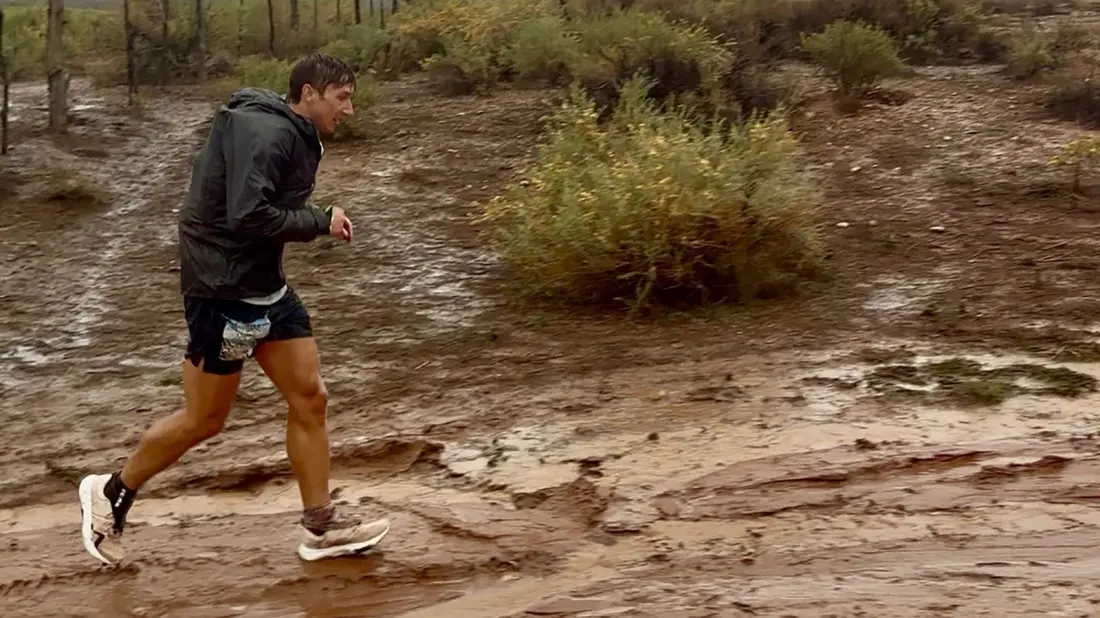
With fewer than 30 miles to go and the course record in reach, ultrarunner Aaron Kubala watched the Moab 240 turn from the race of his life into a fight to stay upright. The 31-year-old was leading the 240-mile Utah event outright on October 11 when a violent storm swept over the La Sal Mountains east of Moab, forcing organisers Destination Trail to cancel the race entirely.
Kubala had led from the gun and was running ahead of the course record pace (55 hours, 49 minutes, 48 seconds) while chasing the 200-miler Triple Crown record across the Tahoe 200, Bigfoot 200 and Moab 240. The season carried extra weight: after losing his mother weeks before the Tahoe 200 in June, he'd turned his racing into a fundraiser for breast cancer research.
By mile 180, he'd been soaked in rain for 12 hours, and above 10,500 feet the weather turned vicious. Winds gusted to 50 mph through canyons filled with thousands of dead trees. Kubala described hearing hundreds of trees crack and fall in the dark — one landed ten feet behind him, another five feet in front. His pace collapsed from around 12-minute miles to 40 minutes per mile as he scrambled over and under timber. Somewhere in there, he says, his brain switched from race mode to survival mode.
He had warned organisers at the Pole Canyon aid station that the trail was impassable, so when word came through that the race was cancelled, he wasn't surprised. He even briefly considered finishing the remaining stretch on his own — it was mostly downhill — but chose to comply and head to an aid station. He's blunt about other runners who lobbied to finish unofficially: most never saw how dangerous the high country was, and anyone injured by a falling tree would have drained search and rescue resources.
The story didn't end at the finish line that never was. Kubala had suffered back spasms on day two, then noticed blood in his urine. He checked into the emergency room in Moab and was airlifted to University of Utah Hospital in Salt Lake City, where he was diagnosed with rhabdomyolysis — a serious muscle-breakdown condition doctors suspect may be linked to 12 hours of hypothermic shivering. A week later he was still hospitalised, and he hopes organisers will award finishing positions based on where runners stood when the race was called.
For travellers, it's a vivid portrait of Moab's split personality: postcard desert running for two days, then genuinely alpine danger in the La Sals. The mountains around Moab sit above 10,000 feet and can dish out winter-grade storms even in October, so anyone hiking or running there in autumn should carry layers, check weather alerts and know when to turn around. As Kubala's account makes clear, the locals — the weather and the dead trees — don't negotiate.
As told to Frederick Dreier, Outside Online