While the 20th Francophonie Summit ran in Phnom Penh from November 14-16, the most interesting part for visitors wasn't inside the conference halls — it was the Village Francophone, a cluster of cultural exhibition spaces where member countries showed off what makes them them.
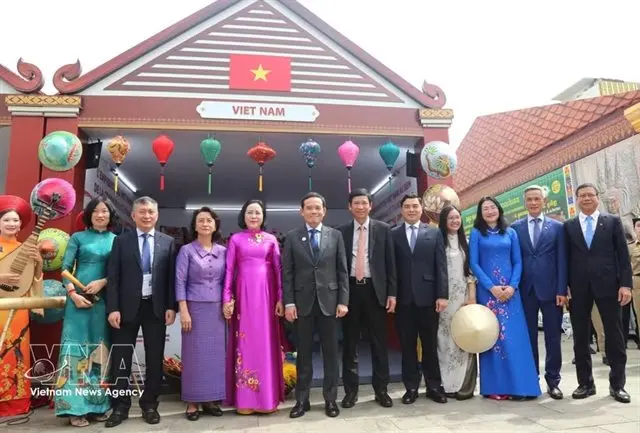
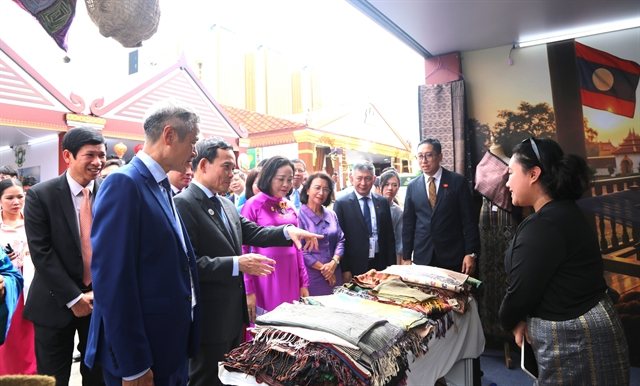
On November 15, a high-ranking Vietnamese delegation led by Trần Lưu Quang, Politburo member and Secretary of the HCM City Party Committee, toured the displays alongside Cambodian Minister of Women's Affairs Ing Kantha Phavi and culture ministry representatives. They visited the spaces of host Cambodia, Laos, the International Organisation of La Francophonie and the Wallonia-Brussels delegation, as well as Việt Nam's own pavilion.
The Vietnamese space was the richest of the bunch for craft lovers. On show: traditional musical instruments, ethnic costumes, lacquerware made with bamboo, wood, coal, eggshell, gold and silver, rattan and bamboo weaving, ceramics from the famous Bát Tràng kilns and Chăm pottery, and Đông Hồ folk woodblock paintings — a craft added to UNESCO's Intangible Cultural Heritage in Need of Urgent Safeguarding list, meaning very few artisans still practise it.
Officially, the tour was cultural diplomacy: Việt Nam positioning itself as an active Francophone member and using culture as a bridge to deepen ties with other members. But it also amounts to a curated shopping list for anyone heading to Việt Nam. Every item on display — Đông Hồ prints from Bắc Ninh, lacquer from Hanoi and Huế, ceramics from the Bát Tràng village just outside Hanoi — is something travellers can see being made, and often try making themselves, on the ground.
For Cambodia, meanwhile, the summit and its village were a chance to present Khmer culture to a francophone audience that includes plenty of long-haul visitors, reflecting Phnom Penh's ongoing mix of Khmer, French and regional influences.
Why should a traveller care? Because events like the Village Francophone signal where countries are investing in their cultural identities — and Việt Nam's display confirms that its traditional craft villages remain front and centre of how the country wants to be seen. If your trip includes Phnom Penh and you're tempted by a onward hop to Việt Nam, the pavilion's highlights double as an itinerary sketch: a morning at Bát Tràng's pottery workshops, an afternoon in Hanoi's old quarter hunting Đông Hồ prints, and a lacquerware workshop in Huế or HCM City.
The summit itself has wrapped, but the takeaway stands: both Cambodia and Việt Nam are actively courting cultural visitors, and the craft traditions on display are accessible, affordable and easy to fold into a Southeast Asia trip. Just check that any Đông Hồ prints you buy are genuine hand-printed works from the village artisans — with the craft on UNESCO's urgent safeguarding list, authentic pieces are becoming rarer and more worth supporting.
Story reported by Vietnam News Life.