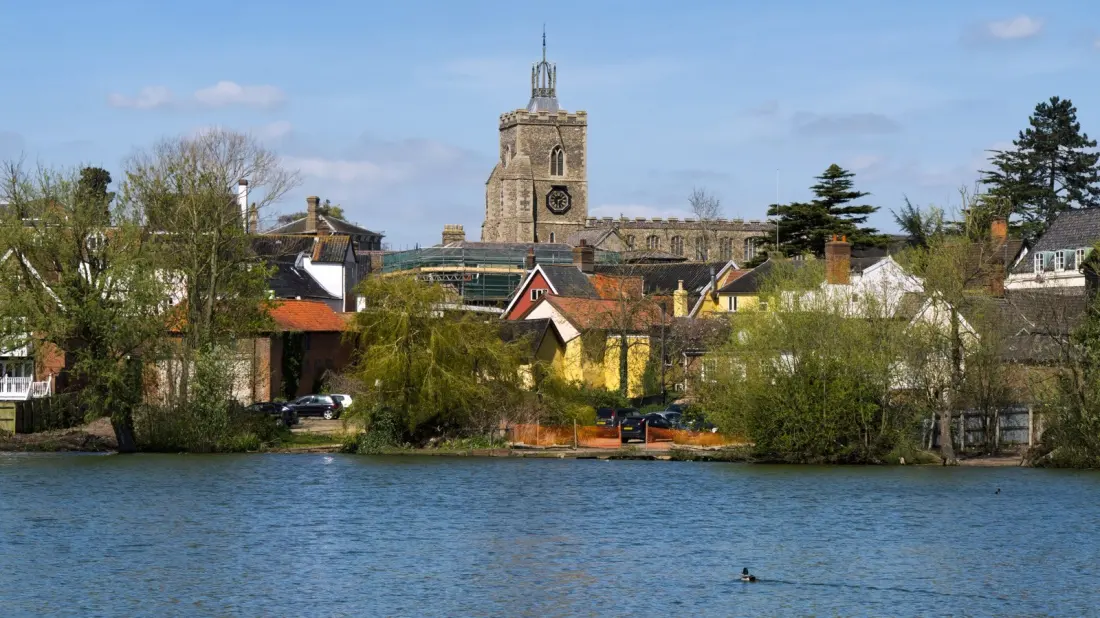
Halfway between Norwich and Ipswich, the Norfolk town of Diss packs an unusual amount of history into a small footprint. Its centrepiece is Diss Mere, a six-acre natural lake that has shaped the town since its earliest days — the name itself comes from an Old English word for dyke or ditch, a nod to the water at its heart. Settlement here dates back at least to Roman times, and the town earns a mention in the Domesday Book of 1086.
Diss became a market town in the 1100s and never stopped being one. The Diss Heritage Triangle — framed by St. Mary's Church, the historic Corn Hall and the Diss Museum — still hosts a Friday market (8:30 a.m. to 3 p.m.) selling clothing, local produce, cheese and garden goods. Around it, a cluster of independents keeps things interesting: Designermakers21 lets you meet working artists, buy their pieces and even take a workshop; Diss Publishing Bookshop has been trading since 1864; and there's a women's preloved boutique plus a garden-themed homewares shop called Skincense.
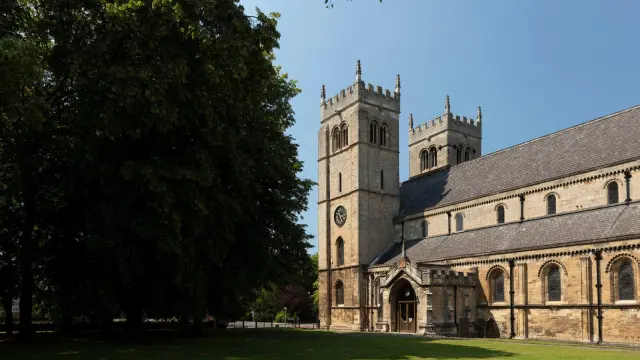
The architecture rewards slow wandering. Timber-framed buildings survive across town, including Dolphin House on Church Street, built around 1520 as a merchant's home and later a pub, now home to restaurants and small businesses. Above it all rises the Perpendicular Gothic steeple of St. Mary's Church, largely built in the 14th and 15th centuries with Victorian windows added later.
For anyone willing to walk two miles into open farmland, the 13th-century church of St. Andrew at Frenze is a highlight. It sits alone in a field, loaded with medieval and Tudor detail, brass memorials — and a curious door ring that once granted sanctuary to fleeing criminals who managed to reach it.
Why bother with Diss when bigger names are close by? Because it's still a working market town, not a preserved set piece. Medieval neighbours like Lavenham, 30 miles away, trade on frozen-in-time charm; Diss simply carries on its Friday-market routine century after century, which gives it a lived-in feel that's rarer than it sounds.
It also works brilliantly as a base. Norwich — a UNESCO City of Stories with the nearest major airport — is about 24 miles north, Ipswich roughly the same to the south. If you've got a car, point it 25 miles northeast to Beccles, the gateway to the Broads National Park, and continue to the ruins of St. Benet's Abbey near Ludham, an early-11th-century monastic site in classic Broadland scenery.
Diss suits travellers who like their history unpolished: a lake, a market, independent shops and quiet churches, all reachable by train on the Norwich–London line. Come on a Friday for the stalls, leave room in the bag for a bookshop find, and give yourself an afternoon for Frenze.