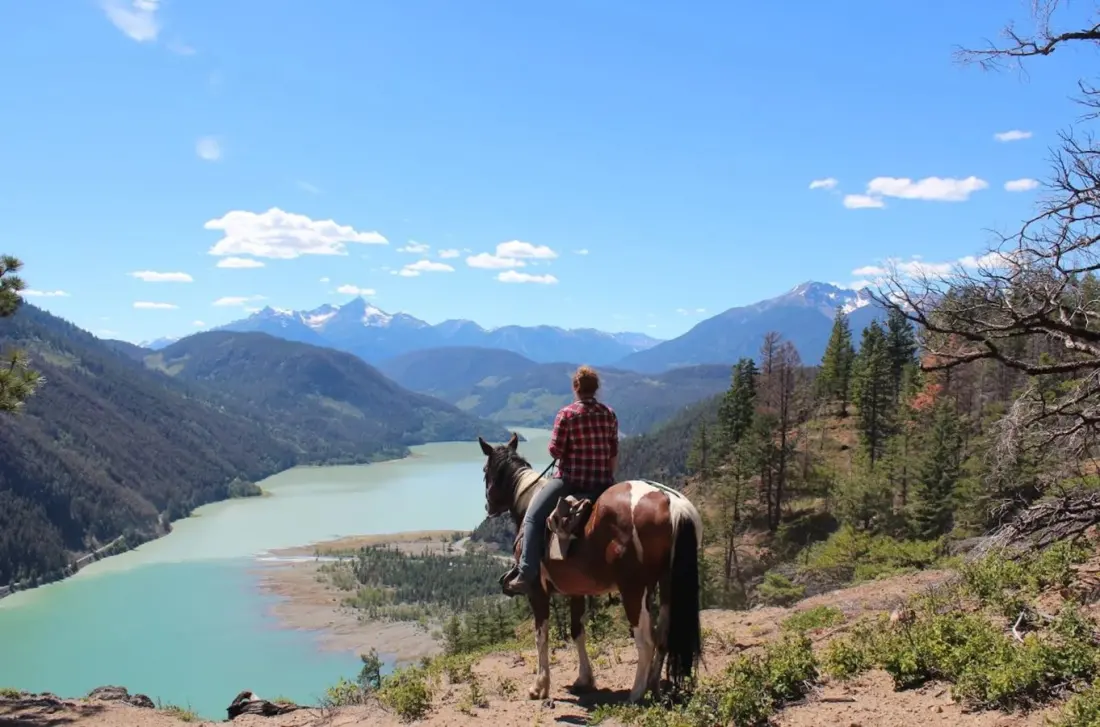
In the remote Chilcotin region of British Columbia, an eco-tourism outfit called Wilderness Trails has found a simple trade that travellers seem to love: a few hours of conservation work in exchange for free camping. The company, based in Gold Bridge and operating for over 35 years, ran the program for the first time in summer 2026, and six volunteers planted around 2,000 Douglas fir trees. It's set to run again in summer 2027.
The idea came from a real problem. Wildfires swept through the region in 2023, and parts of the burn zone are struggling to regenerate on their own — the local terrain is a dry slope where young trees have a hard time getting established. When a nearby mill offered up saplings that needed planting, Wilderness Trails saw a chance to hand the work to guests and make it part of the trip.
What makes this interesting is that the tree planting isn't an add-on. Every visitor, whether they come for horseback expeditions, wildlife tracking, mountain biking, alpine hiking or fishing, starts with an orientation to the Chilcotin Ark — a large protected wilderness area where the company estimates roughly 1,000 mountain goats live. British Columbia as a whole holds about half of the world's mountain goat population, which gives you a sense of how ecologically significant this corner of the province is. Guides use that context to explain why certain activities are restricted in places, and why one change to an ecosystem ripples through all of it.
The hands-on part is where it clicks, according to office manager and guide Lea Dahlke. During planting sessions, guests learn how to dig, position each sapling and protect the roots so the trees actually survive. Wildlife tracking works the same way: you learn which animals have passed through, why they favour certain terrain, and what their presence says about the health of the habitat. Guests, she says, take ownership of the work — its challenges and its wins.
There's also an unplanned benefit. After a week or two without cars and phones, guests consistently mention the silence — birdsong and wind, and not much else. Several go home and start deliberately seeking out quiet, which might be the most portable souvenir on offer.
Why it matters: this is a good template for anyone bored of passive sightseeing. Participatory conservation trips give you skills, a physical stake in the place you visited, and a much better story than a photo of a viewpoint. It's not a conventional holiday — you'll be tired, possibly muddy, and you'll come home knowing how to plant a fir tree properly. If that appeals, watch for the program's return in summer 2027, and note that similar volunteer-for-stay models exist at conservation projects worldwide, so you can look for equivalents closer to home too.