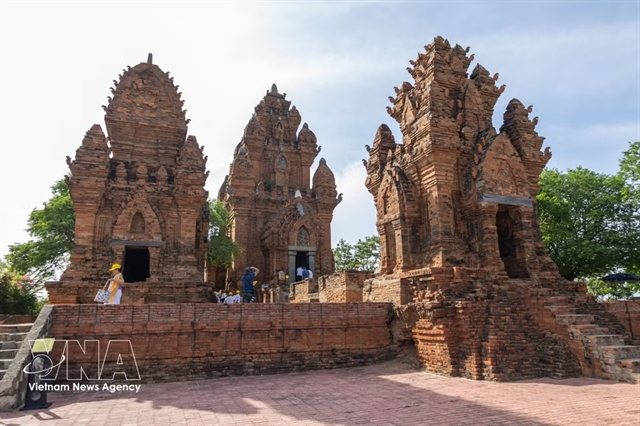
On a hill above Đô Vinh ward in Khánh Hòa Province, a cluster of 700-year-old brick towers still does its original job. Pô Klông Garai isn't a museum piece roped off from the world — it's a working temple where the Chăm community holds ceremonies to this day, and one of the best-preserved examples of Chăm architecture anywhere in Vietnam.
The complex on Trâu Hill has three main structures: the Gate Tower, the Fire Tower and the Main Tower. The Main Tower is the showstopper, rising about 20.5 metres with a square base and tiered roofs that taper as they climb. The Fire Tower is the odd one out, with a boat-shaped curved roof you won't see on the others. Look closely at the brickwork and you'll find columns, niches and lotus motifs carved directly into the walls — all the more impressive given the towers date to the late 13th or early 14th century.
The site started life as a Hindu shrine to Shiva before becoming dedicated to King Pô Klông Garai, remembered for improving agriculture and irrigation in the region. The most intriguing object inside is the Mukhalinga, which fuses the linga symbol with the face of the king himself — a neat example of how the Chăm adapted Indian religious ideas to their own rulers. Researchers describe it as architecture and religious symbolism working together, not just decoration.
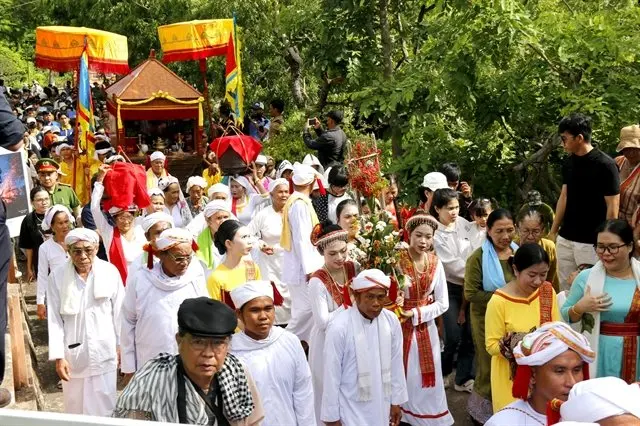
What makes Pô Klông Garai special for visitors is that it hasn't gone quiet. Ceremonies honouring the king are still held here, and the annual Kate festival draws big crowds of locals and travellers alike. Locals like Dương Ngọc Khả Quyên, a Chăm woman from nearby Phước Hậu Commune, see the towers as a vessel for Chăm history and identity — something worth protecting so younger generations understand their roots.
The site was declared a special national relic in 2016, and experts argue conservation should respect the original fabric of the buildings while keeping the Chăm community involved in how the place is run. For travellers, that means you're not just looking at old bricks — you're walking into a living tradition, so treat it as one: dress modestly, keep your voice down if a ceremony is under way, and ask before photographing rituals.
If you're headed to south-central Vietnam, the towers pair well with the region's beaches and the Chăm cultural sites scattered across the former Ninh Thuận area. Come during Kate festival season for the fullest experience, or visit early in the day to beat the heat on the exposed hillside.