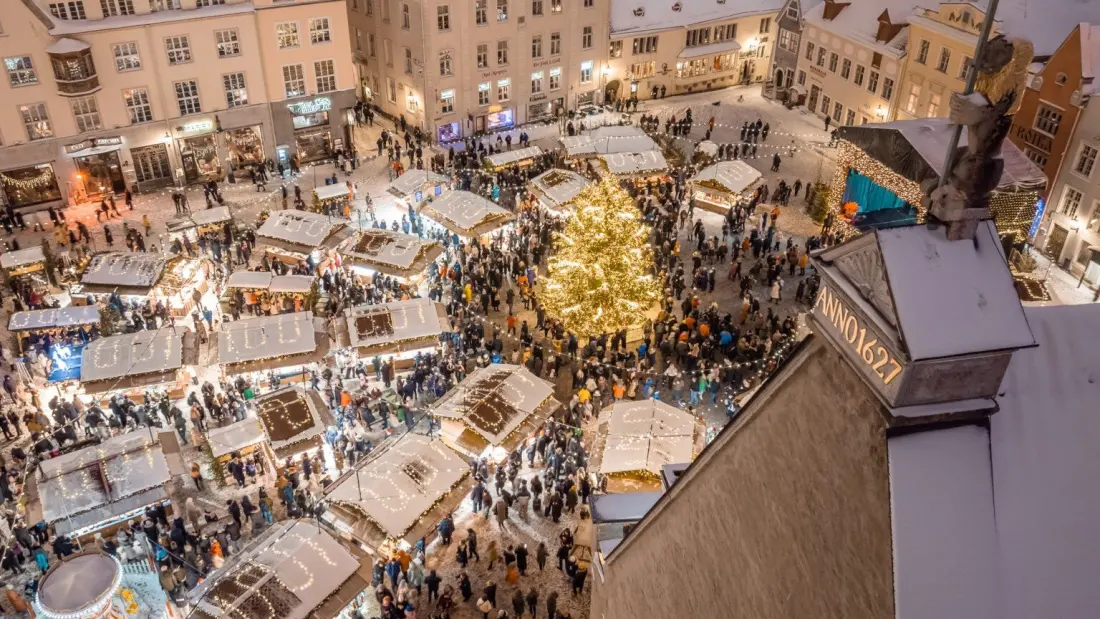
Tallinn's Town Hall Square fills with festive stalls from 20 November, and this edition of the city's Christmas market carries extra weight: after 26 years, it is the last one in its current shape. From 2027 the city plans to run the market itself instead of handing it to a private organiser, promising a noticeably different concept.
The centrepiece, as always, is a 15-metre Christmas tree brought in from the village of Hara in Lahemaa National Park. Around it sit stalls selling Estonian handicrafts — handmade marzipan, knitted sweaters and hats, wool socks, ironwork — alongside the food and drink that pull crowds back each winter.
Mulled wine is the headline act here. The market pours dozens of varieties, both boozy and alcohol-free: cranberry and cherry, a raspberry and blackcurrant blend from the Setomaa region, even pumpkin, with black cherry joining the line-up this year. Food runs from proper Estonian Christmas fare — sauerkraut, blood sausage, roasts — to more substantial plates like lamb chops, slow-cooked pork belly, chicken roulade, turkey legs and red deer sausage. Everything can be eaten on the spot or taken away.
There's theatre too. Santa moves into his market house at the start of Advent and hands out sweets to children who recite a Christmas verse for him. On Advent Sundays, candles are lit with wishes from city and church figures, and the tradition everyone waits for comes on Christmas Eve at noon, when mayor Peeter Raudsepp proclaims the Christmas Peace from the Town Hall.
Practicalities: the market runs daily from 20 November 2026 to 6 January 2027, open 10am to 8pm, with hot drinks served until 10pm — or 11pm on Fridays and Saturdays.
Why does the format change matter to visitors? The current organiser's relationship manager, Marjen Võsujalg, told Estonian World that next year's market will be funded from the city budget — taxpayers' money — with a total cost around €9 million, €6.3 million of it covered by Tallinn itself. What that means for the atmosphere, the stall mix and the mulled wine count is an open question. If you've been meaning to experience the market as it has been for a quarter-century, this winter is the window.
It's a good excuse for a Baltic city break anyway: Tallinn's medieval Old Town is at its most atmospheric in the cold months, and the market sits right in its heart, an easy walk from hotels, cafés and the ferry terminal.