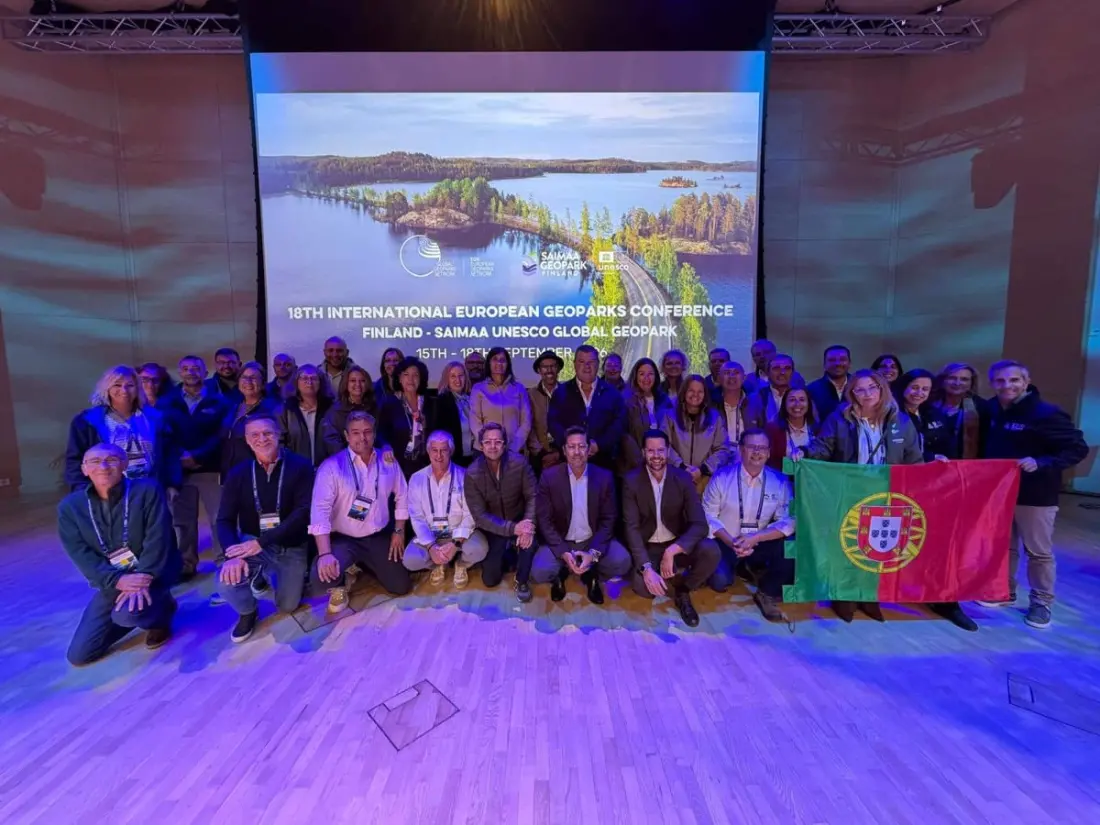
The Algarve has a new badge for its collection — and this one celebrates the interior, not the beach. The Algarvensis UNESCO Global Geopark has now formally received its certificate, handed over by the Global Geoparks Network at the 18th European Geoparks Conference in Finland's Saimaa Geopark, held 16-18 September. UNESCO had already added the territory to its 2026 list of designated geoparks earlier this year, so the certificate closes the loop on a process years in the making.
The geopark sprawls across three municipalities — Albufeira, Loulé and Silves — and its creation has been a genuine team effort, pulling in schools, researchers, local producers and community groups. At the Finland conference, delegates from Algarvensis presented work on science, education, conservation and tourism, and showcased regional products to an audience drawn from geoparks across Europe and beyond.
So what exactly are visitors getting? Roughly 330 million years of geological drama, for a start. The territory's rocks record tectonic shifts, volcanic episodes, sedimentation and shifting ancient shorelines. Two highlights stand out: tsunami deposits at Lagoa dos Salgados, linked to the catastrophic 1755 Lisbon earthquake, and the Loulé Salt Mine — by UNESCO's description, the deepest point in Portugal that anyone can visit.
The designation isn't purely geological, either. UNESCO also flags the area's Mediterranean ecosystems and its cultural layers: megalithic monuments, Roman and Islamic-era remains, traditional villages, crafts and food. Albufeira's mayor, Rui Cristina, framed it plainly — the recognition gives value to a heritage that is part of the region's identity, and the municipalities hope it will boost local products and traditional knowledge in ways that benefit residents too.
For travellers, the real appeal is the push inland. Most Algarve holidays cluster on a thin strip of coast; the geopark is essentially an official invitation to explore quieter territory beyond it, where you can walk among older stones than any resort and taste a food culture that hasn't been sanded down for tourists. If your Algarve pattern has always been beach, restaurant, repeat, this gives you a ready-made reason to rent a car and head for the hills.