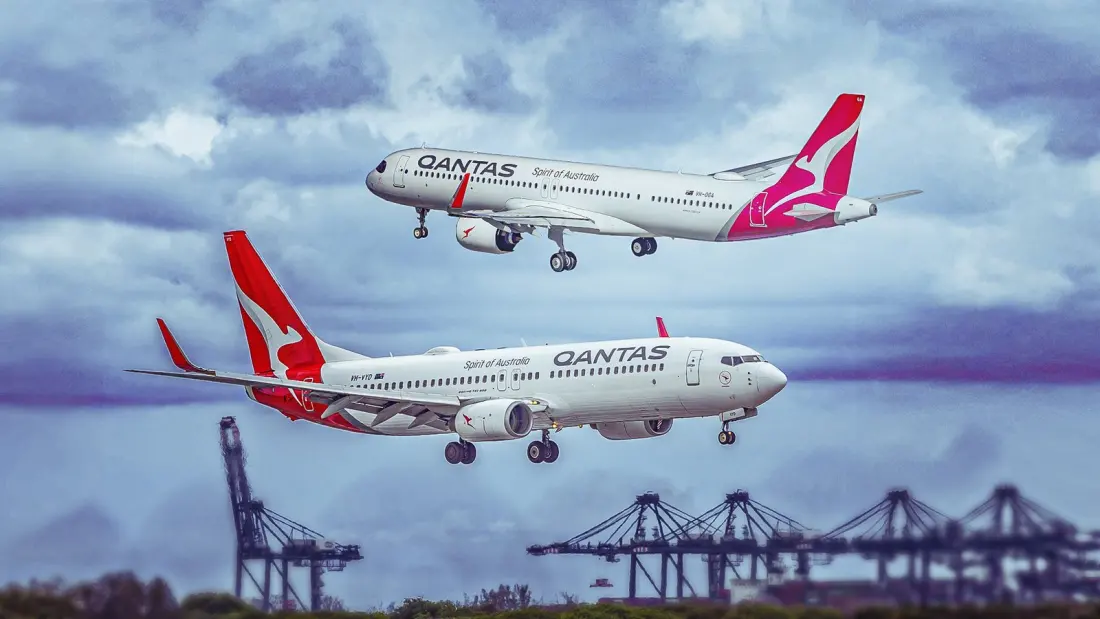
Qantas has confirmed it really is retiring its Boeing 737-800s in favour of the Airbus A321XLR, a jet most airlines keep for long international routes. Australia's flag carrier is doing the opposite: flying most of its XLRs on busy domestic trunk routes, with extra range held in reserve for longer sectors when needed.
The switch sits inside Project Winton, the airline's narrowbody renewal programme named after the Queensland town where Qantas was founded in 1920. What began as an order for at least 20 A321XLRs has grown to 48, with an extra 20 added in August 2025 to speed up 737 retirements. Six aircraft arrived during the 2026 financial year, and the first 737-800 exits began in late 2026 under a seven-year deal to sell 44 airframes and 88 CFM56-7B engines to aftermarket firm AerFin.
Why bet on an extra-long-range jet for hops between Sydney and Melbourne? The 737 fleet carries nearly half of all Qantas passengers each year, so upgrading it moves the needle commercially. The A321XLR and QantasLink's A220-300s are projected to add AUD 150-200 million to annual earnings by 2027. The XLR also offers up to 8,700 km of range — roughly 3,000 km more than the 737 — letting Qantas serve thinner international routes like Brisbane–Manila without committing a widebody. That service has slipped from October 2026 to February 1, 2027, with A330-200s filling the gap.
Cabins will vary by route. Early domestic jets carry 197 or 200 seats with 20 recliner-style business seats, while 16 aircraft due from 2028 will get lie-flat business suites with sliding doors and 19-inch screens for longer sectors. Not every detail has landed smoothly: after scrutiny over economy lavatory ratios, Qantas added a third bathroom from the fourth delivery, cutting three seats and triggering retrofits for earlier jets.
Don't expect an overnight swap. Some surviving 737-800s will receive cabin refreshes from 2027, and Qantas has built slack into its retirement schedule in case Airbus deliveries slip on supply-chain issues. Analysts also debate the choice — some suspect cargo considerations played a part, though adding the XLR's rear fuel tank actually reduces underfloor cargo space.
For travellers, the practical upshot: if you fly Qantas domestically through the late 2020s, you'll increasingly find yourself on a newer, quieter Airbus with more seats and — on longer routes from 2028 — proper lie-flat business suites. Frequent flyers on short hops should note early domestic XLRs have recliners, not beds, so seat choice matters when booking.