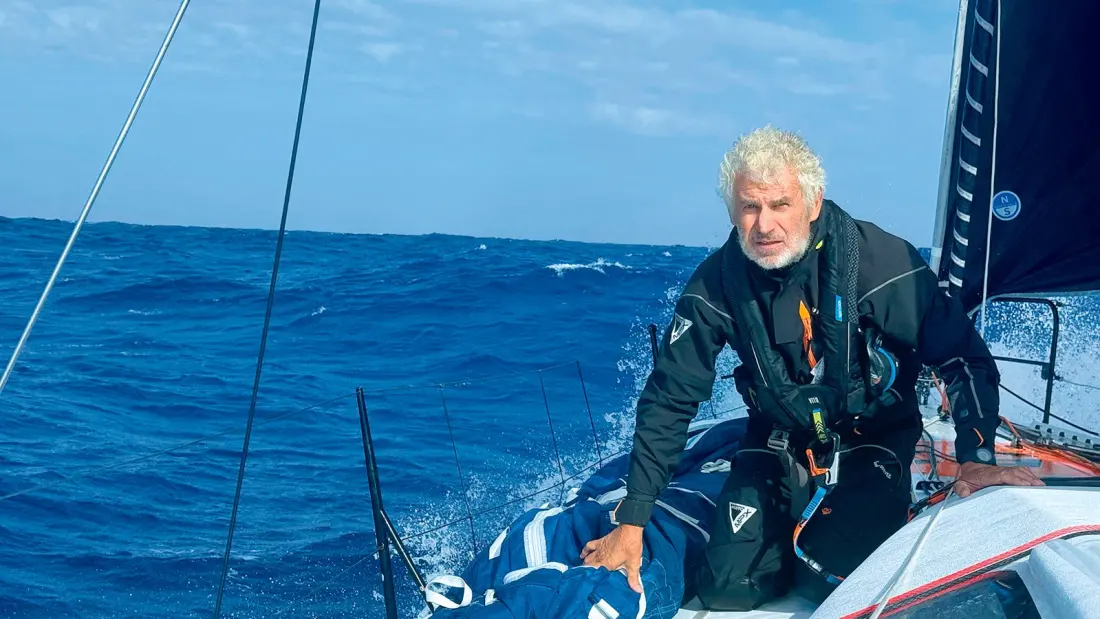
Skipper and writer Rupert Holmes has written a vivid account of racing the Globe 40 — a round-the-world yacht race via the great southern capes — aboard Jangada 40, a 40-foot Class40 he co-skippers with Richard Palmer. The pair covered 34,000 miles in 32 weeks, racing double-handed from Lorient in France to a finish that took in Cape Horn, the Southern Ocean, Sydney and Reunion.
The race is far from a gentle circumnavigation. Four days from the Cape of Good Hope, Holmes describes deliberating whether to push through 40-knot forecasts against the Agulhas current, which can run at five knots and produce breaking waves capable of damaging large ships. A 60-70 mile wide eddy of wind-against-current proved unavoidable: the boat surfed at 20 knots, slamming into waves so violently the crew wondered how long the structure would hold. In the South Atlantic they recorded gusts of 55 knots and a knockdown their instruments measured at 70 degrees.
Not everything was survival. The Pacific leg was a highlight: a three-week sleigh ride with repeated 300-mile days and peak speeds of 27 knots, albatross gliding alongside, and a dramatic finish off Valparaiso where three boats crossed the line within an hour of each other. Up front, the newer scow-bow boats were in another league — Belgian Ocean Racing – Curium set an outright 24-hour monohull world record for the class, covering 459.78 miles at an average of 19.2 knots.
Holmes' account also underlines how much preparation determines who makes it round. A career-threatening series of setbacks — an injury, a flooded boat in Antigua, a crane whack on unloading in Lorient — cost the team much of 2024. A full winter refit in Cowes, stripping the boat to its shell and adding watertight bulkheads, proved decisive in keeping it reliable through the race. Even so, they lost spinnakers, waited six days for seas to calm enough to repair a bobstay near Bass Strait, and were pipped by two hours on a triple-points leg into Sydney.
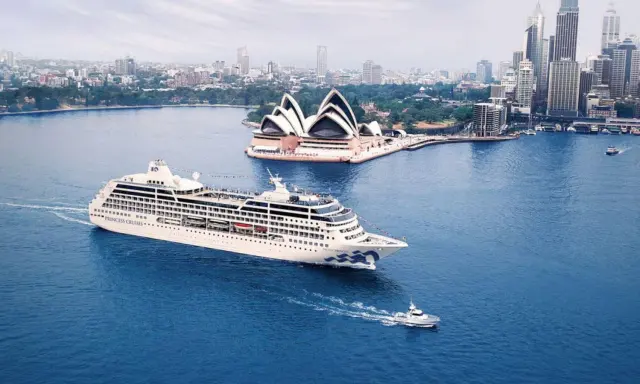
Why should a traveller care? Because stopovers are half the story: Christmas and New Year in Sydney, and a memorable stop on Reunion with its volcanic scenery, gave the crews time with family and a rare sense of camaraderie across the fleet. And for anyone tempted by offshore sailing themselves, Holmes' account shows the smallest, most accessible class of boat capable of world-circling speed racing — and the mindset needed: regulating your emotions through ten days of 'temporary' misery until the sun comes back.
For the rest of us, it's an armchair epic — one to read with a curry, as Holmes and Palmer did when they first hatched the plan after Cowes Week three years ago.
Reported by Yachting World.