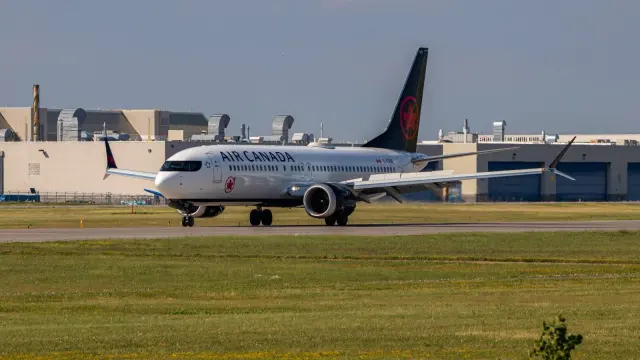
WestJet has quietly become one of the biggest narrowbody operators across the Atlantic, running its Boeing 737 MAX 8s on a growing web of European routes — all with recliner seats only. While American Airlines and JetBlue fit lie-flat suites onto their Airbus A321LR/XLR transatlantic jets, the Canadian carrier has taken a deliberately different approach. Over the past summer it grew its European network by 44% year-on-year using nothing but the MAX 8, making it the second-largest narrowbody transatlantic operator after Icelandair.
The expansion added eight new nonstop routes from four Canadian airports. Halifax gained connections to Lisbon, Madrid and Copenhagen; Toronto picked up Glasgow, Ponta Delgada in the Azores and Cardiff; Edmonton and Winnipeg both link to Reykjavík. These are classic 'long and thin' leisure routes — places where a full widebody would be hard to fill, but where a 160-180 seat single-aisle jet works.
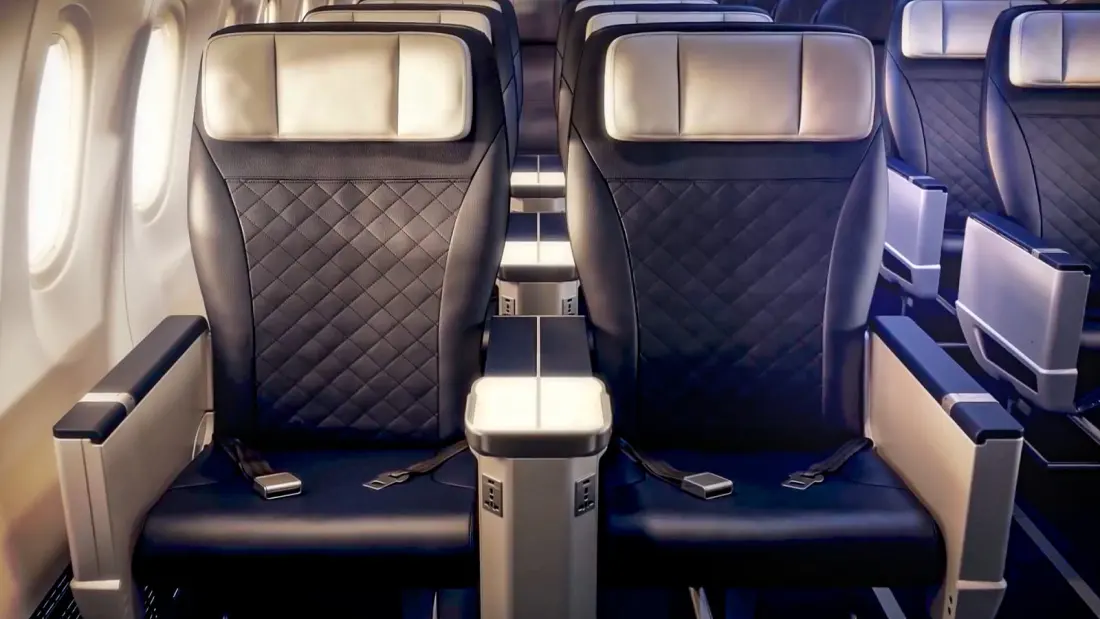
On board, there is more variety than 'no lie-flats' suggests. Every MAX 8 carries 174 seats: 12 Premium seats in a 2-2 layout with 38-inch pitch and 21.3-inch width, either 36 or 24 Extended Comfort seats with extra legroom, then Preferred and Standard Economy at a fairly tight 30-inch pitch. What you won't get is a lie-flat bed or even seatback screens. Premium seating is under 7% of the cabin, versus roughly 13% on American's A321XLRs and more than 21% on JetBlue's A321LRs, where Mint suites and Flagship Suites target premium demand on routes like New York–Edinburgh.
Why go basic? Fleet commonality. WestJet runs just two aircraft families — the 737 and the 787 — and has spent the past year retrofitting 16 ex-Swoop and 18 ex-Sunwing jets to a single standardised configuration, a job it finished in August. One seating plan across 69 MAX 8s means any aircraft can be swapped onto any route at short notice, keeping costs down on leisure-heavy markets where most passengers would rather pay less than sleep flat. United's network planning chief made a similar point recently, saying the MAX 8 is ideal for 'sportier' markets where lie-flat demand simply isn't there. Air Canada and Icelandair fly the same playbook.
For travellers, the takeaway is simple: WestJet's new routes open up direct access from smaller Canadian cities — Halifax, Winnipeg, Edmonton — to destinations like Reykjavík, Lisbon and Copenhagen that would otherwise require a connection. Manage your expectations for the seat (bring a tablet, download your entertainment, consider paying for Extended Comfort on the westbound day flights), and you can cross the Atlantic on a modern jet for a low-cost-carrier price.