A couple of inches may not sound like much, but on a 12-hour flight it is the difference between shoulders that fit and shoulders that don't. A breakdown of economy configurations on the Boeing 777 and Airbus A350 shows exactly how much width passengers lose when airlines squeeze an extra seat into each row.
Both aircraft were designed around a comfortable 3-3-3, nine-abreast economy layout. The 777's original cabin ran about 19 feet 3 inches wide, giving passengers seats of roughly 18-18.5 inches. The A350, despite its 'Xtra Wide Body' tag, is narrower at about 18 feet 5 inches, and nine-abreast seats there measure around 18 inches.
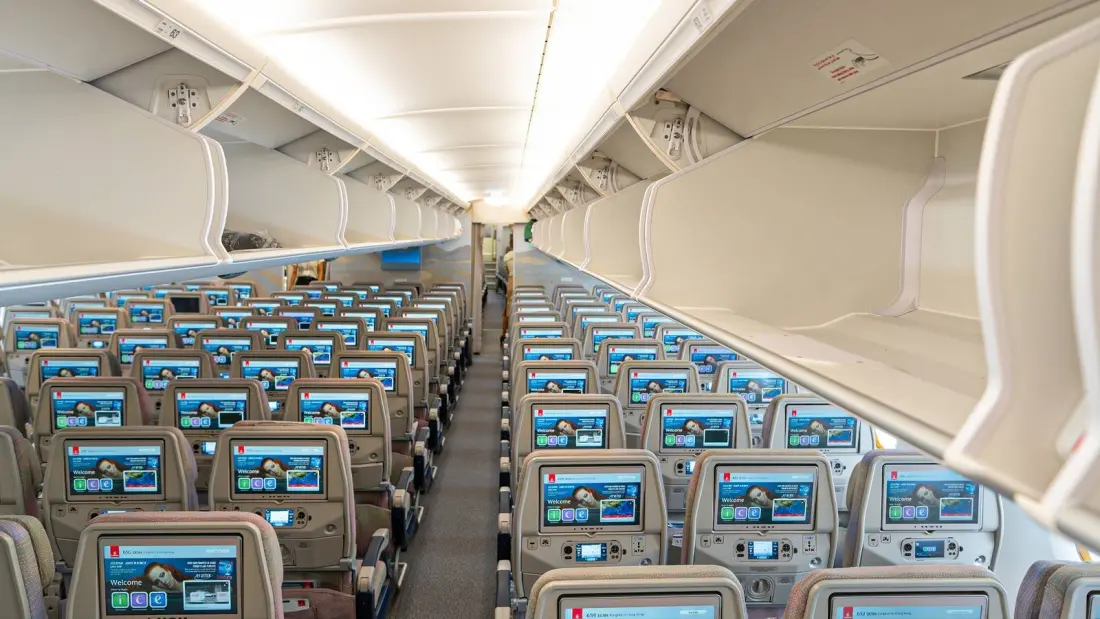
Then the market pushed for density. Most 777-300ERs flying today have been converted to 3-4-3, ten-abreast, trimming seats to about 17 inches. Even premium-heavy carriers like Emirates and Qatar have gone dense; Japan Airlines, ANA, Singapore Airlines and Korean Air are among the holdouts, though Korean Air reportedly reconsidered a 3-4-3 switch in 2025 after customer pushback.
The A350 squeezed ten-abreast is much tighter: roughly 16-16.7 inches, well below the 17-18 inch industry norm. Only two airlines fly old-production A350s that way — the French long-haul leisure carriers French Bee and Air Caraïbes — and French Bee's dense layout hits the A350-1000's certified maximum of 480 seats. The message is clear: these tickets are about cheap fares to far-off beaches, not comfort.
Newer aircraft complicate the picture. Boeing's 777X (777-9) has a 19-foot-7-inch cabin and will mostly fly ten-abreast with seats around 17.6-18 inches — Singapore Airlines announced exactly that in its new 777-9 cabin. Airbus responded with a new production standard for the A350 (delivered from 2022) that widens the usable cabin to 18 feet 9 inches. Nine-abreast NPS A350s get seats of about 18.7 inches; ten-abreast ones manage 17. So far, Philippine Airlines is the only mainline carrier to go ten-abreast on the new A350s.
Here's the practical takeaway: since the 777X will almost always be ten-abreast while most A350s remain nine-abreast, a typical nine-abreast A350 actually gives you about 1.1 inches — around 6% — more seat width than a typical ten-abreast 777-9. If seat width matters to you, the aircraft type on your booking is worth checking before you pick the cheapest fare.
For travellers, the rule of thumb is simple. Flying a low-cost long-haul leisure airline like French Bee or Air Caraïbes on an A350? Expect the narrowest seats in the sky. On a 777-300ER, odds are you're in a 3-4-3 with 17-inch seats unless you're on one of the few nine-abreast holdouts. And seat-width data is published by most airlines and seat-map sites, so it's easy to compare before booking.
Story via Simple Flying.