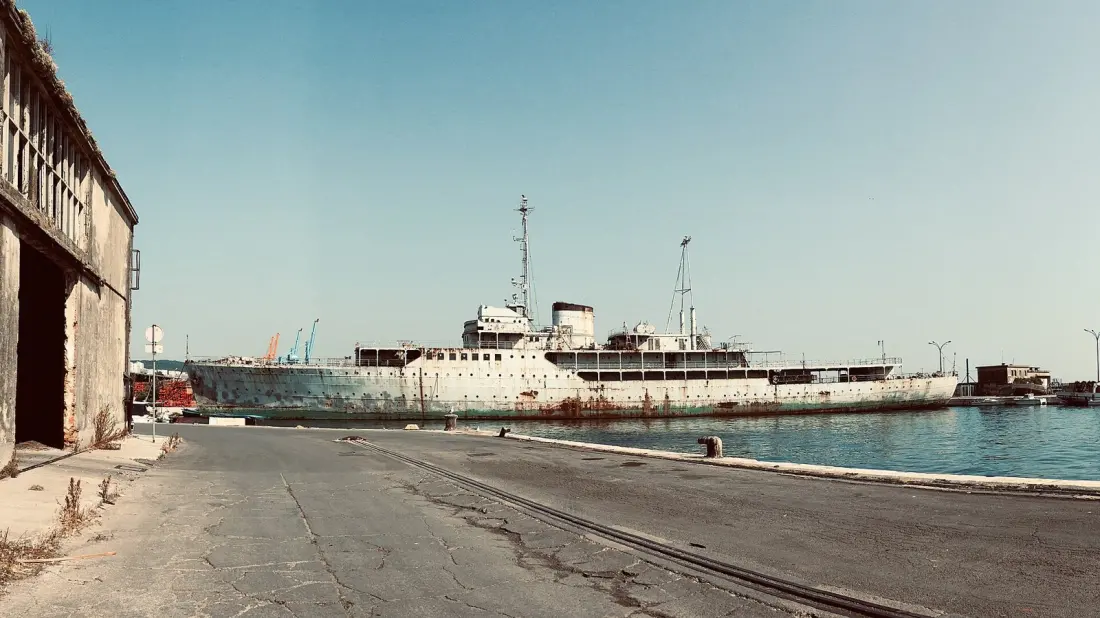
Moored in Rijeka's harbour sits one of the Balkans' most storied vessels — and one of its most expensive delayed projects. The Galeb, the former presidential yacht of Yugoslav leader Josip Broz Tito, has now swallowed around €22 million in renovation costs, partly covered by EU funds, and its long-promised museum conversion still hasn't opened. The latest target is the end of 2026, after earlier deadlines in 2021 and February of this year came and went.
The ship's résumé is remarkable: built in the 1930s, sunk during WWII, salvaged and eventually transformed into Tito's floating residence and a floating emblem of the Non-Aligned Movement. Tito used it both as a naval school ship and as his personal yacht for state travels around the world. That layered history is exactly what the Museum of the City of Rijeka wants to showcase — the permanent exhibition, reportedly about 90 percent complete, will trace the vessel's full life through original objects rather than focusing solely on the Tito years.
Recent months brought an unwelcome plot twist. In February, a Turkish cargo ship struck the Galeb, and the vessel is now heading to the Viktor Lenac Shipyard for repairs alongside its routine annual overhaul. The damage fix, priced at €860,000 including VAT, will be covered by the Turkish ship's insurance. Shipyard board president Luka Hrboka noted the job is trickier than usual because the hull is riveted rather than welded — old-school construction that demands extra care. The ship is expected back in Rijeka's port within about a month.
Rijeka's mayor, Iva Rinčić, has been candid that the project suffered from bad calls from the very beginning, from the original purchase through ballooning costs and missed deadlines. The city is now negotiating with the Central Agency for Financing and Contracting of EU Programmes and Projects to close the project out while dodging as many penalties as possible.
For travellers, the Galeb is worth tracking. Rijeka — Croatia's third-largest city, a former European Capital of Culture with a gritty-cool waterfront, austro-Hungarian architecture and a serious café scene — already rewards a visit, and a museum aboard a presidential yacht would be a genuinely distinctive addition to the Adriatic cultural circuit. If the end-of-year opening holds, 2026 visitors could walk the decks where Cold War-era diplomacy played out, seeing everything from the engine room's riveted hull to the quarters where Tito hosted world leaders. Until then, the rusty silhouette in the harbour is a story in itself: a ship that survived a world war, carried a movement, and is now taking its time becoming a museum.