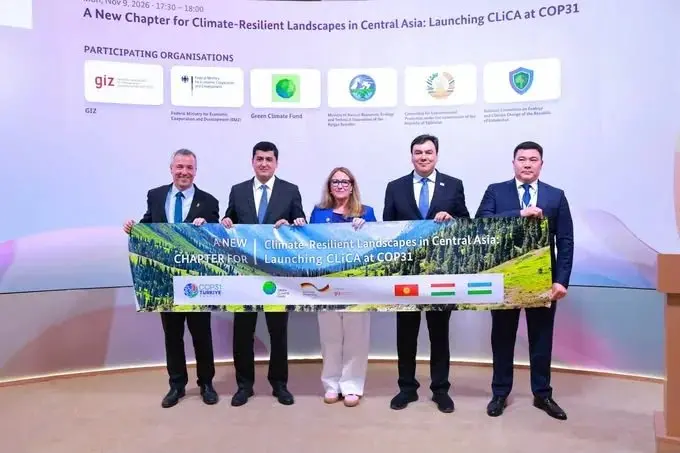
A seven-year, €200-million-plus plan to repair and protect Central Asia's landscapes took a step forward at COP31 in Antalya, where officials met at the German Climate Pavilion to discuss the regional Climate-Resilient Landscapes in Central Asia programme, or CLiCA.
Kyrgyzstan was front and centre. Its Minister of Natural Resources, Ecology and Technical Supervision, Akyl Toktobaev, opened the session and made the case that his country — a place of high peaks, glaciers and vast summer pastures — sits on the frontline of climate change in the region. He thanked the backers behind the money: Germany's Federal Ministry for Economic Cooperation and Development (BMZ), the development agency GIZ and the Green Climate Fund.
The logic is simple but significant. Kyrgyzstan's mountain ecosystems feed the rivers that much of Central Asia depends on, so restoring degraded forests and pastures there isn't just a local environmental issue — it underpins water and food security for the whole region. For travellers, that matters too: the alpine meadows, juniper forests and glacier-fed valleys that draw hikers and horse-trekkers to the Tian Shan are exactly the landscapes this programme aims to protect.
CLiCA's approach goes beyond tree-planting. The plan covers restoring damaged landscapes, promoting farming methods that can cope with a changing climate, and giving farmers and rural communities better access to finance, technology and practical training. More than €200 million is expected to be mobilised over seven years, with goals that include healthier ecosystems, better land management and improved living standards for people in rural areas.
Why should a holidaymaker care? Because the communities you meet on a trek around Song-Kul Lake or in the Alay Valley are the same ones this funding is designed to support. Healthier pastures mean herders with more stable livelihoods — and a warmer welcome for visitors. For anyone planning an active trip to Central Asia in the coming years, the programme is a signal that the region's headline natural attractions are being actively safeguarded rather than left to degrade. Kyrgyzstan has quietly become one of Central Asia's most accessible adventure destinations, with visa-free entry for many nationalities, and initiatives like CLiCA help keep it that way.
Reported by 24.kg.