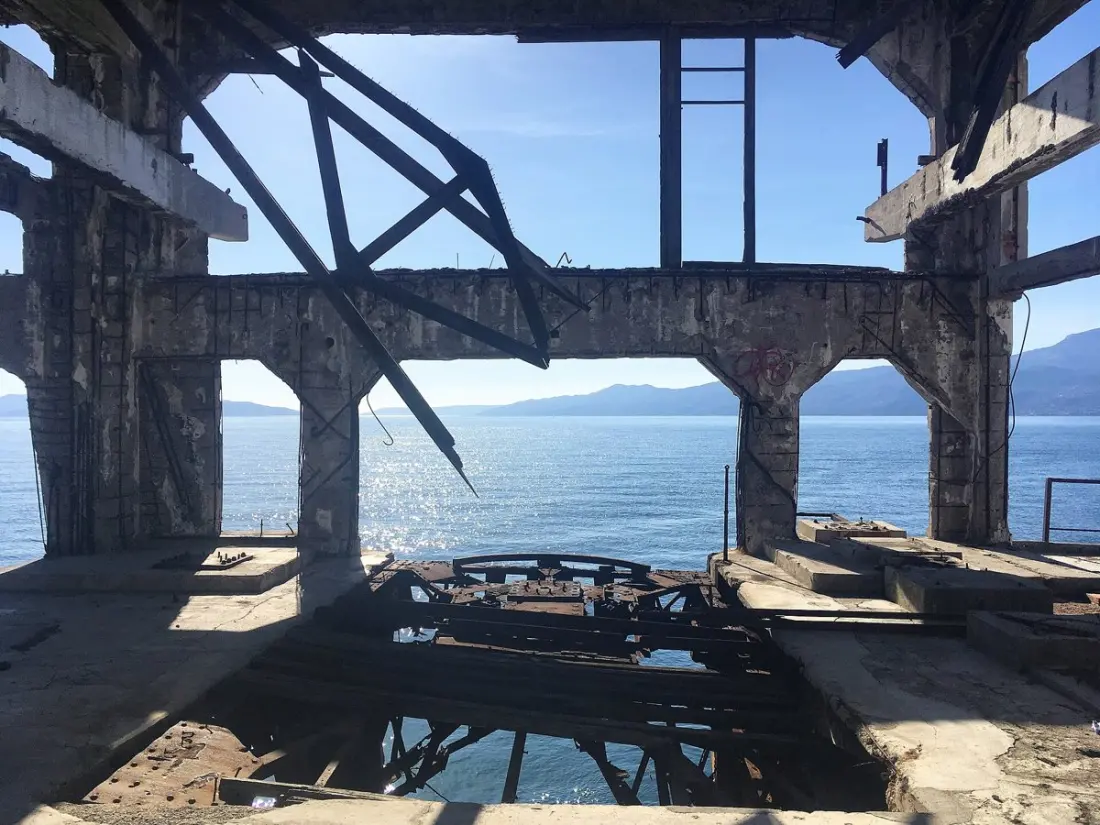
A strange reinforced-concrete structure jutting into the sea on Rijeka's western waterfront is finally getting the attention it deserves. After decades of decay, Croatia's protected torpedo launch station — the last working remnant of the city's role as the birthplace of the torpedo — will be restored starting in late 2026, with completion expected during 2027. Crucially, conservationists chose to preserve the original structure rather than knock it down and build a replica.
The backstory is genuinely remarkable. In the early 1860s, Rijeka native Giovanni Luppis dreamed up a defensive weapon to stop enemy ships before they reached the coast — he called it the "coast saver" — but lacked the funds and engineering know-how to make it real. Enter Robert Whitehead, a British engineer and former manager of the Rijeka Technical Institute, who turned the idea into a self-propelled "metal fish" that travelled underwater. The first workable torpedo was tested in Rijeka in 1866, and by 1875 the institute had become R. Whitehead & Co., the world's first torpedo factory.
Demand was global. Britain, France, Italy, Germany, Sweden, Japan and Russia all ordered Rijeka-built torpedoes, and production in the city ran until 1966 — a full century of output. The launch station itself is a later chapter: the Museum of the City of Rijeka dates the current concrete ramp to 1930, with an aircraft-launch testing section added in 1934, because Rijeka had no airport of its own at the time. Before any torpedo shipped out, it was fired from this ramp so engineers could watch how it behaved in the water.
The restoration plan goes beyond patching up concrete. A Torpedo Visitor Centre is in the works, exhibiting full-size torpedoes and technical components, plus a multimedia room telling the story of the invention. Architecturally, the design blends industrial heritage with contemporary touches — façades decorated with archival photographs and technical drawings, steel elements echoing submarine plating — and the surrounding waterfront will gain a promenade with views over the Kvarner Gulf, a stone-step viewpoint, and a small public square.
Why should this be on your radar? Rijeka has long lived in the shadow of Croatia's coastal headliners, yet it's a European Capital of Culture alumnus with a gritty, fascinating industrial past. Once the works wrap in 2027, you'll be able to stand on the exact spot where an invention that reshaped naval warfare was tested, then wander a redesigned waterfront that connects it to the rest of the city. Pair it with Rijeka's Habsburg-era architecture, its lively food scene, and easy day trips to Opatija or the islands — this is Croatia beyond the postcard beaches, and it's about to get a whole lot more interesting.