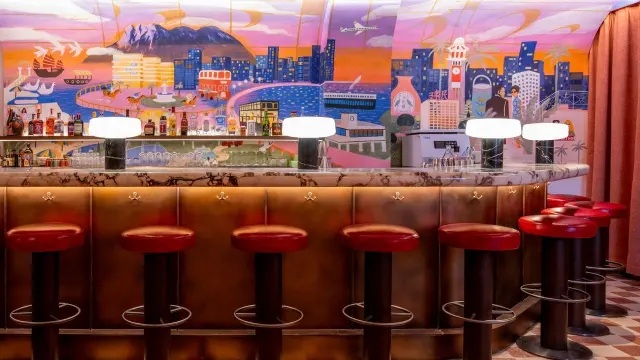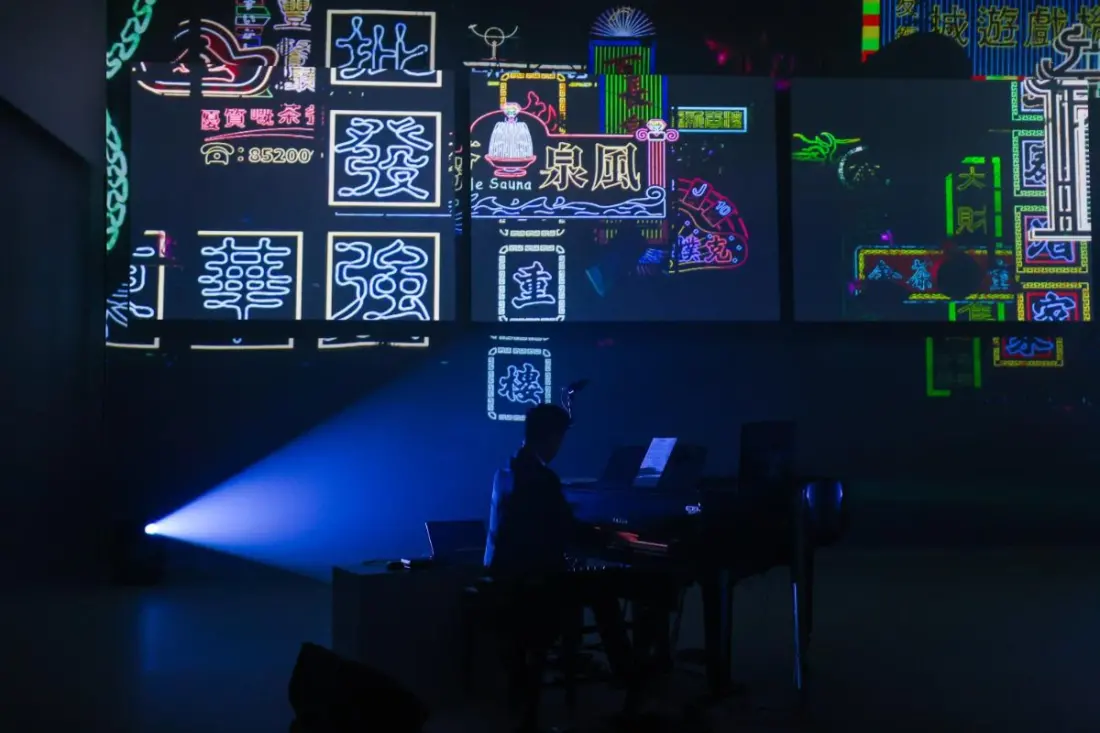
Hong Kong's Performing Arts Expo (HKPEX) has grown into the city's biggest celebration of cross-genre performance, and the 2026 edition opening act made its ambitions clear. At the Hong Kong Cultural Centre's Studio Theatre in Tsim Sha Tsui, the multidisciplinary show Reverie City — created by Joel Kwong, Vélez Kok, Fun Lam and Silver Cheung — traced the island's course from colonial past to futuristic vision. It opened with archive footage of the Jumbo Floating Restaurant, the beloved landmark that closed in 2020 after four decades, and wove in neon streets, Star Ferries and food motifs. Pianists used hand-tracking technology to transform their gestures into lines of light, and the finale was composed from biometric data collected from wristband-wearing audiences. It faltered at one moment — a glitchy projection that never quite landed — which arguably proves a point debated throughout the event: does tech art need a purpose, or is experimentation itself enough?
That question ran through the opening talks. HKPEX chairman Kenneth Fok framed the platform's mission as finding new opportunities for performers, while playwright Santan Lia argued that artists need two things: method and wisdom, and that wisdom comes from living, not from innovation for its own sake. Landscape orientation was the philosophy of Crimsons Roselle's Creative Adventures, a company building place-based, slow art that engages with surroundings — currently restoring a festival village in Tathar, New South Wales, as an open-access gathering space.
The programme itself delivered the strongest arguments. FrereEoria's playful adaptation of Beethoven's Symphony No. 9, staged by acrobats hurling sheet music while riffing on Napoleon Bonaparte, showed how canonical works can be visited rather than revered. Cayli Public of Canada drew on Beethoven's hearing loss in a version of Symphony No. 9 performed partly in silence, with deaf choreographerneh Caia Globe removing her hearing aid mid-piece. In Common by Sue-hee Cheong of South Korea saw acrobats balancing on a rickety steel scaffold mid-air, reflecting on support within communities. Bread by Korea's Creative Group A Person;s confronted vulnerability in a 30-metre rope climb through themes of life and death, while Between Two Lights by Chinese-American composer Huaru R explored liminality between birth and death, ending with a high-note duet between piano and film visuals. Two Bite Jazz closed things out with choirs in cha chaan tengs and street-art theatrics that made the case for experiencing art in Hong Kong itself.
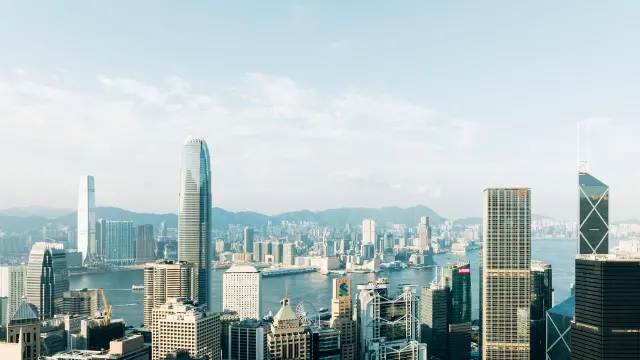
Despite a small time slot of roughly 20 minutes per show, HKPEX 2026 showcased a confident, mature scene. It also offers free public programmes for anyone wanting to engage. For travellers, this is a reason to time a Hong Kong trip to the expo: a week where the city's identity — colonial buildings, harbour crossings, cha chaan teng culture — becomes raw material for performance, and where you might catch a moving, flawed, fascinating experiment you won't see anywhere else. As HKPEX keeps its head in the clouds of change, some of it sticks.
Photo credit: Thanah Bloontrel, via Bangkok Post Life.