Archaeologists have confirmed that a huge circle of pits surrounding the Durrington Walls site, around two miles from Stonehenge in Wiltshire, is the largest known prehistoric structure in Britain — and it was built by people with surprisingly sophisticated planning skills.
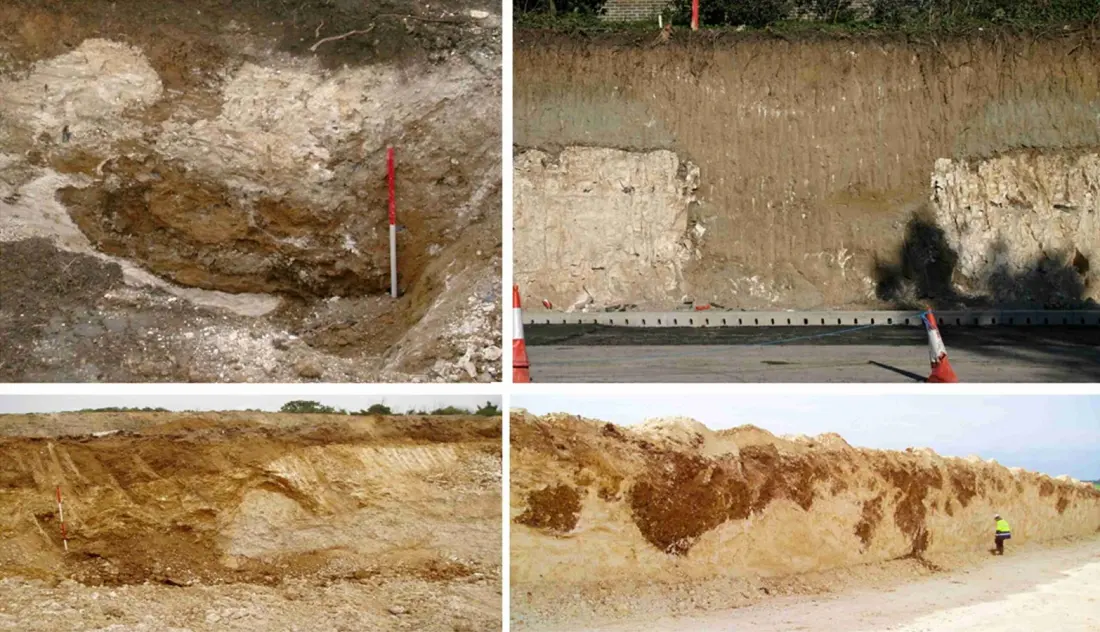
The findings come from a team at the University of Bradford, working with the University of St Andrews, who re-examined the site using underground scanning and environmental testing. What they found: 16 pits, each about 33 feet across and 16 feet deep, arranged in a vast circle that encloses the Durrington Walls monument and stretches the known footprint of the complex far beyond what was previously mapped.
Dating analysis, led by Tim Kinnaird at St Andrews, puts the digging and refilling at around 2480 BC — the late Stone Age, an era already famous for its stone and earth monuments. The sediments in every pit match, suggesting they were all filled at roughly the same time. Combined with the symmetrical layout, that points to a single coordinated project, likely completed quickly by a community under organised leadership.
Geophysics expert Richard Bates noted that aligning the pits across such a wide area would have required advanced surveying abilities — skills rarely credited to Neolithic societies. Soil samples also turned up traces of ancient plants and animals, hinting that the pits were part of one unified design woven into the wider landscape rather than isolated holes in the ground.
For visitors, the discovery adds yet another reason to look beyond Stonehenge itself. Durrington Walls, a short distance away, was a major Neolithic settlement thought to have housed the builders of Stonehenge, and this new pit ring reframes the whole area as an even larger ceremonial zone. English Heritage and the National Trust manage much of the surrounding land, and the wider World Heritage Site packs in barrows, the Cursus, Woodhenge and the visitor centre exhibits — now with one more enormous mystery in the ground. Even if the pits themselves stay buried, knowing the scale of what lies beneath makes a walk around the Salisbury Plain landscape far more rewarding.
Story via Colombia One.