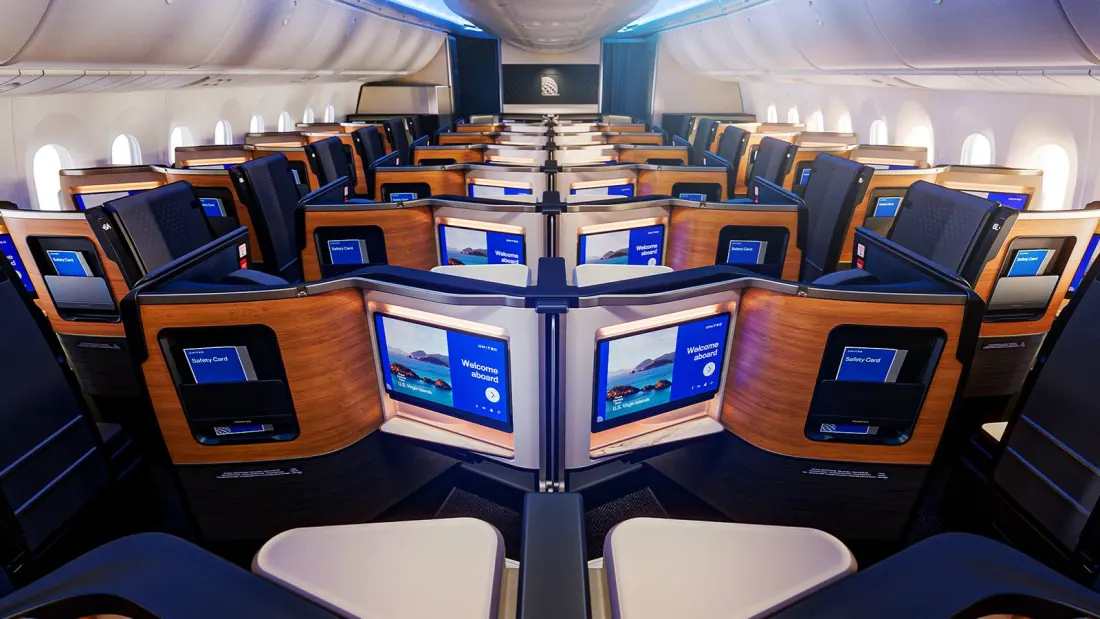
If you've flown business class on a Boeing 787 in the last decade, you may remember the older 2-2-2 layout: a decent flatbed, but one awkward climb over a sleeping stranger if you had the window seat. That design is disappearing fast. Airlines flying the 787-9 are pouring hundreds of millions of dollars into retrofits that put every passenger in their own 1-2-1 suite — and increasingly, behind a sliding door.
The numbers are striking. Air India has launched a $400 million programme to replace dated 2-2-2 seats on its 787s with direct-aisle suites plus new premium economy cabins. LATAM is spending $360 million refitting its Dreamliners with staggered Recaro R7 suites. British Airways swapped its high-density 42-seat 2-3-2 Club World cabin on the 787-9 for 38 Club Suites with privacy doors, sacrificing four seats to meet modern expectations.
Two forces drive this. First, travellers: at fares that routinely run into the thousands, nobody wants to step over a reclining neighbour. Second, corporate travel policies — companies now write direct aisle access and privacy into their preferred-carrier contracts, so airlines clinging to older layouts lose high-yield bookings to competitors.
Interestingly, going 1-2-1 doesn't always mean fewer seats. Japan Airlines' denser 787-9 variant packs in 52 reverse-herringbone Sky Suite III seats — eight more than its older 2-2-2 configuration — by angling seats and overlapping footwells. The catch is ergonomics: the 787's cabin is about 38 cm narrower than a 777-300ER's, so squeezing four suites across means narrower hip room and tapered footwells that taller passengers may find snug when fully reclined.
The new frontier is doors. ANA's THE Room FX, developed with Safran Seats, adds sliding privacy doors and seats up to 41.5 inches wide by ditching heavy recline mechanisms. United's 787s now carry 64 Polaris suites, American's carry 51 Flagship Suites with doors, and Qantas runs 42 1-2-1 suites. Doors aren't free — each adds roughly 4.5 to 6.8 kg of weight plus maintenance overhead — but privacy has become the baseline for premium long-haul flying.
For travellers, this is genuinely good news: within the next couple of years, six-abreast business class will have all but vanished from major long-haul routes, with LOT Polish Airlines and others finishing Recaro CL6720 installations. When booking a premium cabin, check the seat map and aircraft type — if the flight is on a retrofitted 787, you'll get aisle access at worst and an enclosed suite at best. And don't overlook premium economy: airlines are expanding it to recover revenue from shrunken business cabins, making it a sweet spot for premium leisure flyers who want the extra space without the business-class price.
If you fly long-haul regularly or are booking a special trip, it's worth choosing your airline partly on cabin hardware — the gap between an old open-grid seat and a new door-equipped suite is now the biggest quality divide in the sky.