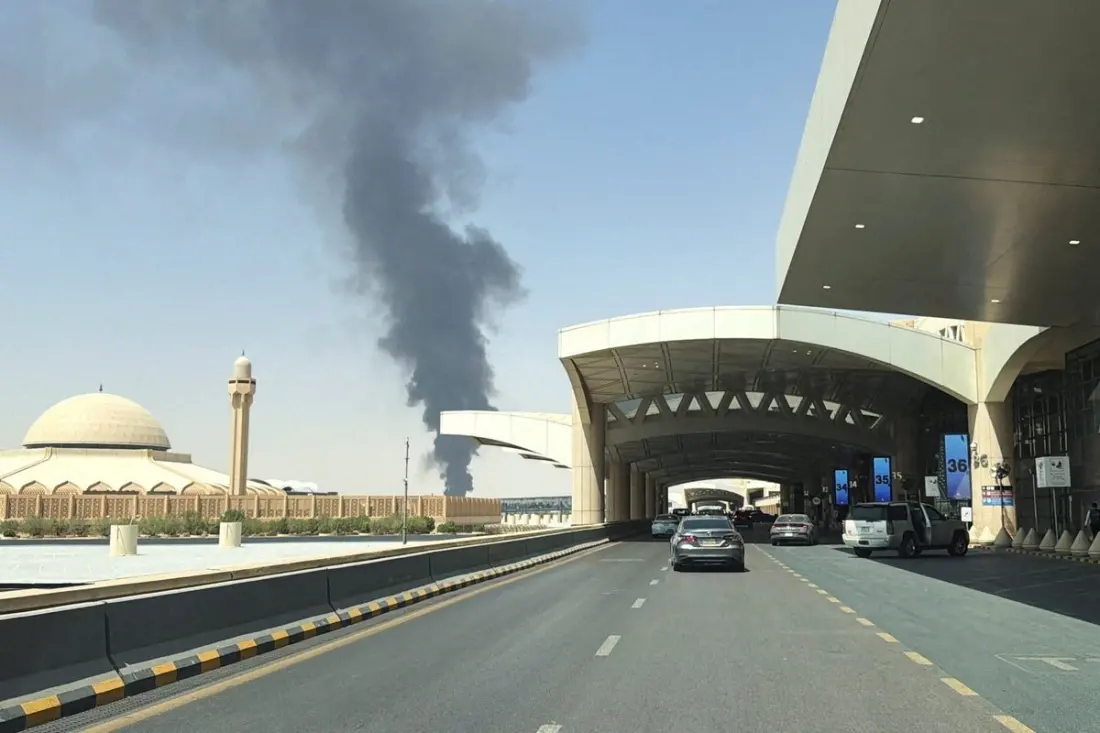
Saudi Arabia has been rattled by a fresh round of missile and drone launches attributed to Yemen's Houthi rebels, with several cities, airports, military bases and energy facilities targeted — including the capital, Riyadh, and Jeddah. The kingdom intercepted a ballistic missile fired at Riyadh on Saturday, and emergency alerts sounded across the country late Friday and into the early hours of Saturday morning. A column of black smoke was later seen rising from fuel tanks near Riyadh's main international airport.
For anyone with a trip booked, the key question is what the UK Foreign Office actually says. The answer is more nuanced than the headlines suggest: there is no blanket 'do not travel' warning for most of Saudi Arabia. Riyadh and Mecca carry no advisory at all. The restrictions are concentrated in the far south — the FCDO advises against all travel within 10km of the Yemen border, and against all but essential travel in the 10km–80km zone, which also covers Abha and Khamis Mushait in Aseer province.
That said, the FCDO does flag a broader risk of further attacks and escalation, tied to the wider Iran-US standoff. Travellers already in the region are told to monitor local media, follow Saudi Civil Defence alerts, and know what to do if a siren sounds: get indoors, ideally an interior stairwell or a room with few external walls and windows. The main danger during intercepts is falling debris. The advice also covers the practical stuff — keep travel documents current, review your departure options, exercise caution around ports and airports, and steer clear of oil and military installations. Sharing images of conflict-related incidents is discouraged too.
Flights have, for now, bounced back. FlightRadar24 reported normal operations at Riyadh airport as of Monday morning, after a brief disruption on Saturday. Airports near the Yemeni border can be closed at short notice, so check with your airline if you're flying into the southwest.
The awkward news for nervous holidaymakers: you probably can't cancel for free. Because the FCDO hasn't advised against travel to most of the country, there are no special refund circumstances, no obligation for operators to refund, and travel insurance won't cover cancellation on safety grounds unless government advice changes. Your contract with the provider governs any postponement. Worth checking whether your policy includes natural disaster cover that applies if an event stops you reaching your destination — some do.
In short: the capital and the west coast's main destinations remain formally open for travel, the red zone is the Yemeni border area, and anyone going should sign up for FCDO email alerts and stay flexible.