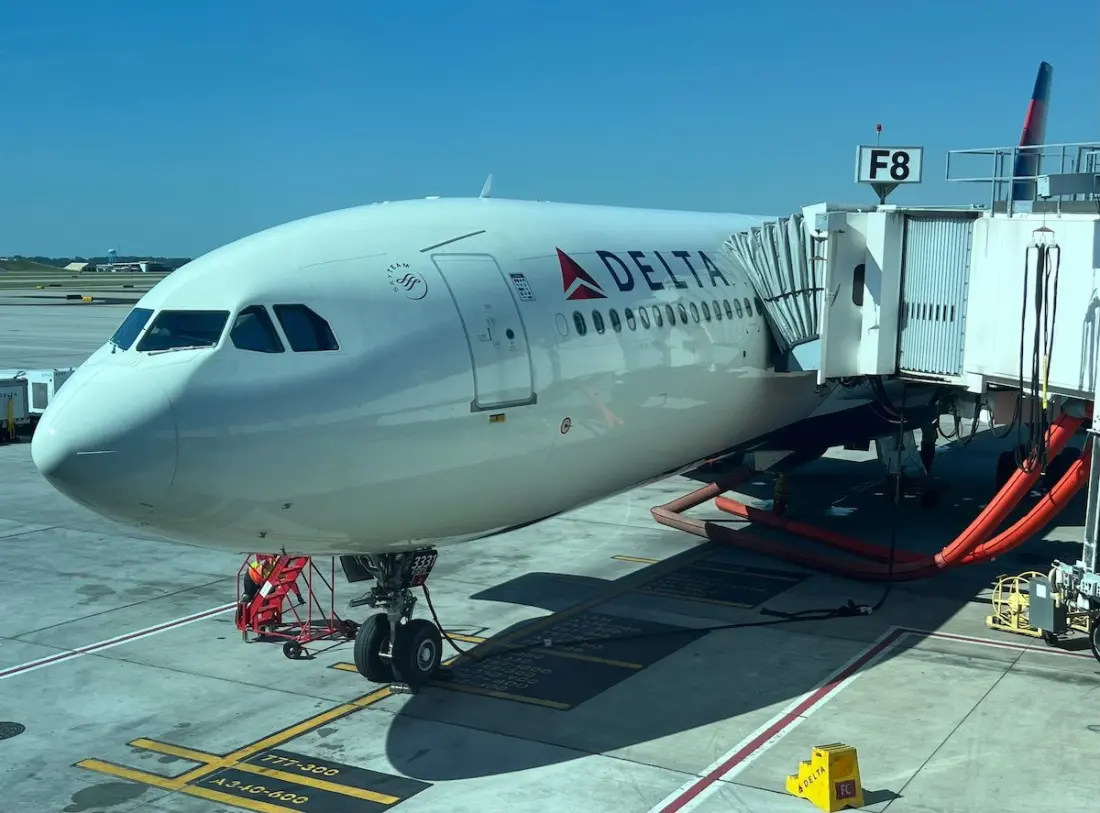
A failed rocket launch has thrown a wrench into Delta's high-profile bet on inflight connectivity. On Sunday, November 15, 2026, a Vulcan rocket flown by United Launch Alliance — the Boeing and Lockheed Martin joint venture — suffered an anomaly roughly ten minutes after lifting off from Cape Canaveral Space Force Station in Florida, destroying its cargo: dozens of Amazon Leo satellites. It was the first mission failure in ULA's roughly two-decade history.
Amazon Leo is Amazon's answer to Starlink, and it's the satellite network Delta chose for its future Wi-Fi instead of Elon Musk's SpaceX service — a decision that has already generated plenty of noise, given the public sparring between Musk and Delta. JetBlue has also signed up, with plans to come online in 2027.
Here's where the constellation stood before the failure: 398 satellites had been deployed across 14 successful launches, or about 12% of the 3,236 satellites needed for full global coverage. Amazon was targeting an initial service rollout in select regions before the end of 2026, with wider availability following. The 40 or so satellites lost on Sunday were only a small slice of the overall plan, so the hardware itself isn't the real problem — the real problem is what comes next. ULA will now conduct an investigation, implement fixes, and only then return to flight, meaning future launches are grounded in the meantime. Industry observers suggest a delay of several months at an absolute minimum, possibly longer.
For Delta, the timing compounds an existing disadvantage. The airline wasn't scheduled to start installing Amazon Leo until 2028, and even then only on less than half of its fleet. Compare that with United, which expects Starlink on every aircraft by the end of 2027, while American, Southwest and Alaska are also rolling out SpaceX connectivity — often free of charge. Delta's counter-programming gamble was always going to involve some risk of betting on an unproven network, and that risk has just materialised in the most public way possible. Amazon has publicly said it remains confident in ULA's long-term delivery, but confidence and launch schedules are different things.
Why should travellers care? Because inflight Wi-Fi is going through a genuine upgrade cycle, and the speed and availability you'll get on a US carrier in the next few years now depends partly on rocket reliability. If you fly Delta or JetBlue and were hoping for fast, modern satellite internet, the wait just got longer. If you're booking with an eye on connectivity, Starlink-equipped United, Alaska, Southwest and American flights currently look like the safer near-term bet. The broader lesson: airline tech roadmaps can wobble for reasons that have nothing to do with the airlines themselves.
There's no confirmed revised timeline yet — ULA says it will share findings as its investigation progresses. What's certain is that the schedule looked better 24 hours before the launch than it does today.