Cairo's oldest metro line just got a serious upgrade. On 15 November, the first two new Alstom Metropolis trains began carrying passengers on Line 1, the historic route that opened in 1987 as the first metro in Africa, the Middle East and the Arab world.
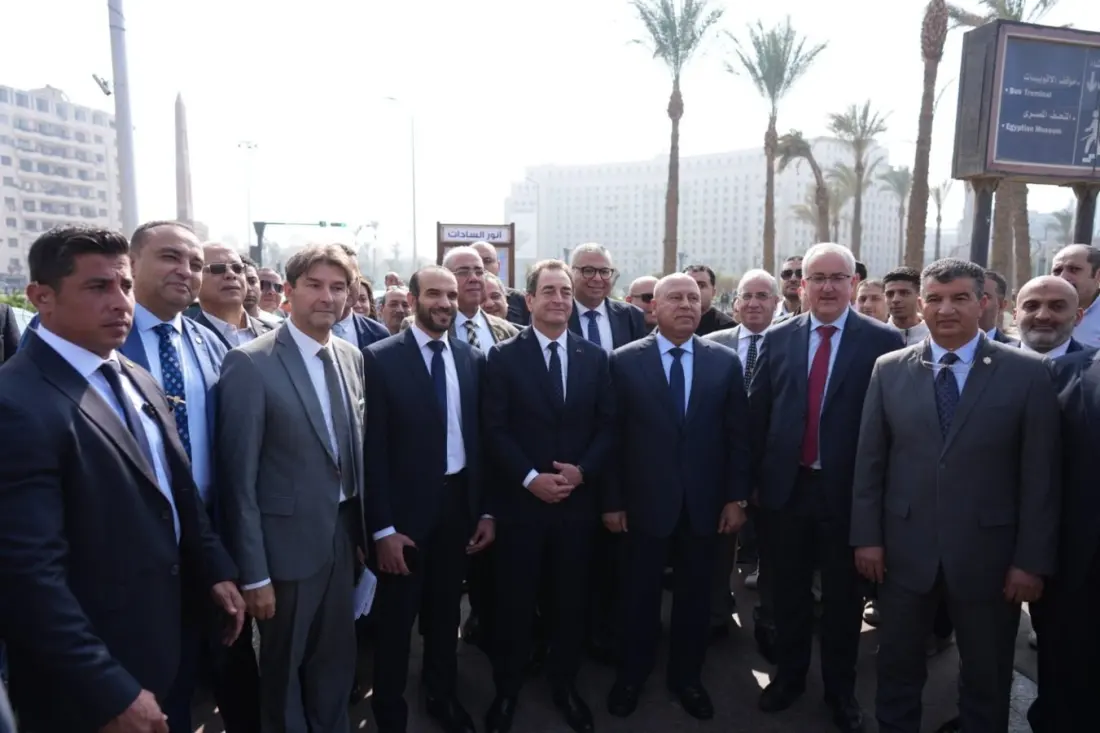
The launch is the first delivery milestone under a EUR 876 million (EGP 51 billion) contract signed in 2021 with French rail giant Alstom, which will supply 55 trains in total. Transport Minister Kamel Al-Wazir marked the occasion by riding one of the new trains from Saray El-Qobba to Sadat station, passing through eight intermediate stops, alongside French Ambassador Éric Chevallier and National Authority for Tunnels chairman Tarek Goweili.
The trains were designed and built at Alstom's Valenciennes site in France and tailored specifically for Line 1. For anyone who has ever sweated through a Cairo rush hour, the headline feature is obvious: full air-conditioning. There's also through passage between carriages, so passengers can spread out along the train, plus CCTV coverage in both driver cabins and passenger areas, with live feeds running straight to the central control centre.
Line 1 is the backbone of Cairo's public transport, running 44 kilometres between Helwan and New Marg across 35 stations, and moving roughly 2.5 million passengers a day. The new fleet is expected to shorten intervals between trains, cut waiting times and improve reliability and safety, according to the transport ministry. Funding came via one of the largest French Treasury financing packages granted to Egypt, and notably the first to include a climate bonus under that scheme — a nod to the wider goal of cutting carbon emissions from the city's transport.
Why should travellers care? If you're visiting Cairo, Line 1 is genuinely useful: it links central Tahrir-area stations like Sadat with southern sites such as Helwan, and it's by far the cheapest way to move around the city. Historically, carriages have been hot and crowded, and older rolling stock has been a common complaint among locals and visitors alike. Air-conditioned, connected trains with better security monitoring should make the metro a far more pleasant option — though note that dedicated women-only carriages have long been a feature of Cairo's system, so check signs before boarding.
One caveat: the two trains are the first of 55, and the full rollout will take time, so don't expect every service on Line 1 to be a shiny new Metropolis just yet. The rest of the city's network — Lines 2, 3 and the newer monorail — continues to expand in parallel, part of a broader push to build a more integrated and sustainable public transport system in a megacity famous for its traffic.
If you're planning a Cairo trip, it's worth mixing metro rides into your itinerary: Sadat station sits right by the Egyptian Museum and Tahrir Square, and the line's southern end at Helwan puts you closer to sites like the Japanese Garden and, further afield, the ancient quarries and ruins of Memphis and Saqqara. A cheaper, cooler commute than a taxi across the Nile-bound traffic.