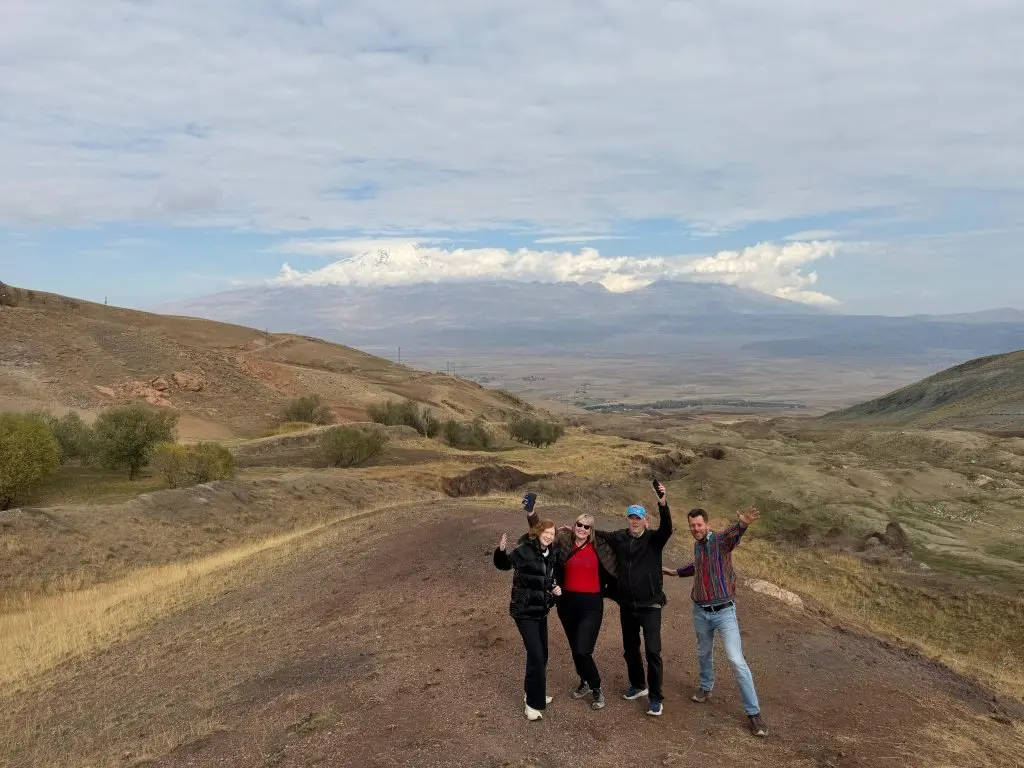
Near the small town of Dogubeyazit in far eastern Turkey — a short drive from the Iranian border — sits a 157-metre boat-shaped rock formation that has divided believers and geologists since 1959. That year, Turkish military satellite images picked out the strange outline in the foothills below Mount Ararat, and the Durupınar Formation has been argued over ever since.
The case for it being something more than a geological oddity rests on a few points. Its length roughly matches the 300-cubit Ark described in Genesis, depending on which cubit you use. Nearby stone formations have been interpreted as ancient anchors, and ground-penetrating radar has flagged unusual patterns beneath the surface. Researchers are now using geological mapping, soil analysis and drilling to see what, if anything, is buried there. Young Pioneer Tours, which runs an Alternative Turkey Tour including the site, reports renewed interest in the investigations.
Sceptics are less convinced. Most geologists say the shape comes from natural processes — erosion and landslides — rather than a petrified vessel. It remains a theory, not an established discovery, and no excavation has produced confirmed timber or artefacts.
The broader flood story, though, has real grounding. Southern Mesopotamia, between the Tigris and Euphrates, is a flat flood plain where major inundations still happen. Excavations at ancient cities like Shuruppak, Kish and Ur found thick layers of clean river silt sandwiched between occupation layers, with no pottery or artefacts inside — evidence those cities were submerged and abandoned around 2900 BC. When snowmelt surged down the rivers and met monsoonal rains, water spilled across the plain as a vast shallow inland sea. To anyone caught on that flat ground, it would have looked like the end of the world, and the event seeped into records like the Sumerian King List and later flood epics.
Genesis places the Ark's resting spot on the "Mountains of Ararat", which is why searches focused on the 5,137-metre Mount Ararat itself before attention shifted to the Durupınar formation below it. The flood narrative spans Judaism, Christianity, Islam, Yazidism and other traditions, giving the whole region a weight of religious history few places can match.
Why should a traveller care? Eastern Turkey is one of the country's least-visited corners, and the Durupınar site sits on a route that also takes in Dogubeyazit's Ishak Pasha Palace, the penal colony town and the looming bulk of Ararat itself. Whether or not a boat is buried there, you get dramatic volcanic scenery, Kurdish tea houses and a genuinely strange piece of 20th-century pseudo-archaeology you can stand on. It's a day trip for the curious rather than a pilgrimage with a guaranteed payoff — and that's part of the appeal.
Full story via Young Pioneer Tours.