Most safaris keep the local community at arm's length. Sarara, in the Namunyak Conservancy of northern Kenya, does the opposite. The 850,000-acre conservation project is run with the Samburu people who have lived on this land for generations, and the result feels less like a lodge-and-vehicle safari and more like being adopted into the place itself.
The setting is remote: a dried riverbed in the shadow of the Mathews Mountains, where the writer spent a blood-moon evening by the fire while Samburu women sang from nearby manyattas to guide the eclipse. Hyenas called in the dark and giraffes crossed the sand in silhouette. That's the tone of the whole stay — wildlife and culture braided together rather than kept in separate slots.
Days mix classic game drives and guided walks with Samburu trackers alongside community experiences. The standout is Reteti Elephant Sanctuary, Africa's first community-owned elephant orphanage, where rescued calves are raised by local keepers — including Long'uro, a baby whose trunk was damaged in a hyena attack. Visitors can also join the Milk Mamas, a women's programme selling goat milk to feed the orphans, sit in with local beading circles, or visit schools and health projects the conservancy supports.
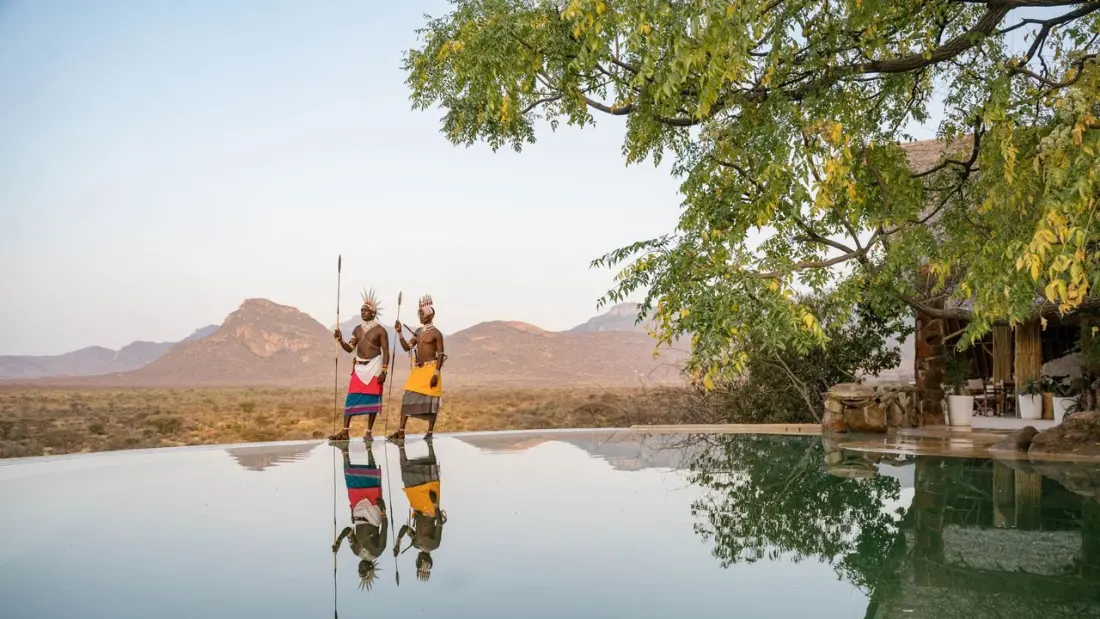
There are four places to stay. Sarara Camp, the original, has six canvas tents and an infinity pool over a permanent waterhole — the writer counted around twenty elephants from two herds one afternoon. Reteti House is a private-use, four-tent retreat with its own waterhole and a resident leopard calling through the night. Sarara Treehouses sleeps guests in eight tented suites up in the canopy, with elephants passing beneath the walkways. And Sarara Wilderness, the most remote of the lot, is reached by small plane with Scenic Air Safaris, which flies low over the plains — lionesses, cheetah, leopard and even serval were spotted from here.
Getting there is half the cost. Return flights from Nairobi to Namunyak airstrip start at about $600 per person, or a private charter with Scenic Air Safaris (up to nine people) runs roughly $3,470 for the whole aircraft — worth splitting if you're travelling as a group.
Why it matters: if you've ever felt uneasy about safaris that extract wildlife photos while locals watch from the sidelines, Sarara is a working counter-example. Guides, hosts and staff come from the surrounding villages, tourism revenue funds conservation and livelihoods, and the experiences go well beyond spotting animals. It suits travellers who want wilderness and wildlife at a genuinely high standard, but who also want their money and their time to flow back into the community that protects it.
Read the full story at Condé Nast Traveller UK.