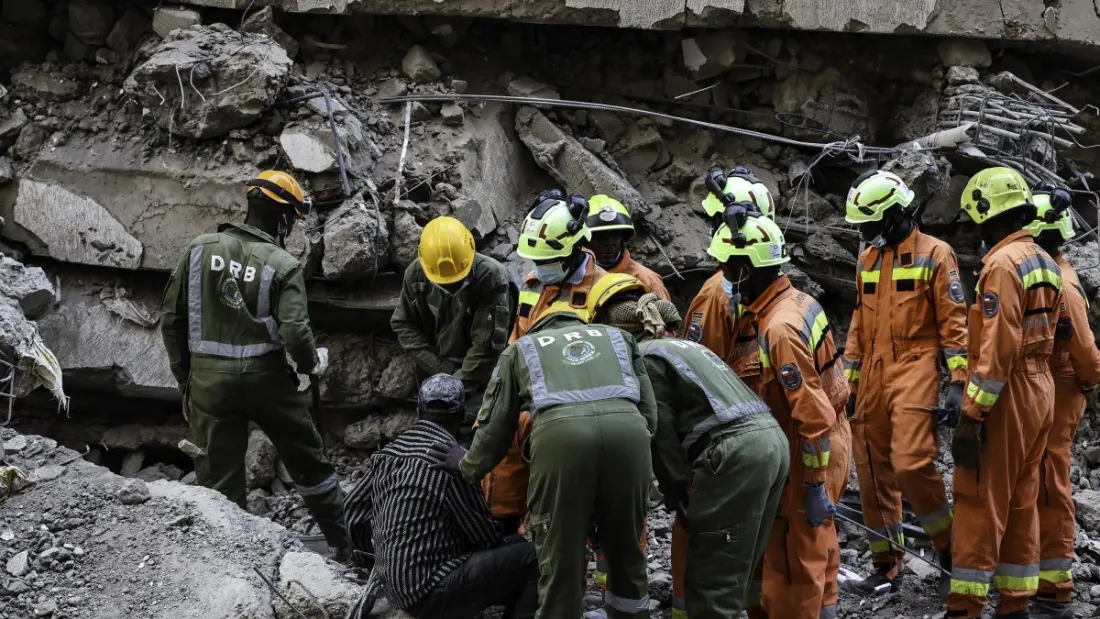
A 16-storey building under construction came down around lunchtime on a Friday in Eastleigh, one of Nairobi's busiest and most densely built-up districts. Seven people were reported missing and feared trapped in the rubble, with rescue crews working through the night in a site hemmed in by other high-rises — a factor that made access difficult for emergency teams.
The numbers could have been far worse. Of the 67 people working on the site, 66 escaped unharmed and one was injured, according to Interior Minister Kipchumba Murkomen. But 11 shops on the ground floor and in the basement were occupied when the building fell, and police rescued at least one woman from the debris while another voice could be heard calling for help.
The collapse has reignited a familiar argument about how Nairobi builds. Engineers at the scene said warning signs — visible cracks — had been reported before the structure gave way. The president of the Institution of Engineering Technology of Kenya, Bibiye Mahmoud, was blunt: contractors routinely skip professional oversight, and accountability is thin. Nairobi's governor, Johnson Sakaja, confirmed the building had no occupation certificate, the formal sign-off that a structure is safe for use. A National Building Inspectorate audit found 87% of buildings checked nationwide last year either failed standards or lacked approvals altogether.
This is not an isolated incident. A think-tank report documented 86 building collapses in Nairobi between 2009 and 2019, causing around 200 deaths — among them a 2016 apartment collapse that killed 49 people and a six-storey fall in 2022 that left five dead. The pressure is only growing: completions jumped from just over 20,000 buildings in 2022 to more than 25,000 last year, as East Africa's leading business hub draws workers from across the region. Eastleigh, known for its sprawling markets and large Somali community, is at the centre of that boom — and local media reported looting and crowd trouble at the collapse site, with police using tear gas.
For travellers, the takeaway is less about panic than practical awareness. Eastleigh is a major commercial hub that many visitors pass through for shopping and food, and it pays to be alert around construction sites in fast-growing parts of the city, where regulatory oversight has repeatedly proven unreliable. Kenya remains a welcoming and safe destination overall — Nairobi is the gateway to most safaris and East African itineraries — but this story is a reminder that the city's breakneck growth comes with real risks, and that checking current local news before exploring less touristy districts is a smart habit.