
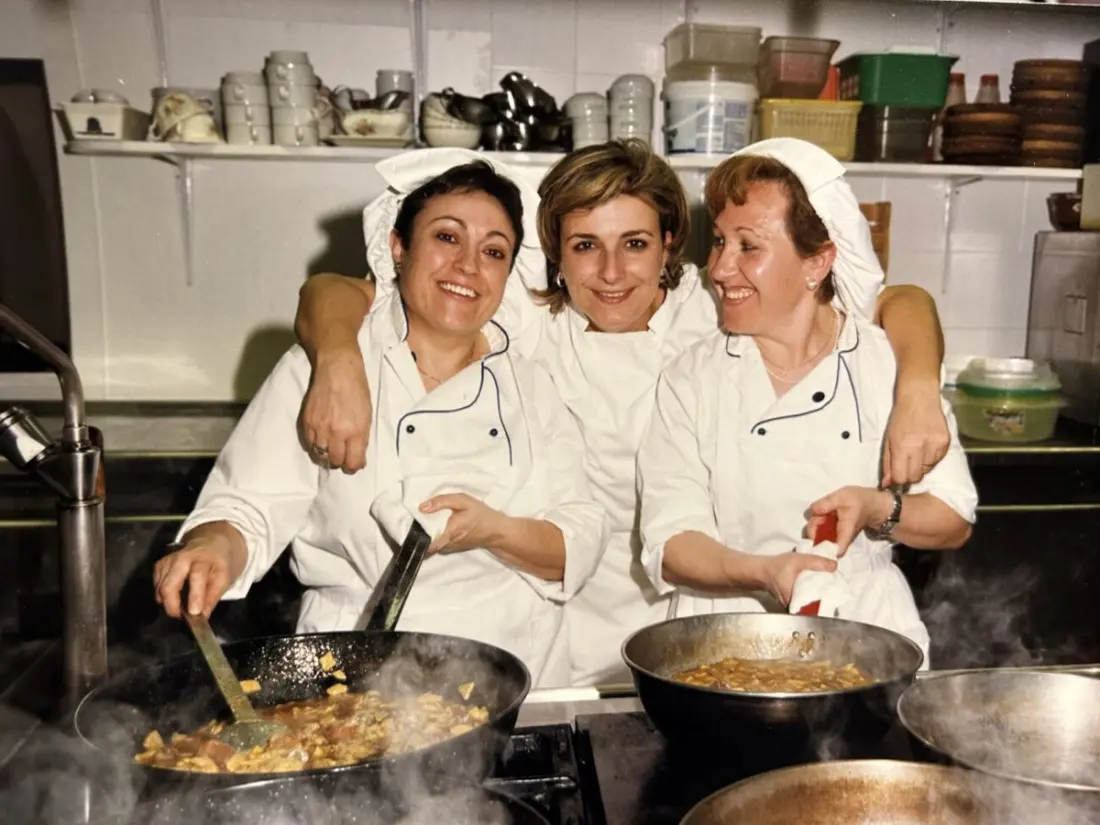
In 1952, in the Castilla–La Mancha town of Almansa, a couple named Pascual and Josefa Blanco opened a small bar called Mesón de Pincelín. Spain was still under Franco's rule, the Civil War had ended barely a decade earlier, and the country was only just shaking off food rationing. Pascual poured the wine and beer; Josefa cooked. Among her dishes was gachamiga, a humble regional staple of flour, garlic and olive oil, along with torreznos — crispy fried pork belly that remains a fixture on Spanish bar counters today.
More than seven decades later, the restaurant is still open, still in Blanco family hands, and still serving that same kitchen tradition. That alone makes it remarkable. Family restaurants rarely survive one generational handover, let alone three — and this one has outlasted economic crises, internal family shake-ups and the pandemic that shuttered so many Spanish dining rooms.
The story of the business is a story of the family itself. Originally the bar had a patio shaded by a grapevine, a detail the founders' grandson, Diego Blanco Moreno, remembers from its earlier incarnation. In 1980 a second generation came on board when Diego's father and uncle joined with their wives. Back then, the women ran the kitchen and the men handled the front of house. Now the roles have flipped: Diego cooks, while his cousin Marían Blanco Tornero runs the room as maître d'.
Diego's approach to the menu is quietly conservative. He wants to keep the old recipes and the traditional cooking that built the restaurant's reputation, allowing room for some adaptation to modern tastes but, as he puts it, never losing the essence of what the place has always been. For diners, that means the kind of regional Manchego cooking that has largely vanished from city menus — honest, filling dishes born of a poor postwar countryside, made with the same techniques the family has used since ration books were a memory.
Why should a traveller care? Because places like this are the reason to leave Madrid and Valencia behind and point the car inland. Almansa sits in the south-east corner of Castilla–La Mancha, known for its castle and its PDO-designated designa manchego lamb and wine country nearby. A lunch at Mesón de Pincelín isn't just a meal — it's a living piece of Spanish culinary history, where you can taste what families ate when the country was rebuilding itself, served by the same family that has done the serving since 1952. If your idea of a good holiday includes finding the one restaurant locals have trusted for three generations, this is exactly the kind of detour worth building a day around. Credit: Roads & Kingdoms.