Modern gear has made the trail easier than ever — ultralight packs, freeze-dried dinners, phone navigation. But there's a case for learning a few low-tech techniques that most beginners have never bothered with. Backpacker magazine has flagged six old-school skills that still earn their keep, and they're a fun winter project for anyone planning a bigger hiking season ahead.
First up: knots. Most hikers tie everything with the same overhand knot and regret it later when it won't come undone. Three worth learning: the slippery backpacker's hitch (three wraps around a tree, tuck a loop of the loose end under the last wrap — ideal for bear bags and tarp ridgelines, releases with one pull), the bowline (a rock-solid fixed loop, memorised via the classic "rabbit out of the hole" rhyme), and the sheet bend, which joins two cords of different thicknesses. Get these down and camp setup gets noticeably quicker.
Second: make your own gear. There's little practical need to sew a tent anymore, but the make-your-own-gear scene has never been more accessible thanks to online patterns and tutorials. The low-risk entry point is a ditty bag — a design from Backpacker's Spring 1973 issue that needs no sewing machine, just ¾-yard of ripstop nylon, 30 inches of cord, needle and thread.
Third: camp baking. Slow and messy, yes, but pulling fresh cake out of the woods is a genuine party trick. The near-foolproof starter version needs a steel or titanium mug, a larger pot, and a packet of microwaveable cake mix. Three tablespoons of water into the mug, three small rocks in the pot's base, mug balanced on top, water in the pot up to the mix line, cover, simmer 20 minutes. Pancake mix works too.
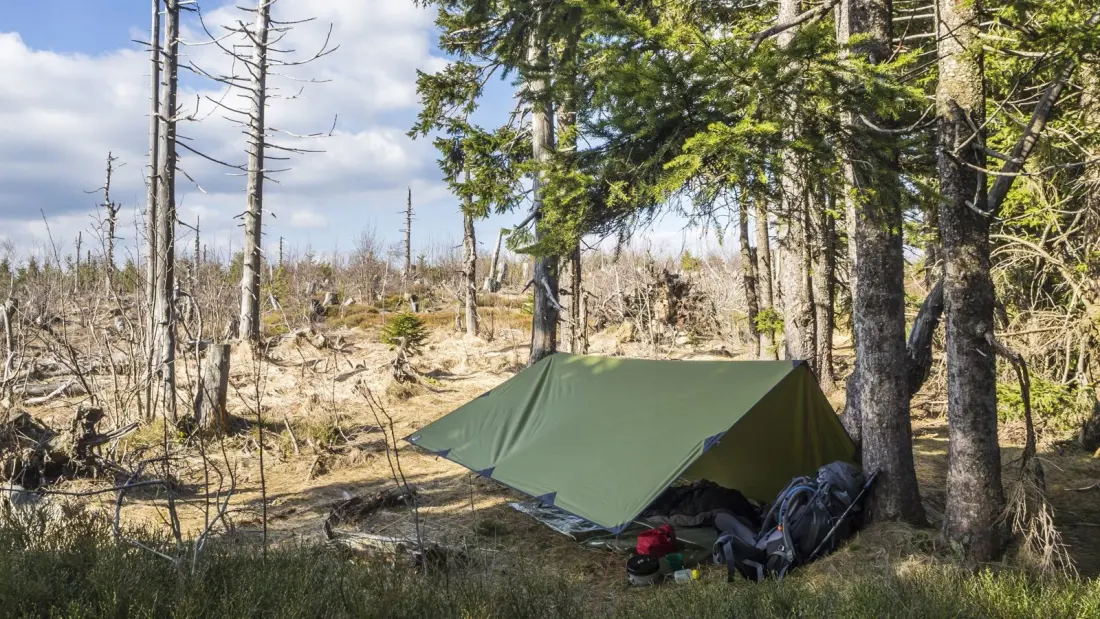
Fourth: pitch a flat tarp instead of a tent. It's lighter, simpler, and cheaper — Borah's Silpoly Solo Tarps come in under $90. The beginner-friendly plow point pitch stakes three corners and raises the fourth with a trekking pole and guyline; expect some fiddling the first time. True dirtbags can substitute a 9x10 scrap of Tyvek, pinching pebbles at the corners for tie-out points.
Fifth: whittling. Less camp time these days means knife skills have faded, but carving practice pays off when you need to improvise a replacement stake or shave tinder. A spoon is the classic first project — split some green deadfall, carve the outline, hollow the bowl (a shovel shape is easier than round with a straight pocketknife).
Sixth: plan a route on paper. Guidebooks and topo maps force you to actually understand your route rather than blindly follow a digital line — the kind of carelessness that gets hikers lost. Libraries stock guides and can source more via interlibrary loan; photocopy the relevant pages, annotate them, add a compass, and confirm conditions with rangers before you go.
None of this requires abandoning modern gear. It's about adding a layer of self-reliance that makes you a more capable — and more impressive — trail partner.