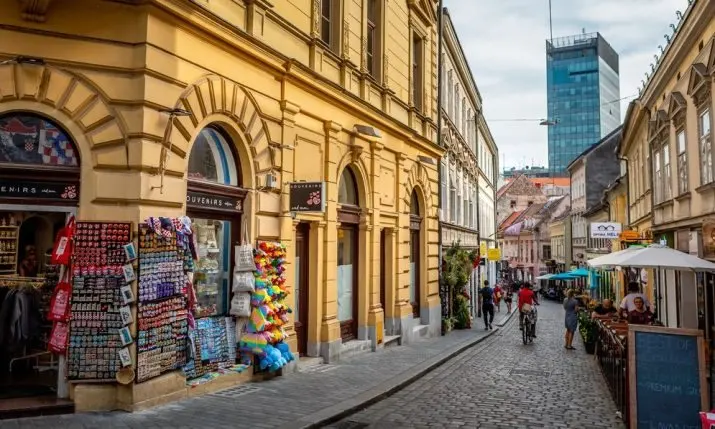
Zagreb will find out this December whether it's Europe's most accessible city. The Croatian capital has made the six-city shortlist for the 2027 Access City Award, the European Commission's annual prize for cities that make urban life work for people with disabilities and older residents.
Zagreb's competition is stiff: Madrid and Vitoria-Gasteiz in Spain, Matosinhos in Portugal, Milan in Italy and Poznan in Poland all made the final cut. Fifty cities from 16 EU member states applied, national juries trimmed that to 24 candidates, and an EU-level jury picked the final six. The winner will be announced on 4 December 2026 at a ceremony during the European Day of Persons with Disabilities conference, run jointly by the European Commission and the European Disability Forum.
The award isn't about a single project. Judges look at how easily people can move through the whole city: getting into buildings and public spaces, using public transport, accessing facilities and services, and dealing with information and digital tools. This edition also carries a special mention for Accessible Community Services, highlighting efforts that help disabled people take part in local life and live independently, in line with the EU's disability rights strategy through 2030.
European Commissioner Hadja Lahbib put the stakes plainly: catching a tram, popping into a shop or heading to work are things many people do without thinking, but they can still be major hurdles for disabled residents and visitors. Cities, she argued, have real power to change that.
For travellers, the shortlist is a useful signal. Accessible tourism is one of the fastest-growing segments in Europe, and city-level awards like this give wheelchair users, people with limited mobility, blind and deaf travellers, and older visitors a rough guide to where infrastructure is likely to cooperate. Zagreb earning finalist status suggests the Croatian capital is worth a closer look for anyone who has previously written off Croatian city breaks as tricky. The city's flat central districts, its tram network, and its compact old town all matter when planning a trip with access needs — though anyone travelling before the award result should still check specific venues and transport lines in advance, as finalist status doesn't guarantee every barrier is gone.
The result also puts a spotlight on the other finalists, which double as a shortlist of Europe's more navigable city breaks: Milan for its ongoing metro and street upgrades, Madrid for its accessible metro system, and smaller options like Matosinhos, which offers a coastal break with serious accessibility ambitions.
Whoever wins on 4 December, the six finalists now have a year to showcase what improved access looks like in practice — and travellers with access requirements have a fresh set of cities to consider for 2027 trips.
Croatia Week