While most visitors to Norway head for Lofoten's peaks or the Arctic lights, a forested corner two hours north of Oslo is quietly making a case for itself. Finnskogen — the 'Finn forest' of eastern Norway — is moose, wolf and eagle country, and locals wonder why it gets so little attention compared with the northern big hitters.
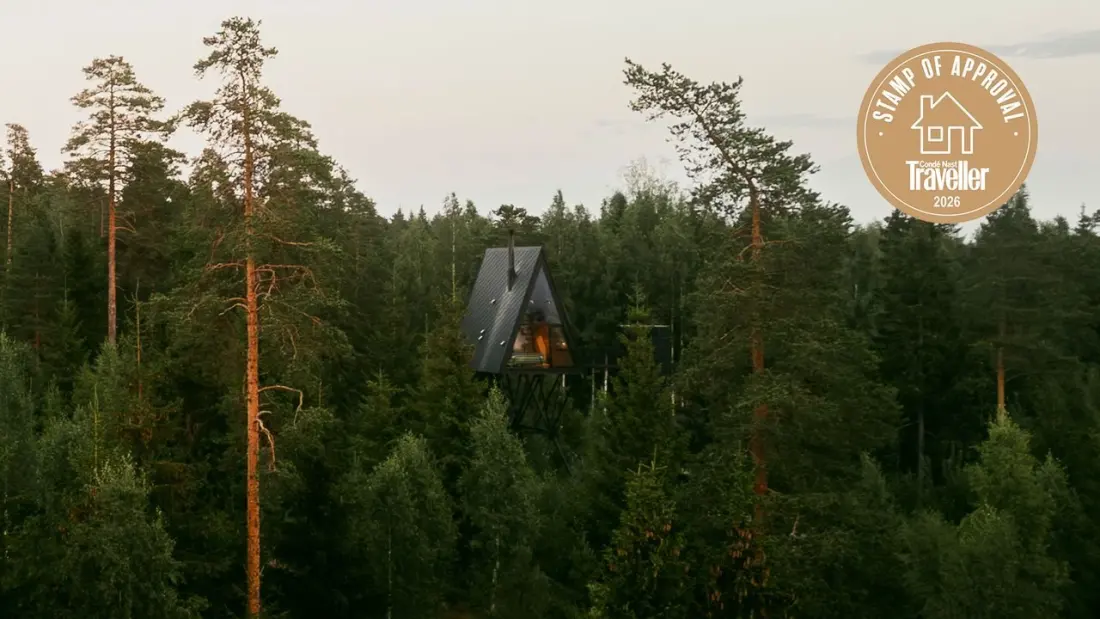
The strongest argument for going is Pan, a set of three treetop cabins built on a private forest estate near Lake Gjesåssjøen by hosts Christine Mowinckel and Kristian Rostad. Designed by architect Espen Surnevik, the cabins won a European Steel Design Award in 2019 for their sustainable, landscape-sensitive construction. Each one is raised eight metres off the ground on steel and reached by a spiral staircase.
The cabins are compact but well thought out. The one the writer stayed in with three friends covered 40 m², with pine floors, big panoramic windows over birch and spruce woodland, a small but fully equipped kitchen, a bathroom with Elm Organics products, and a ladder up to a double bed in the A-frame apex. Fold-out wall beds suit children, and the whole setup feels cosy — best for groups who genuinely like each other's company. Food isn't included, so you stock up at a nearby supermarket; think elk stew.
The appeal is as much outside as in. Every cabin has a firepit and a slate table with sheepskin-covered benches at ground level, plus add-on extras: a candle-lit open-air hot tub, a yoga platform with supplied mats, and mountain bikes for the ride to Lake Gjesåssjøen, a nature reserve where geese gather in winter. There's a lovely log-cabin café and farm shop, Søstuen2280, by the lake.
Local operators fill the itinerary. Spreke Opplevelser runs kayaking trips on the tranquil Kynna river, past beaver dams and dragonflies, with a stop on a sandbank to cook chocolate pastries. Guide and storyteller Marit Høvik leads forest hikes from the cabin doorstep, teaching you which berries are safe and which are 'for your enemies', while huntsman Martin Løvtjernet hosts visitors in a wooden hut for moose sausages, flatbread, chaga mushroom tea and tales of the wolves, lynx and capercaillie that roam here. In winter, the region swaps to snowshoeing, cross-country skiing and horse-drawn sleigh rides.
The name Finnskogen comes from 16th-century Finnish immigrants whose slash-and-burn farming unsettled locals — a history that still simmers quietly and adds real depth to the folklore you'll hear.
For travellers, the pitch is simple: the same Norwegian wilderness experience as the crowded northern routes, minus the queues, with genuinely striking architecture to sleep in. It suits small groups or couples who want a nature-based break that's hands-on — paddling, cycling, foraging — rather than drive-and-photograph.
Story based on reporting by Condé Nast Traveller UK.