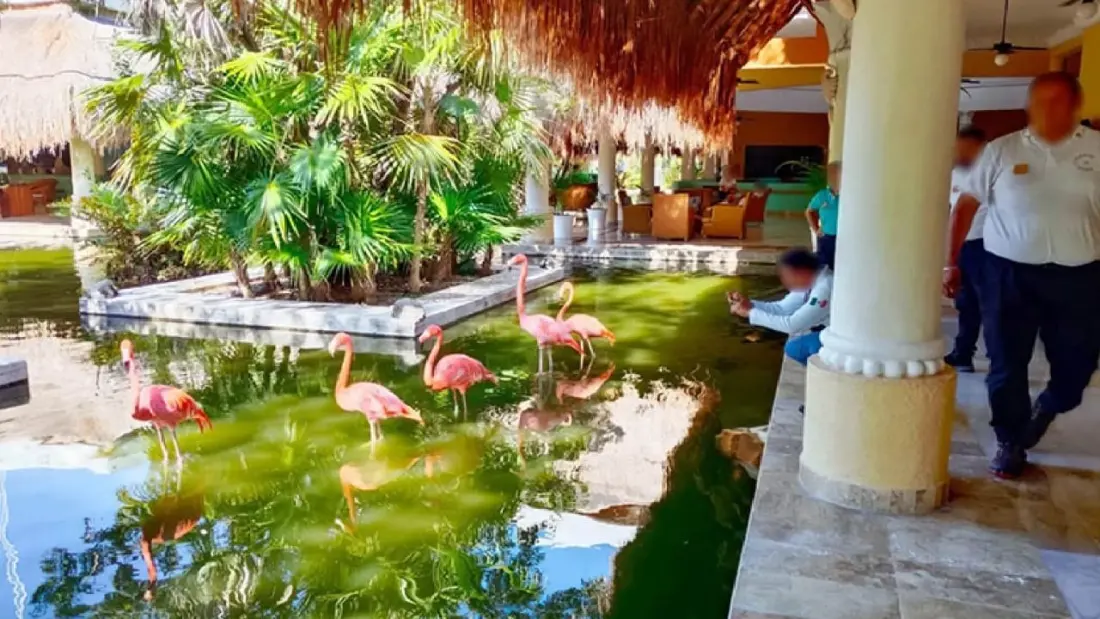
A hotel complex in Playa del Carmen has come under the watch of Mexico's environmental watchdog after inspectors found it couldn't prove where its on-site wildlife came from. Profepa, the Federal Attorney for Environmental Protection, secured 20 animals as a precautionary measure earlier this week — though they're still physically at the property for now.
The haul reads like a small zoo inventory: seven European fallow deer, five American flamingos, two jicotea turtles and one mojina turtle, a green Javan peacock, three blue peacocks, and a black swan. Inspectors checked identification tags, inventoried each animal, and assessed their condition. The good news for animal lovers: everything looked healthy, and there were no signs of mistreatment.
So why the intervention? The hotel's collection is properly registered and even has a management plan approved by the wildlife directorate of Mexico's environment ministry. What's missing is the paperwork showing the legal origin of the individual animals — and under Mexico's General Wildlife Law, that matters. The law prohibits capturing or trafficking wild animals from their natural habitat, allowing capture only with authorisation for specific purposes like breeding, reintroduction, research, or environmental education.
Profepa has appointed the person responsible for the facility as administrative custodian, so the animals remain on site under official supervision while the administrative process plays out. The agency hasn't named the hotel, and further measures under the Wildlife Law remain possible depending on the outcome.
What does this mean for travellers? Resorts across the Riviera Maya often keep flamingos, peacocks, and other animals on their grounds as an attraction — guests photograph them by the pool, kids feed them, and few ever ask questions. This case is a reminder that those animals are regulated wildlife, and that a property's handling of them can be a rough proxy for how seriously it takes its broader environmental obligations. If animal welfare and legality factor into where you book, it's fair to ask a hotel about the provenance and permits behind any resident wildlife. Mexico's environmental enforcement is clearly willing to act, even against large hospitality operations, when documentation doesn't hold up.
For now, the deer, flamingos, turtles, and peacocks stay put — just under a lot more official scrutiny than before.
Riviera Maya News