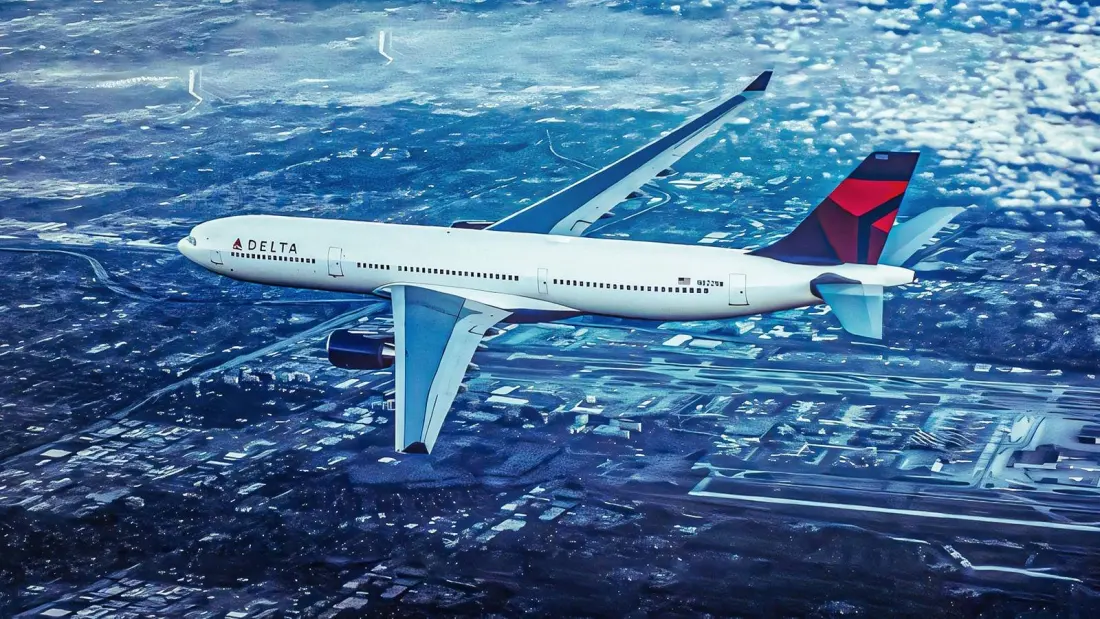
A routine transatlantic hop turned into an emergency on Sunday when Delta flight 251, an Airbus A330-300 flying from Barcelona to Boston, filled with smoke mid-flight and diverted to Porto in northern Portugal.
The aircraft was still close to Spain's northeast coast when smoke appeared in the cabin, prompting the crew to declare an emergency and turn back. Air traffic control vectored the jet to Francisco Sá Carneiro Airport, where it touched down safely at 5:45 PM local time, roughly two and a half hours after leaving Barcelona at 3:15 PM. On board were 283 passengers and 13 crew.
Portugal's Emergency and Civil Protection Authority said eight passengers were treated and released at the airport, while three were taken to a local hospital. Air traffic control audio also indicates two flight attendants needed supplemental oxygen during the diversion. Delta confirmed the landing was safe and attributed the incident to an unspecified mechanical issue.
The likely culprit is the aircraft's bleed air system — the setup that cools engine air for the cabin, prevents wing icing and pressurises various systems. When an engine's carbon seal fails, oil can leak into the compressor and produce smoke that gets piped straight into the air conditioning. Since pilots can't tell on the spot whether fumes are toxic, the standard response is to declare an emergency and land at the nearest suitable airport, which is exactly what happened here.
Worth noting for frequent flyers: these so-called "fume events" have been cropping up more often on Airbus widebodies lately. Just last Thursday a Delta A330neo flying Boston to London Heathrow turned back over a mysterious odour, and earlier this month a Swiss A330 from Zurich to New York diverted to Bangor, Maine after smoke filled the business class cabin. Flight attendants have been increasingly vocal about contaminated cabin air, particularly on the A320 family — a United crew member's lawsuit against Airbus over alleged fume-related injuries was dismissed in April 2025, though the debate continues.
For perspective, an FAA report from 2015 put reported fume events at fewer than 33 per million departures — rare, even if the recent cluster is uncomfortable reading. The plane involved here, a 2015-built A330-300 registered N824NW, runs the widely used General Electric CF6-80 engine found on generations of widebodies from the DC-10 to the 747.
If you were booked on a diversion like this, the practical reality is a long ground delay while the airline rearranges onward travel — Delta said it was working to get passengers to Boston as quickly as possible. Aircraft diversions are handled as emergencies for good reason, but they remain statistically rare, and crews train constantly for exactly this scenario. For nervous flyers, the takeaway is less about avoiding a particular aircraft type and more about knowing that smoke of unknown origin always gets treated seriously, which is a good thing.
Simple Flying