
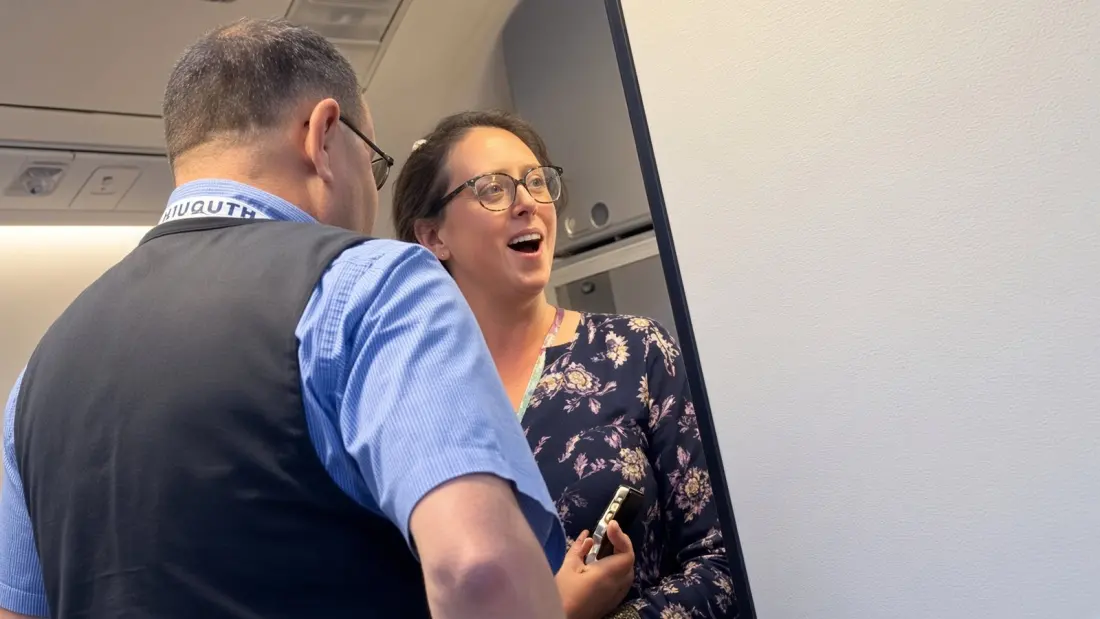
A viral video from a Southwest Airlines flight shows a passenger at the aircraft door arguing with a flight attendant after her carry-on was taken for a gate check. Her complaint: the overhead bins still had space. The exchange escalated fast — she repeatedly accused him of assault and battery, he said she had arrived with a bad attitude and claimed she had physically assaulted him, and she was told she wouldn't be flying, with police called to remove her. The roughly two-and-a-half-minute clip, shared by A Fly Guy, doesn't show what happened before recording started, and her ultimate fate is unknown. But the underlying grievance — surrendering a bag only to walk past visibly empty bins — is one plenty of travellers will recognise.
Why does this happen? It's largely about timing. Gate agents can't wait to see whether bins actually fill, because discovering a shortage when the final passengers board means bag-tagging, backtracking down the aisle against traffic, and a delayed departure. So agents check bags early, estimating space from the aircraft type, passenger load and route. American Airlines, for example, has used computer systems advising agents how many bags to gate check — not a live reading of bin availability. And the incentives skew one way: a late departure draws management attention, while a passenger waiting longer at baggage claim doesn't register as a gate delay.
Southwest's version of this problem has grown recently. The airline's old perk of two free checked bags kept large luggage out of the cabin; since bag fees were introduced and assigned seating rolled out, more passengers board with bigger carry-ons, slowing boarding and raising the odds of preemptive gate checks.
Even perfect overhead bins don't fully fix things. Larger bins still get loaded badly, with small items placed up top that could have gone under a seat. Sometimes a gate check is genuinely needed; sometimes the airline just doesn't want to spend the time working out whether it is. What makes it sting is when passengers are told bins are full and then walk past rows of open space — it reads as dishonest even when the process is about risk management.
The lesson for flyers is less about winning the argument and more about not having it. If a gate agent tags your bag, escalating at the boarding door almost never ends well, as this clip demonstrates. If overhead space genuinely bothers you, the author's suggested fix is intriguing: paying for guaranteed bin space — bundled into higher fares, elite status or sold separately — instead of the current 'license to hunt' that early boarding products effectively offer. Until airlines sell that, your best defences are early boarding, a regulation-sized bag, and packing small items where they can go under the seat. Credit: View from the Wing.