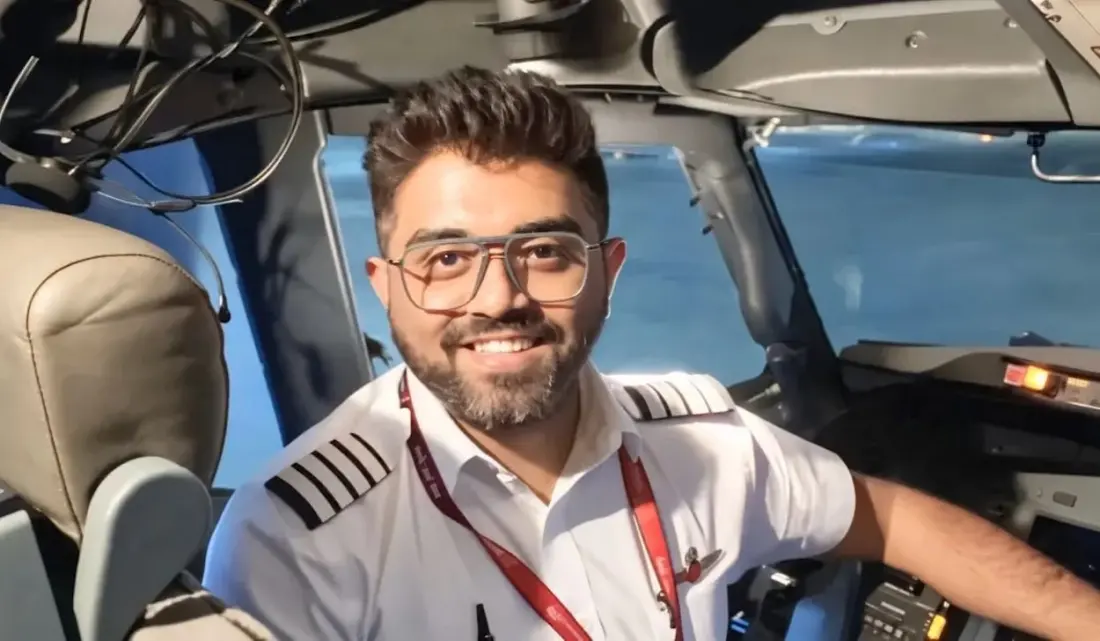
A flydubai flight from Dubai to Tel Aviv nearly ended in catastrophe, and the details that have since emerged read like a thriller. Israeli officials say the Omani first officer stabbed Captain Smit Machchhar, an Indian national, and tried to crash the Boeing 737 MAX 8. What saved everyone: a wounded pilot who fought to open the cockpit door from the inside, and passengers plus off-duty flydubai pilots who took over and landed the plane.
The flight, FZ1073, left Dubai around 7:05 a.m. local time and was cruising at 34,000 feet over Saudi Arabia when things went wrong. According to an Associated Press reconstruction, the aircraft began a steep descent at 05:21 UTC, dropping to roughly 16,600 feet within a minute, then descended again toward 15,000 feet. By 05:28 the crew had squawked 7700, the general emergency code; seven minutes later came 7500, signalling unlawful interference. After a brief crossing into Jordanian airspace, the plane turned toward Tabuk, Saudi Arabia, and landed safely at 06:58 UTC.
For passengers, the first sign was the plane repeatedly plunging. Accounts describe people rushing toward the cockpit as the aircraft dropped. The captain's own account, shared during a conversation with Indian Prime Minister Narendra Modi, fills in the crucial gap: realising the aircraft was going down and despite his stab wounds, Machchhar made a final effort to get the cockpit door open so others could get in. Flydubai has confirmed that company pilots travelling as passengers secured the aircraft and brought it down safely, and has thanked the captain, those pilots, the cabin crew and assisting passengers.
The official characterisation has hardened from 'cockpit altercation' to attempted terrorism. A senior UAE presidential adviser, Anwar Gargash, described it as terrorism according to The Wall Street Journal. Investigators still need to establish motive and whether anyone else was involved. Conspiracy theories, including a fabricated BBC video alleging Israeli and Indian involvement, have already circulated online; ABC News found no evidence supporting them. Meanwhile, Saudi Arabia has transferred both the suspected first officer and the injured captain to the UAE, making extradition to Israel unlikely.
Why does this matter to anyone who flies? Partly because it's a reminder of how much has to go right in a crisis — and how thin the margin can be when the person at the controls is the threat. But mostly it's a story about ordinary people and professionals doing extraordinary things: a badly injured captain thinking of the door instead of himself, passengers running toward danger at 16,000 feet, off-duty pilots stepping into seats they weren't scheduled for. Route-specific worries are unlikely to linger once the investigation concludes, but the human story here deserves the attention it's getting.
Story via Live and Let's Fly.