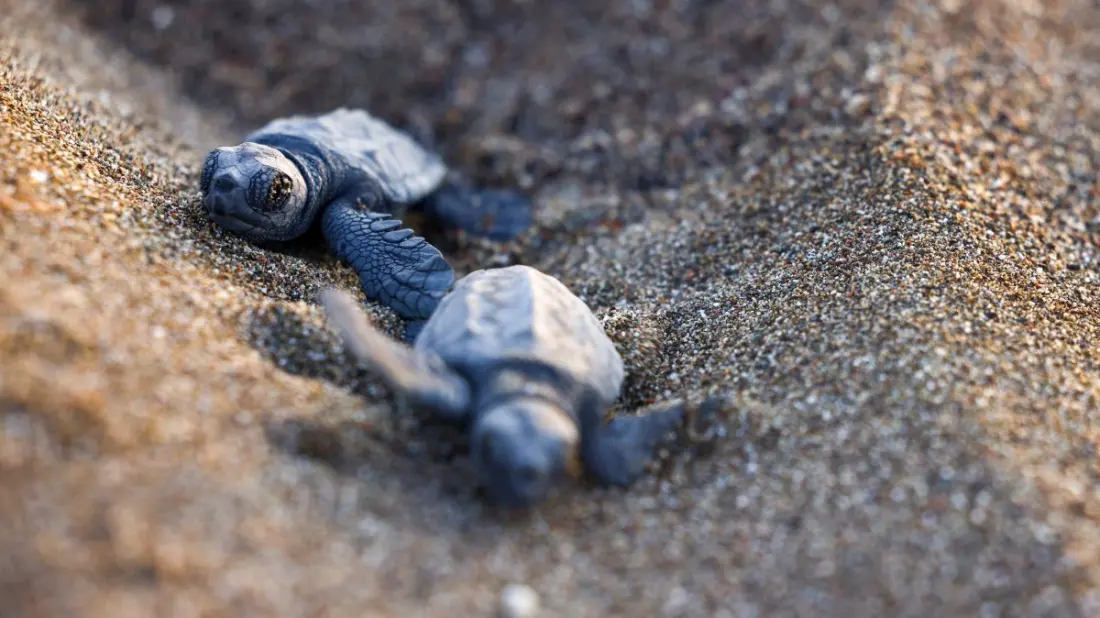
On the Iztuzu sandbar near Dalyan, a stretch of Mediterranean coast that doubles as a tourist beach by day, night belongs to the turtles. Biologist Yakup Kaska and his volunteers patrol four kilometres of sand, watching over nests protected by pyramid-shaped cages that keep foxes out. Each season, roughly 30,000 loggerhead hatchlings scramble from hundreds of nests into the sea here. Many of them, scientists warn, are telling us something uncomfortable about the climate.
Türkiye hosts the COP31 U.N. climate summit in Antalya next month, and the loggerhead turtle is its mascot — a fitting choice. Because hatchling sex is determined by nest temperature, warming sands are tipping the balance towards females. A five-year doctoral study by Ayfer Şirin of Üsküdar University at Patara beach estimated about 70% of hatchlings were female, and broader analysis suggests some populations are hitting 80-90%. Nest temperatures at Iztuzu have climbed nearly one degree Celsius in the past 20 years. Above 30°C, embryos face higher mortality risk. If the trend continues, there may eventually be too few males to sustain reproduction.
The changes don't stop at the nest. Şirin's research linked warming to earlier nesting and shorter incubation periods, and some females are now nesting further north than before. Since loggerheads migrate across the Mediterranean — nesting in Türkiye, feeding off Tunisia or in the Adriatic — Kaska argues their survival depends on cross-border cooperation, exactly the kind COP31 is meant to deliver. The Mediterranean has been warming steadily since the early 1980s, and European waters just recorded their hottest summer months on record.
There's a human-sized conservation story here too. Injured turtles recover in circular pools at the DEKAMER rehabilitation centre, a short walk from Iztuzu beach, where vets treat propeller wounds and other injuries. The most common culprit is plastic: 60% of turtles brought in have at least five pieces of plastic in their digestive systems. At sea, nets are lethal too — a trapped turtle that can't surface drowns.
Why should holidaymakers care? If you're visiting Türkiye's Turquoise Coast between spring and autumn, Iztuzu is one of the most rewarding wildlife experiences in the Mediterranean — and one where your behaviour matters. Stick to marked areas, skip beach lights after dark (volunteers use dim red lamps so hatchlings aren't disoriented), and keep plastics out of the water. The beach works as a working conservation site precisely because tourism and protection coexist there. And if the turtle-fest piques your interest, Antalya will be awash with climate-themed events during the summit itself.
Mediterranean loggerheads are currently listed as of least concern thanks to decades of conservation work — but scientists say climate change is quietly undoing some of those gains. The hatchlings disappearing into the waves at dawn may not return to nest for decades. Whether there are enough males left for them to breed with is, at this point, up to the summit and everyone it represents.