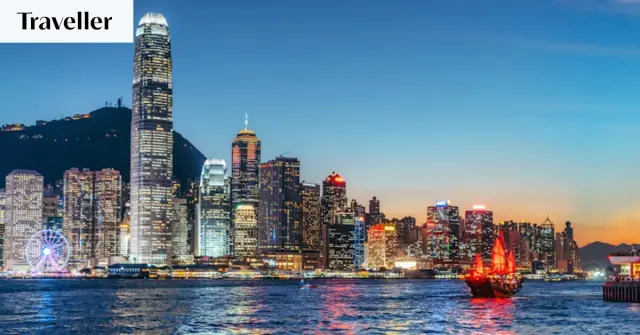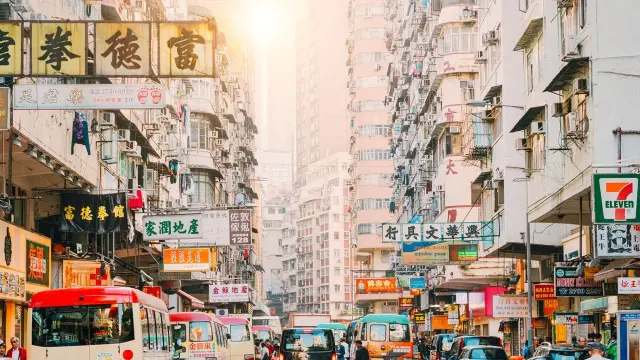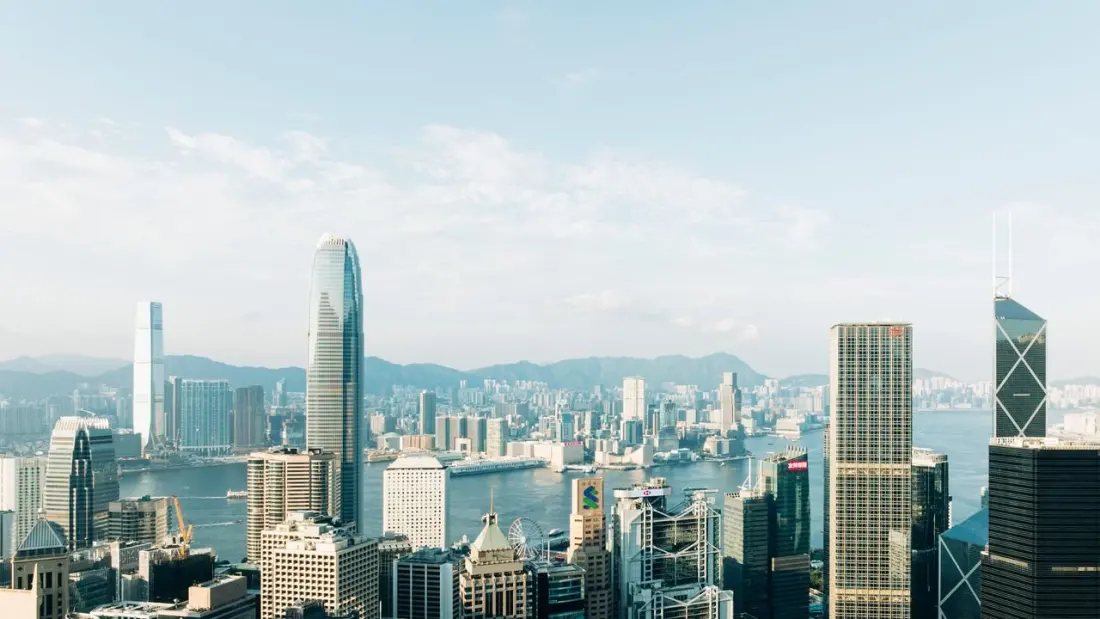
Hong Kong is small — around 430 square miles across Hong Kong Island, Kowloon and the New Territories — but with seven million people stacked into more than 9,000 high-rises, the city runs on speed and quiet courtesy. Locals notice when you fumble at the MTR gates or linger over a dim sum table others are waiting for, so a little know-how goes a long way.
Start with the Octopus card, the contactless pass that works on everything: the MTR, the Peak Tram, ferries to islands like Lamma and Cheung Chau, and more than 30,000 shops and cafes. Get one at the Airport Express desk or any MTR station; the HK$50 deposit is refundable. The MTR is the backbone, but the double-decker buses often deliver better views — the #6 from Central to Stanley hugs the island's southern coast, while the #94 out of Sai Kung threads through the UNESCO Global Geopark. On board, keep right on escalators, let people off first, and don't eat or drink — it's banned on all public transport, which is why everything is spotless.
Dim sum deserves its own rules. Arrive before noon or after 2pm to dodge queues, whether you're at budget Michelin-starred Tim Ho Wan or the 90-year-old Luk Yu Teahouse. Tick dishes on the printed order form and wave it for a server; tap two fingers on the table when someone refills your tea. And skip the Mandarin: Hong Kong speaks Cantonese, so 'nei ho' (hello) and 'mmm goi' (thanks/excuse me) will earn you far more goodwill than 'ni hao'.
For proper local flavour, head to a Cooked Food Centre — one in every district, usually attached to a fresh market — where dai pai dong-style stalls, communal tables and brusque service come with excellent, cheap Cantonese food. Kowloon City and Java Street are good entry points.
The city rewards wandering. Many bars, clubs and even hotels hide inside office towers and tenements, so look for signposted entrances or ask security. Rainy day? The Hong Kong Palace Museum (HK$70) and the M+ museum of contemporary Asian art (HK$190) are world-class, and dozens of smaller museums are free on Wednesdays. Despite the skyline, over 70% of the territory is protected green space — hike one of hundreds of trails (the free Hiking Trail HK app helps) or just find a park, like Kowloon Park's flamingo-filled lake. Safety is a genuine plus: violent crime and pickpocketing are rare, so neighbourhoods like Sham Shui Po, Wan Chai and the walled village of Lai Chi Wo are easy to explore on a whim.
Two last insider habits: treat yourself to a foot reflexology session — studios glow with LED feet signs and often stay open past midnight, charging around £25 an hour — and time your trip carefully. The city empties during Chinese New Year (late January to mid-February), while Golden Week in early October floods the streets and malls with tour groups. Avoid the latter if you hate queues.