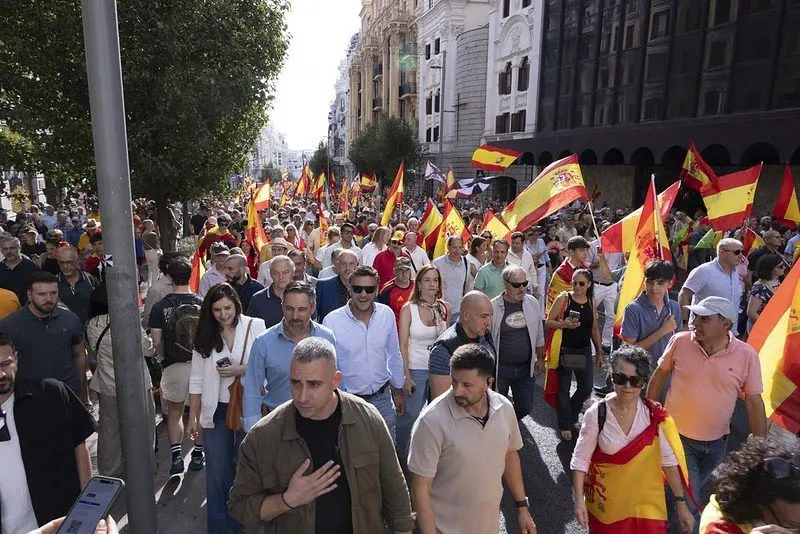
Madrid saw one of its largest right-leaning demonstrations in months on Saturday, as crowds marched from Plaza de Cibeles along Gran Vía to Moncloa in the second 'March for Dignity' organised by Sociedad Civil Española, a platform of more than 150 civil associations. Police put attendance at 20,000; organisers said 180,000. The rally passed without incident under heavy police presence.
The trigger is Ceuta, the Spanish enclave on Morocco's north African coast, which has been under strain since more than 70,000 migrants crossed into the territory on 30-31 July. Most left within hours, but thousands remain, some sleeping on the streets, and the city's resources have been stretched thin. Protesters chanted 'Ceuta is not for sale' and directed anger at Prime Minister Pedro Sánchez and Interior Minister Fernando Grande-Marlaska.
The opposition turned out in force. Vox leader Santiago Abascal and PP secretary general Miguel Tellado both attended, with Tellado demanding that those who entered Ceuta be returned to Morocco and accusing the government of advance knowledge and 'utmost negligence'. Abascal went further, claiming Ceuta 'remains invaded' and questioning why the PP has not backed Vox's push to use Article 102 of the Constitution to pursue a treason accusation against Sánchez.
Ministers hit back. Digital Transformation Minister Óscar López accused the PP of choosing far-right rallies over housing and education, while Presidency Minister Félix Bolaños dismissed the march's manifesto as 'delusional'.
That manifesto asks for a lot: a general election by 15 November — Spain's next is not due until August 2027 — guarantees against electoral-roll manipulation via the 'grandchildren's law' nationality route, a treason procedure in Congress, and the placement of Ceuta under military control with all migrants expelled to Morocco. A further mobilisation is planned for Barcelona on 12 October, the national day.
Meanwhile, El País reported that the government will bring a decree to Tuesday's Cabinet to speed up returns from Ceuta, shortening asylum decision windows and limiting applicants' right to stay in Spain during the process. Madrid has already expanded temporary shelters, deployed hundreds of police and soldiers, and increased funding for the city — steps critics say fall well short.
For travellers, the practical picture is this: Ceuta remains reachable and open, but the border with Morocco has been the flashpoint, so anyone planning to cross between the city and Morocco should check current border status and local advice before travelling. The crisis is also a live political story in mainland Spain, with further large demonstrations announced — worth factoring into any trip around 12 October, when Barcelona hosts the next rally on a public holiday that already draws crowds.