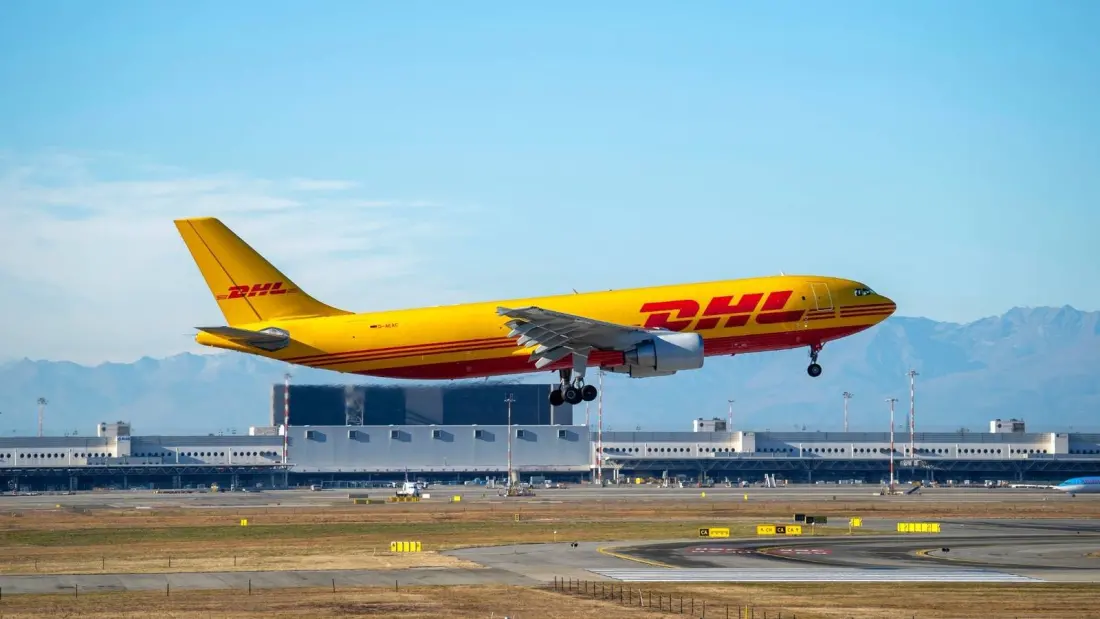
A routine cargo run from Leipzig to London ended up scrapping an aircraft. On October 12, 2025, an Airbus A300-600F registered D-AEAG — operated by European Air Transport Leipzig under the DHL banner — bounced hard while touching down at Heathrow. The crew went around, but during the climb the jet's tail struck the runway, and the damage turned out to be terminal for a 33-year-old airframe.
The UK's Air Accidents Investigation Branch has now published a bulletin explaining how it happened. The aircraft, which began life flying passengers in Japan in 1992 before converting to freight in 2011, was cleared to land at 5:12 PM local time after the roughly 90-minute hop from Leipzig Halle. Footage from a livestream captured the bounce on touchdown. As the commander pitched up for the go-around, the still-deploying ground spoilers added a nose-up effect, and the tail hit the deck.
The report's most interesting finding is about human instinct rather than machinery. The pilot had already selected reverse thrust — a normal part of landing — but did so on autopilot, so to speak, without consciously registering it. When the decision changed to a go-around, that selection complicated the recovery: the engines responded sluggishly as the crew switched to takeoff/go-around thrust, airspeed dropped, and the aircraft took several extra seconds to climb away, worsening the tail strike.
The jet landed safely at the second attempt, but the lower tail section at frame 77 was badly hurt — skin buckled inward, rivets separating from the skin, and abrasion damage to the tail skid. Repairing a freighter of that age to commercial-service standards simply wasn't worth the money. D-AEAG sat at Heathrow for more than three months, then flew one last time on January 31, patched up only for a ferry flight to Lleida in Spain for storage and scrapping. Because the temporary repairs raised pressurization concerns, the aircraft cruised at just 10,000 feet for its final two-hour journey.
Why does this matter to anyone who flies? Reverse thrust selection is one of the most ingrained habits in a commercial pilot's repertoire, and the AAIB's findings show how muscle memory can work against even experienced crews when a landing suddenly becomes a go-around. Go-arounds themselves are far more common than most passengers realise — and entirely safe in the vast majority of cases — so this bulletin is a useful reminder of why crews train them relentlessly, and why investigators dig into every detail when one goes slightly wrong.