
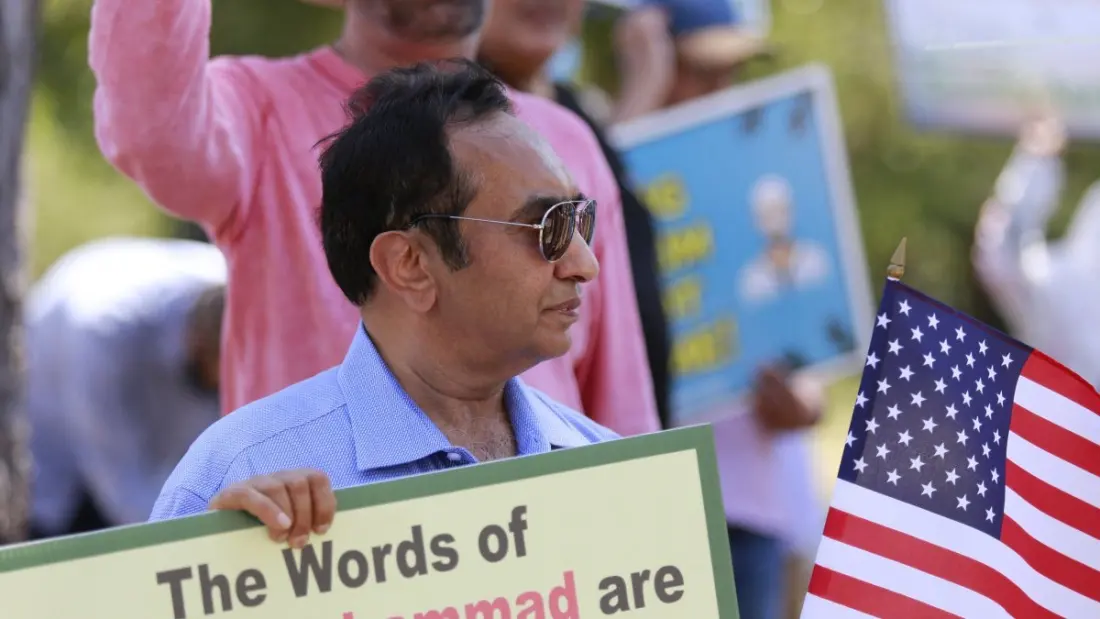
Texas has finalised a major rewrite of its high school social studies standards, and the way it treats Islam has become the flashpoint. The Republican-controlled State Board of Education voted through the framework in mid-September 2026 after days of heated public testimony, keeping language that Muslim students, parents and civil rights groups say embeds bias into public school classrooms.
The most contested provision requires students to learn that "radical Islam" motivated the 9/11 attacks. Speakers at the board urged a narrower framing — al-Qaida and Osama bin Laden specifically — arguing the current wording ties an entire religion to terrorism. They pointed out that Muslims were among the victims and first responders that day, including EMT Salman Hamdani, who died at the World Trade Center. Another provision directs students to study early Islam largely through military campaigns, slavery and the taking of captives, while rejecting an amendment to drop the word "brutal" from those descriptions.
Even the board's own appointed experts pushed back. Andrea Hutchison, a curriculum coordinator for Prosper ISD, said parts of the portrayal fail under historical scrutiny, and UT Austin philosophy professor Robert Koons warned against including claims not grounded in well-established sources. Their concerns didn't shift the outcome. The board also declined to restore material on Muslim contributions to algebra and astronomy — an omission that drew particular anger. Fifteen-year-old Habiiba Quresh told members she felt attacked, "as if my religion doesn't belong." CAIR-Texas condemned the standards outright and noted the revisions also reduce coverage of Black and Palestinian history.
The Islamic-history dispute sits inside a much broader conservative reshaping of what Texas schools teach. The new framework emphasises Christianity and Western civilisation, links biblical imagery to the Declaration of Independence and Martin Luther King Jr.'s "I Have a Dream" speech, frames slavery as an institution that "existed in many societies throughout history" — wording Democrats say obscures the racial system unique to the US — and asks students to examine arguments against Lyndon B. Johnson's Great Society welfare programs. A sixth-grade world cultures course covering societies beyond the West has been eliminated entirely, which some educators fear will narrow students' exposure to the wider world. Board Chair Aaron Kinsey defended the process as balanced and democratic.
Why does this matter to travellers? Texas is one of the largest school systems in the United States, and its textbook choices influence materials nationwide. For Muslim families visiting or relocating to the state, and for anyone who cares about how destinations present culture and history to the next generation, it's a signal of the climate on the ground. The rules don't kick in immediately — phasing into classrooms starts in the 2030-31 academic year — so the political fight, and likely legal and advocacy challenges, are far from over. Critics see the overhaul as the culmination of years of battles over race, religion and national identity in Texan education; supporters call it a welcome restoration of US and Western history.