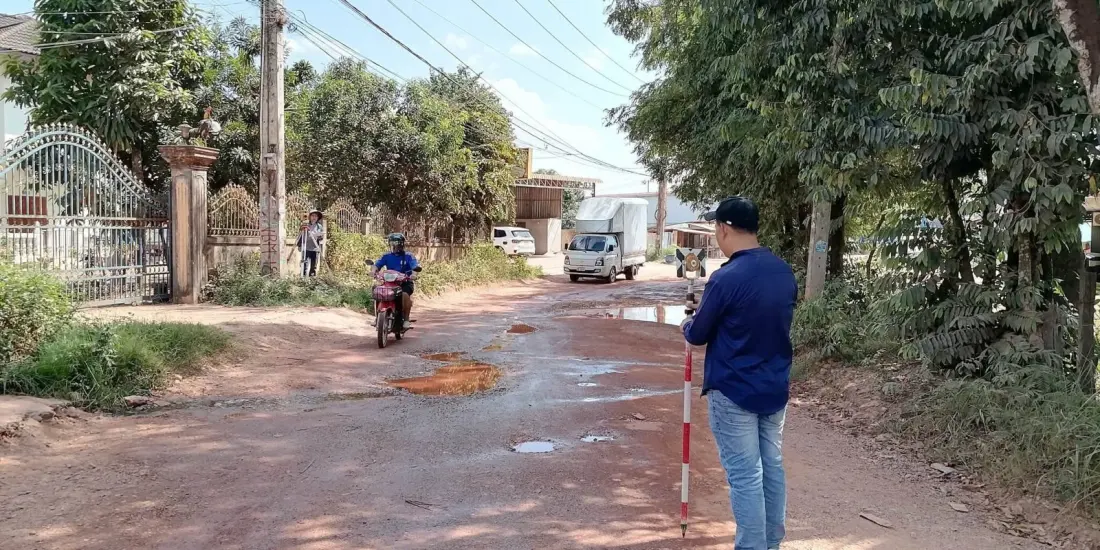
Laos is spending big on the roads around its capital. On 18 November, Vientiane's Department of Public Works and Transport kicked off a LAK 400.76 billion project (about USD 17.7 million) to lay 14.32 kilometres of reinforced concrete roads across the Naxaythong and Xaythany districts, with a ceremony held in Naxaythong itself.
The build is split into two sections. The larger one runs 9.48 kilometres and 12 metres wide, starting at National Road 13 North at Dongluang village, passing through Dongxiengdy village in Naxaythong, and continuing to Nongphaya village along the Tanmixay-Sikeut road in Xaythany. That stretch carries the bulk of the budget at LAK 280.85 billion (USD 12.4 million). The second section covers 4.84 kilometres from Dongluang to Naxay-neua and Dongxiengdy villages, with a width between 7 and 12 metres, priced at LAK 119.91 billion (USD 5.3 million).
Contractor Phaengphone Road-Bridge Construction and Irrigation Sole Co., Ltd has been given five years to finish. Crews are already surveying boundaries and checking for obstacles along the route. The spec is solid: a 23-centimetre reinforced concrete surface, plus drainage ditches, culverts, streetlights and traffic markings along the way. Company president Phaengphone Khanthayongthong has publicly committed to quality materials and on-schedule delivery.
What does this mean for visitors? Not much right now — dust and detours, if anything — but the districts in question sit on the northern and western edges of Vientiane, areas most tourists only cross on the way to or from National Road 13 North, the main artery heading out of the capital. Anyone driving towards the north of Laos, or heading to rural spots around the capital that few international visitors reach, uses these corridors. Concrete surfacing with proper drainage should mean fewer potholes, less dry-season dust and better night driving once the streetlights go in.
The five-year timeline is the catch. This is a long-horizon project, so anyone planning a Vientiane trip in the next couple of years should expect gradual works rather than an instant transformation. The real payoff is likely for travellers later in the decade, when the outskirts of the capital become easier and safer to navigate by car or motorbike — good news for anyone keen to explore beyond Vientiane's riverside and temples into the quieter villages and farmland on its fringe.
It's also part of a broader pattern: Laos has been steadily upgrading transport links around Vientiane as tourism and cross-border trade through the capital grow. Better feeder roads into the districts around the city make day trips and self-drive loops more realistic for independent travellers who've traditionally stuck to the city centre.
For now, file it under 'worth knowing', not 'worth planning around' — but if you're road-tripping in Laos in 2027 or beyond, these two districts should be a smoother ride than they've ever been.
Original report: Laotian Times