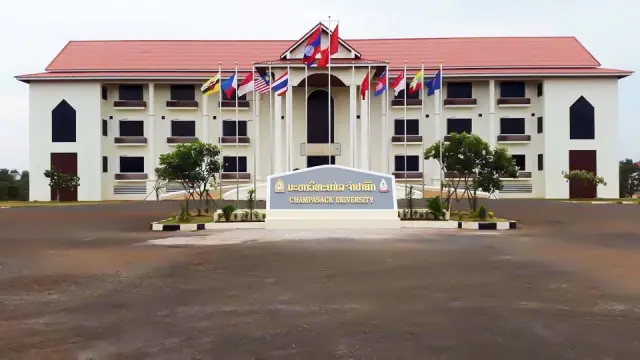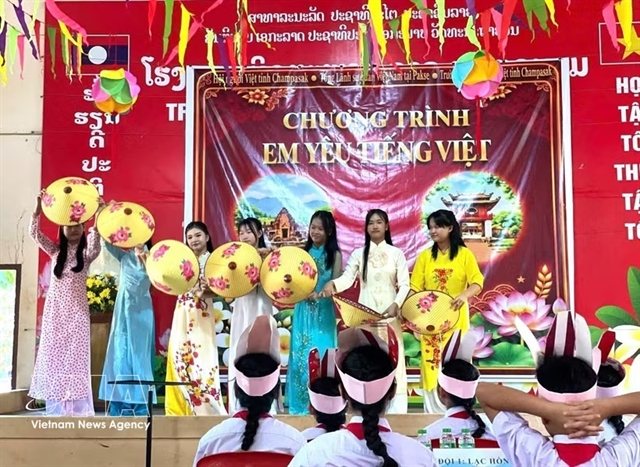
In Pakse, the riverside capital of Champasak province in southern Laos, a school hall recently turned into the unlikely stage for a Vietnamese language competition. Teams of students from grades 6, 7 and 8 faced off across three contest segments, backed by loud support from an audience of fellow pupils, teachers and local officials. Prizes went to first, second and third place, and student performances between rounds kept the atmosphere more festival than exam.
The timing was deliberate. Consul General Tạ Phương Dung opened the event by tying it to two dates on the calendar: the 51st National Day of Laos and Việt Nam Culture Day, marked on November 24. Her framing went beyond vocabulary drills — the idea is that students who learn the language also pick up the history and cultural connections behind the Việt Nam–Laos relationship, and that each participant can carry that role home, acting as a kind of ambassador for the friendship in their school and community.
The Consul General of Việt Nam in Pakse has been a steady backer of this kind of grassroots exchange. Đồng Công Dũng, who chairs the Vietnamese Association in Champasak Province, used the occasion to thank both the provincial authorities and the consulate for their ongoing support of educational activities and people-to-people programmes for students in the area.
For travellers, the story is a useful signal about a corner of Laos that gets far less attention than Luang Prabang or Vang Vieng. Pakse sits at the confluence of the Xe Don and Mekong rivers and serves as the main base for exploring the Bolaven Plateau's coffee country and waterfalls, plus the ancient Khmer-era ruins of Wat Phu nearby. A visible, long-running Vietnamese community — complete with a consulate, cultural events and school programmes — is part of the city's texture, and it shows in the food, markets and cross-border links. If you're passing through southern Laos en route to the Cambodian border or the 4,000 Islands river region, the city offers a genuinely local, low-key stop rather than a tick-box sight.
It also hints at how easy the Việt Nam–Laos corridor is in practice: overland routes connecting central Vietnam's coastal cities with southern Laos are well established, and cultural familiarity between the two countries makes the journey smoother for independent travellers. A school language contest might seem a small thing, but it's the sort of everyday cross-border contact that explains why travelling between the two feels less like crossing a border and more like moving between neighbours.
For anyone planning a southern Laos loop — Pakse, the plateau, Wat Phu, then south to Don Det and Don Khon — timing a visit around local cultural events adds something you won't find in the guidebooks. Check with guesthouses or the provincial tourism office on arrival; these community gatherings are rarely advertised online, but they're often open to respectful visitors who want to see everyday life, not just the viewpoints.
Story reported by Vietnam News Life.