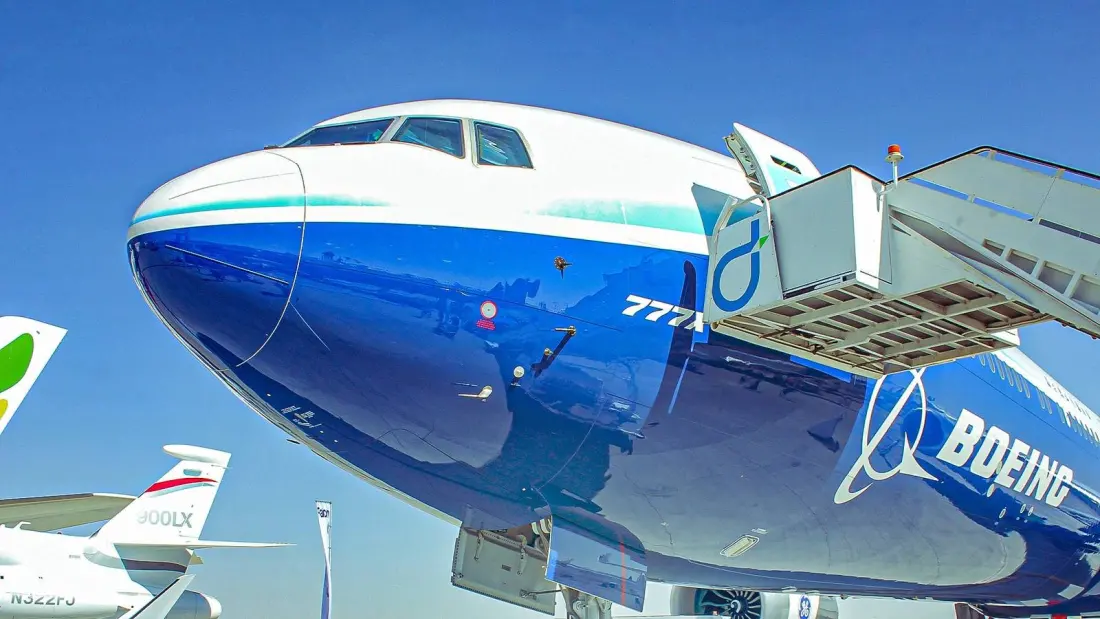
Tucked into the crown of Boeing's new 777X flagship is a space most passengers will fly over and never know exists. It looks, from the outside, like the aircraft has a hint of a second storey — but this isn't a 747-style upper deck or a swanky lounge. It's the crew rest area, and it might be one of the smartest design decisions on the whole jet.
The 777X is Boeing's next-generation evolution of the long-running 777 family, centred on the larger 777-9 and the longer-range 777-8. It packs new GE9X engines, a composite wing with folding wingtips that let a huge span fit standard airport gates, and a cabin borrowed heavily from the 787 playbook: bigger windows, dimmable LED lighting, lower cabin altitude, better humidity and a quieter ride. Nearly 700 aircraft have now been ordered, with customers including Emirates, Qatar Airways, Lufthansa, Singapore Airlines, Cathay Pacific and IAG, plus freighter orders for the 777-8F.
But the hidden module above the main cabin is where the design gets interesting. Boeing's documentation confirms separate overhead rest spaces for pilots and cabin crew — enclosed Class One facilities with horizontal bunks, lighting, ventilation, power and communications. Pilots stay close to the cockpit; flight attendants get a secluded compartment away from the passenger cabin. Crucially, by building crew accommodation into otherwise unused overhead volume, Boeing keeps every revenue seat and cargo position on the main deck and in the hold.
Why should a traveller care? Because on flights stretching well past 14 hours, regulations require augmented crews, and those crews need real sleep — not a doze in a business class seat. Better-rested pilots and cabin crew mean sharper, safer, more attentive service on the ultra-long routes the 777X is built for. It's a quiet efficiency tool rather than a gimmick: human-factors design working hand in hand with airline economics.
The programme isn't without drama. Certification timing remains uncertain after a long and closely watched development path, and analysts are split on whether the 777X will rescue Boeing's finances or deepen its troubles. But once it enters airline service, the combination of range, capacity and fuel efficiency is expected to make it a fixture of long-haul fleets — which means this hidden upstairs bunker will quietly clock millions of miles while the rest of us enjoy the bigger windows downstairs.