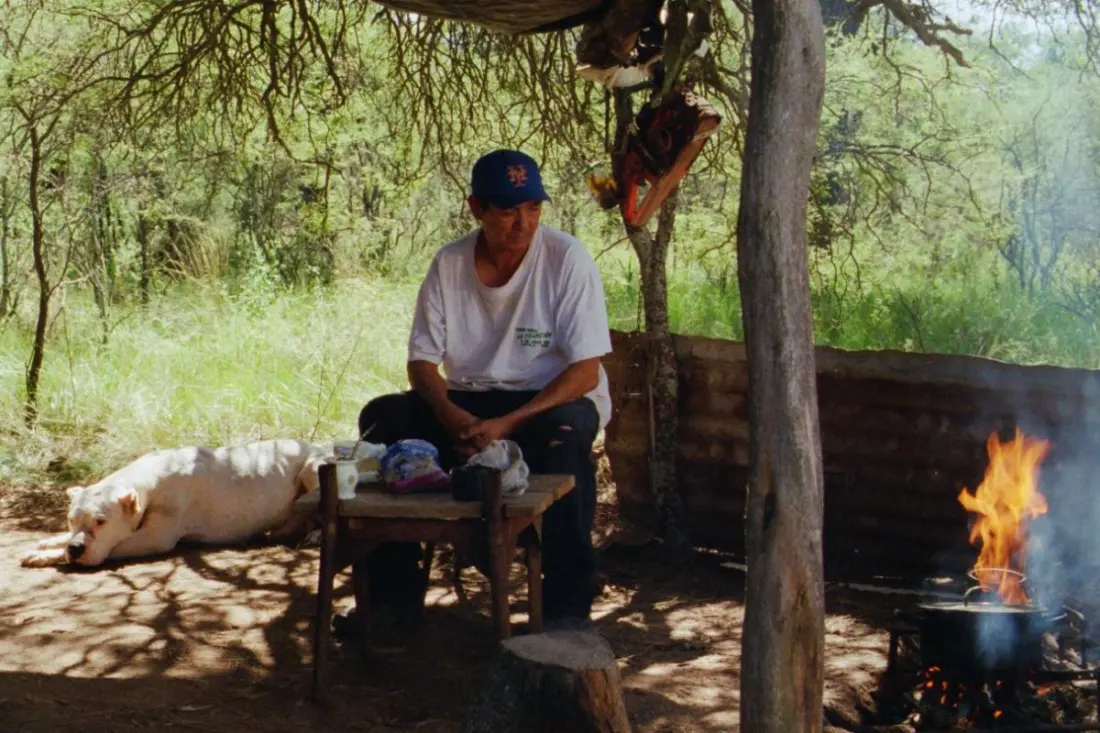
Some places are defined by what fills them. Argentina's Pampas is defined by what doesn't. These flat grasslands sprawl across the centre of the country, and writers and filmmakers have long treated them as something between a real region and a national myth — a frontier where daily life gets stripped down to its essentials.
The latest proof is Double Freedom, the new film by Argentine director Lisandro Alonso, which premiered at Cannes and screened at the Tokyo Film Festival. It's a sequel to La Libertad (2001), a cult arthouse favourite about a woodcutter named Misael who lives alone on the Pampas, cutting trees, roasting meat and watching birds. No plot, no drama — just a man and a seemingly endless horizon. The original ran on a five-page script; the sequel needed sixty, and this time gives Misael a quiet mission: collecting his sister from a closing psychiatric institution.
That's the strange pull of the region, according to co-writer Juan Mendez. The Pampas can feel like a desert — "there's no life, or very little" — yet Alonso saw enough there for two full features. In Argentine literature, the grasslands have always loomed large: Ricardo Guiraldes wrote about a boy lost among the plains in 1920, and César Aira turned them hallucinatory in An Episode In The Life Of A Landscape Painter and Ema The Captive. The Pampas, Mendez says, is the place "from which all kinds of myths spring forth" in Argentina — and in these films, a real man, an actual construction worker in everyday life, is dropped into that myth.
For travellers, the appeal is obvious once you've stood on it. The Pampas does something to your sense of scale. Distances stretch, the sky dominates, and the silence forces you to pay attention — to birds, to wind, to small changes in light. It's the opposite of a checkbox destination. There are no landmarks racing to impress you; the experience is the space itself, and the rural culture that survives in it: cattle estancias, gaucho traditions, slow asado cookouts, villages where the day is structured around weather rather than schedules.
It suits a certain kind of traveller. If your ideal trip involves driving long, empty roads between Buenos Aires and the provinces of La Pampa, Córdoba or Buenos Aires Province's interior, staying on a working ranch, and reading Aira at night, this is your territory. If you need constant stimulation, the flat green horizon might send you slightly delirious — though, as the article's opening suggests, that's part of the deal.
A film like Double Freedom is unlikely to spark a tourism boom, and that's rather the point. The Pampas remains one of South America's least touristed regions — a place where the main activity is looking, and looking carefully. Alonso's two films, made a quarter-century apart, capture exactly why some people can't stop watching it.