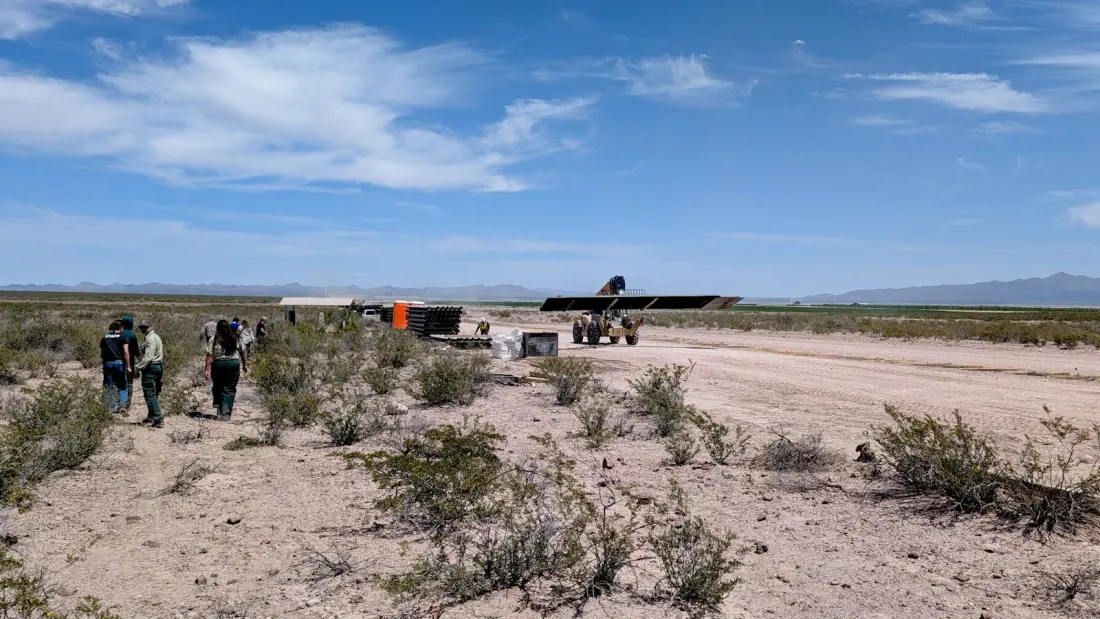
The granite obelisk marking the southern end of the Continental Divide Trail used to sit quietly in the Chihuahuan Desert, reachable only by a rutted dirt road that demanded a high-clearance vehicle. That isolation is gone. The monument now stands between two 30-foot border walls under construction, inside a designated National Defense Area, and the once-narrow Commodore Road has been graded and widened from 8 to 24 feet to handle heavy construction traffic.
For now, hikers can still get permission to enter the zone and touch the monument — a big deal for the thousands who end or begin a 3,100-mile thru-hike there. CDTC executive director Teresa Martinez, who visited in November with communications director Audra Labert, called the scene "surreal" and watched two teary hikers reach the obelisk between the barriers. She stressed that access during construction is fundamental: finishing a months-long hike and not being able to lay hands on the marker would, in her words, be devastating. But security guards will eventually begin moving hikers out of the construction zone entirely.
There are two silver linings. The upgraded road makes the terminus far more accessible — friends and family can now drive up in ordinary cars to drop off or collect hikers, something that was never practical before. The trade-off, Martinez admits, is bittersweet: the remoteness that defined the terminus is eroding, and traffic is likely to grow. Longer term, the monument is expected to be relocated out of the defense area, and the CDTC plans to install a new marker with accurate coordinates — using the redo as a chance to involve Indigenous voices that were absent when the original was dedicated back in 1974.
If you're planning a CDT hike that starts or ends at the border, expect the emotional payoff to remain intact but the setting to look very different: heavy machinery, widened roadbeds and towering steel where there used to be open desert. Martinez's advice to hikers is to embrace the wildness around the infrastructure and treat the moment as a chance to reflect. Anyone tackling the trail in 2027 should also check current access rules for the National Defense Area before setting out, since entry requirements and the monument's location may both change with little notice.