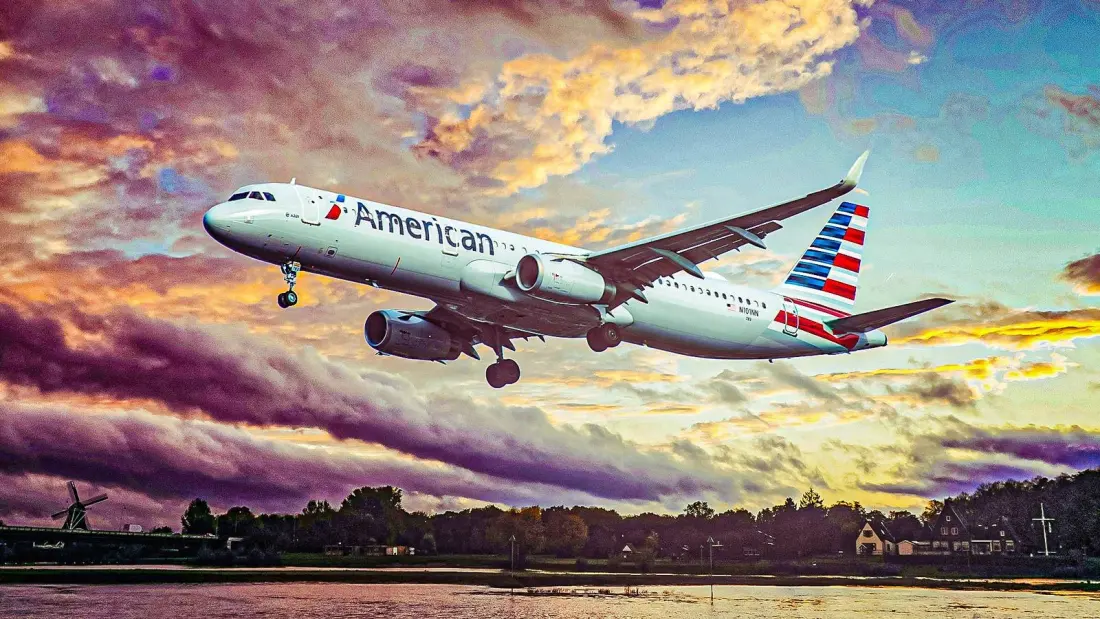
An overnight American Airlines flight from San Diego to Chicago ended up in Phoenix instead, after a passenger allegedly ignored repeated instructions from crew and tried to interfere with a door in the forward cabin. Flight AA1494, an Airbus A321, landed safely at Sky Harbor late Tuesday night, where police removed the man. He was taken to hospital with a minor injury; nobody else was hurt.
Early reports suggested an attempted cockpit breach, but air traffic control recordings point to door R in the forward cabin, which triggered an alarm. Controllers classified the situation as a "Level 3 threat" — a useful detail, because ICAO's four-level threat scale reserves Level 4 for actual or attempted flight deck breaches. Either way, it was serious enough for the captain to divert, a call FAA rules fully support: the captain has wide emergency authority when continuing a flight poses an unacceptable risk.
Passengers and crew subdued the man together, and the FBI has been notified and will investigate. American thanked its team and customers in a brief statement.
If the incident feels familiar, that's because it fits a pattern — and the consequences for offenders are real. A 2022 American flight from Los Angeles to Washington diverted to Kansas City after a passenger tried to reach the cockpit and open an exit; he was eventually sentenced to 19 months in federal prison and ordered to pay the airline more than $64,000 in restitution. Recent comparable cases include a United flight in 2021 (12 months plus fines) and a Swiss Newark-Zurich flight in 2024, where the offender got 10 months and over $73,000 in restitution. Under US law, interfering with flight crew through assault or intimidation can carry up to 20 years.
For regular flyers, the takeaway is simple but worth knowing: tampering with any aircraft door — not just the cockpit — is treated as a life-threatening act, crews and passengers will physically restrain you, and the plane will land wherever it needs to. The cost is measured in both prison time and six-figure bills. It's also a quiet nod to how these situations get handled: cabin crews train for exactly this, ATC and police coordinate through the threat-level framework, and diversions happen fast when safety demands it.